


Known as the ‘second city of the British Empire’ in Victorian times, Glasgow is the most populous city of Scotland and sits on the banks of the River Clyde.
The city’s name comes from the Brittonic for ‘green hollow’, giving it its other nickname of ‘dear green place’, and the area has been home to communities for millenia.
It was reputedly founded by Christian missionary Saint Mungo in the 6th century, who established a church on the current location of Glasgow Cathedral.
In the late 19th and early 20th centuries, the population of Glasgow rocketed to over 1.1 million people, partly thanks to its heavy industry, including shipbuilding on the Clyde.
The following decades saw the population reduced as Glaswegians were relocated to new towns such as Cumbernauld, Livingston and East Kilbride, but the city remained comfortably the largest in Scotland.
While the shipbuilding is now long gone, the city has reinvented itself as a cultural hub, world renowned for the likes of Kelvingrove Museum Art Gallerty and Museum, GOMA, the OVO Hydro, the Glasgow Barrowlands, the Hunterian Museum and Art Gallery, the Burrell Collection, the Citizens Theatre and numerous other venues and institutions.
Here are 40 pictures to take you back to the city in the 1950s and 1960s.
Make sure you don't miss a moment of breaking news from across Scotland by signing up to our free newsletter here.
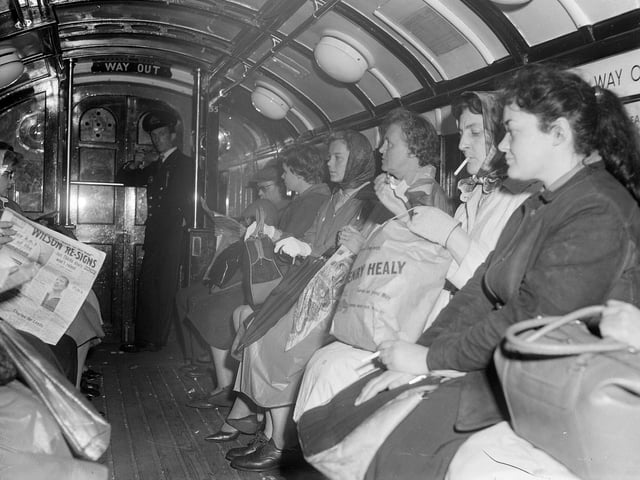
14. Going underground
Glasgow housewives going home on the underground train after a day's shopping in 1962. | Johnston Press
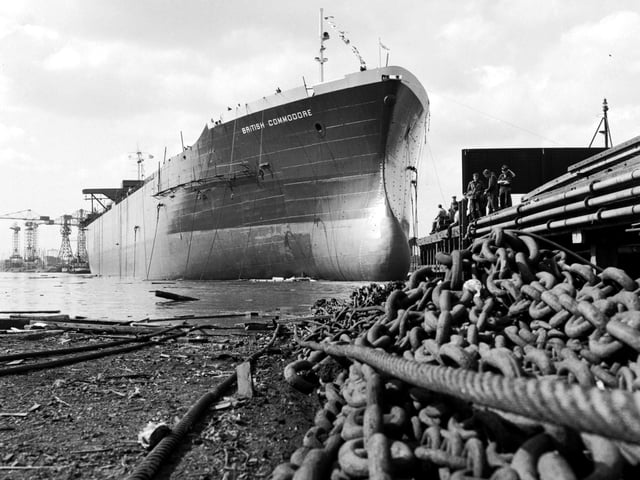
16. Launch
The British Commodore is launched from Fairfield's Shipyard at Govan in August 1966. | Iconic Media