
German consul 'moved and humbled' by visit to Cultybraggan Prisoner of War camp
General Consul Christiane Hullmann has visited Cultybraggan.
The German Consul to Scotland said she was “moved and humbled” by a visit to a prisoner of war camp in Perthshire that housed the most dangerous Nazis during the Second World War.
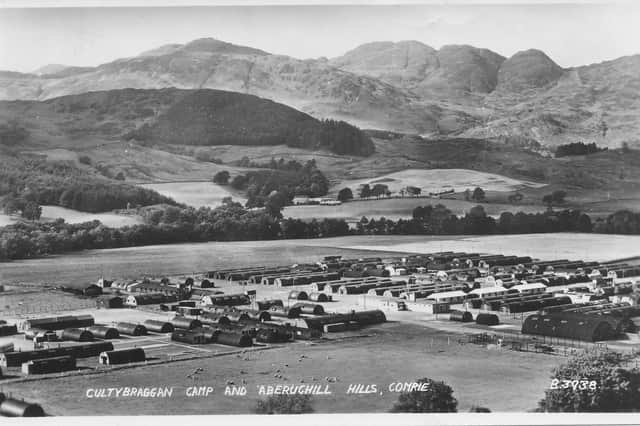
General Consul Christiane Hullmann made the visit to Cultybraggan near Comrie, where more than 4,000 men were held.
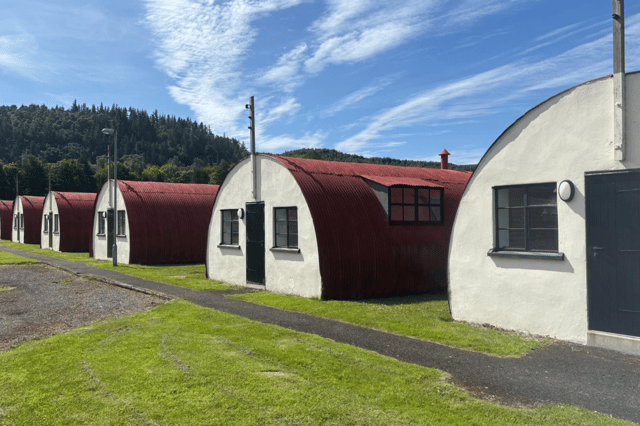

They included around 2,700 Germans, with Cultybraggan the only surviving ‘black list’ camp at the time of the German surrender given it housed members of the SS and those fully immersed in Nazi ideology.
READ MORE: VE Day: Silence among Nazi hardliners at Scotland’s high security POW camp
Ms Hullmann was invited to Cultybraggan by the Comrie Development Trust, which runs the camp as a heritage site that features original Nissen huts slept in by POWs, a museum and also an orchard, business units, a cafe and holiday accommodation.
She said: "As a German, I found it very moving and humbling to receive such a warm welcome at Cultybraggan, a place which is such a stark reminder of the dark time when Germany brought such death and destruction across Britain and Europe.
"I am personally very interested in history, but it is also an important part of our official policy to engage in keeping the memory of World War Two alive."
Ms Hullmann added: "As a German, you know of the brutal and deadly conditions under which Soviet POWs were held by Nazi-Germany. They were essentially left to die.
"It was therefore very moving to see that the German prisoners of war at Cultybraggan were very well treated and were getting the same rations of food as soldiers in the British army.”
Cultybraggan was the scene of an infamous murder in 1944 when German officer Wolfgang Rosterg was beaten and kicked to death in Hut No 4.
He was incorrectly believed to have been an informant of a planned escape of more than 7,000 German POWs from a barracks in Wiltshire. Six men were convicted of his murder and five were hanged at Pentonville Prison.
Adolf Hitler's deputy Rudolph Hess also spent a night at the camp after parachuting into Scotland in 1941.
Although Cultybraggan was a camp of the highest security, many prisoners who were trusted by authorities were allowed to work in surrounding farms or deliver goods on behalf of local businesses.
At the end of the war, some POWs remained in Scotland and helped rebuild infrastructure by laying roads, building houses or logging trees. In 2016, former German POW Heinrich Steinmeyer left £384,000 in his will to Comrie given the kindness he was shown there.
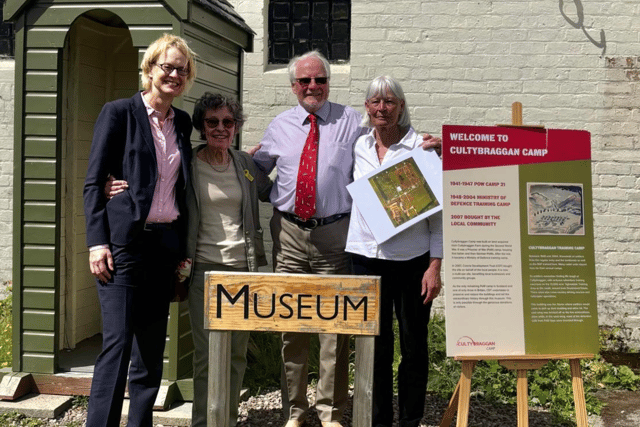
Ms Hullmann said: "There were die-hard Nazis held there, but also very young Germans who were not so deeply committed who were allowed to work on farms. They also had a cultural life, with a theatre group and a music band at the camp, for example.
"Some of the prisoners decided to stay in Scotland after the end of the war, which is the strongest testimony that they were well treated. Many prisoners came back after the war to visit, and one former POW left his inheritance to Cultybraggan.
"The place really is a treasure trove of stories and I would very much like to bring over some young German volunteers to help to preserve the camp. That would be fantastic."
She added: “The dedication and commitment of the volunteers from the Comrie Development Trust and the Comrie Heritage Group are truly impressive.”
Comments
Want to join the conversation? Please or to comment on this article.