


Scotland sits just over the North sea from Scandinavia which made it a prime entry point for Vikings entering the British Isles when they invaded in the 8th century. The violent raids took place on Scotland’s coastline and islands where they robbed precious resources from locals before eventually forming their own settlements.
United under Norwegian rule, the Scottish islands were signed over to Magnus III of Norway by King Eagar in 1098 in a region that was known as the Kingdom of the Isles. The Kingdom included the Northern Isles of Shetland and Orkney (where Norse influence is said to be its most potent) and the Southern Isles including the Isle of Man and Hebrides.
Just like with Gaelic or Pictish, the Norse legacy of Scotland can still be felt today as place names feature motifs from their languages and Scots can trace their ancestry back to Nordic groups.
To explore this heritage, here are nine interesting facts about Vikings in Scotland and how they influenced the country.
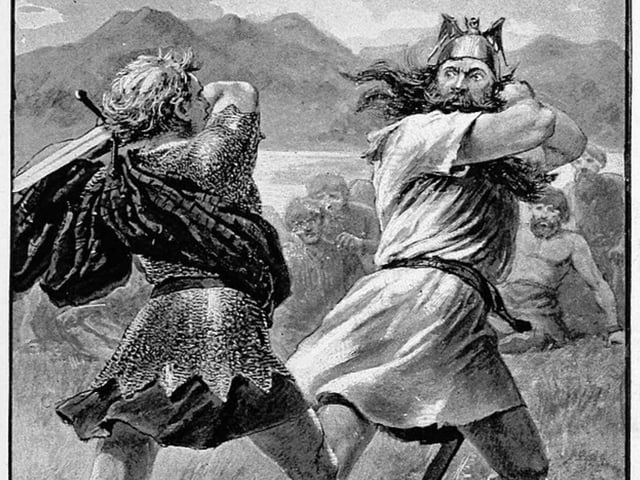
9. The ‘end of Viking reign’ happened in 1263
The Battle of Largs in 1263 was the battle that led to the ‘end of Viking influence’ in Scotland. Following persistent aggression from the Scots, Viking King Haakon IV decided that brute force would be needed to overcome the uprising as he set off a terrifying armada from Norway onto the Ayrshire town of Largs. Ultimately the Scots rose victorious in this battle and the Vikings retreated. Photo: Alfred Pearse (1856-1933)