
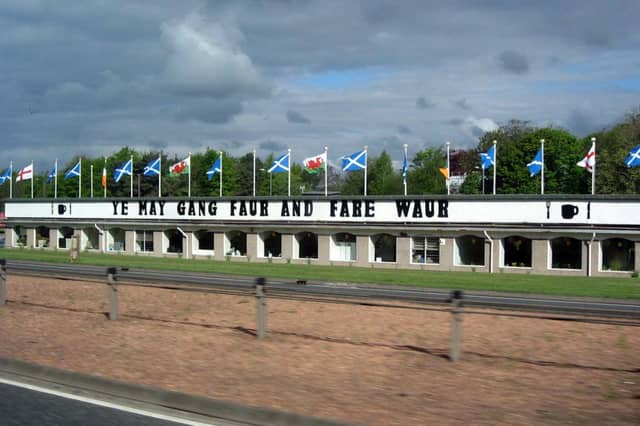

According to The National, Scots is “one of three native languages spoken in Scotland today” along with English and Scottish Gaelic. However, despite the ongoing debate as to whether or not Scots is a real language or just a dialect, it can be considered a settled matter as it has already been recognised by the UK government and Council of Europe.
Possibly, the issue arises as people conflate ‘Scottish English’ which includes well-loved Scottish words and unique Scottish sayings with Scots itself since these two see an overlap but are not quite the same thing.
If you’ve ever read the works of legendary Scottish poet Robert Burns then you’ll know well that Scots is indeed a language worlds away from formal English, and even though Burns Night has passed in 2023 it’s fun to practice languages regardless of special occasions.
Here are sixteen examples of the Scots language taken from street signs, newspapers, books and a variety of dialects all over Scotland (including Doric), how many can you translate?

9. Dinna fash yersel and hae a brew
If you’ve got a friend getting stressed out about something then ‘dinna fash yersel’ is a good thing to say as it reminds them ‘to not worry about it’ or ‘concern themselves’. Of course, the cherry on top is ‘hae a brew’ which is to say “have a brew”. Photo: 'Dinna Fash Yersel' Illustrated by Bob Dewar

10. Cam Ower an Gie’s a Bosie
If you’re a young person visiting your Doric-speaking grandmother in Aberdeen then you might stumble upon this phrase. Simply put it can be taken as “come here and give me a hug.” Photo: jpgfactory via Canva Pro
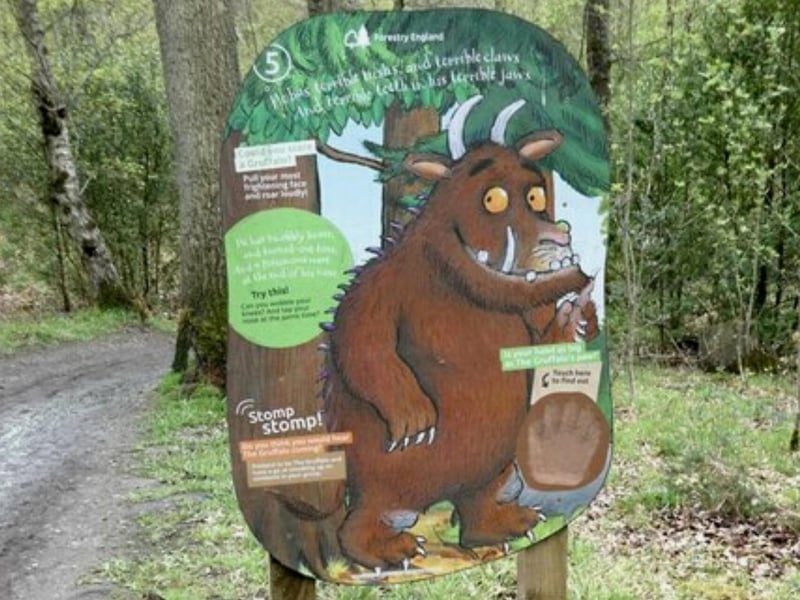
11. ‘Richt you are,’ said the Gruffalo, fit tae burst. ‘I’ll walk ahint ye, and ye gang first.’
Taken from the Scots translation of the beloved children’s book ‘The Gruffalo’s Child’. Word for word, the above can be translated as: “‘Right you are’ (said the Gruffalo) ready to burst out laughing. ‘I’ll walk behind you and you go on first’”. Photo: Oliver Dixon via Geograph

12. Fit like quine?
A phrase that comes from the well-known Scots dialect ‘Doric’ which is associated with the North-east of Scotland. According to Visit Aberdeen it does not refer to asking someone if they’re fit, rather it’s more equivalent to a greeting like ‘How are you?’ Photo: shapecharge via Canva Pro