
Discovering the 'ghost crofts' of a Scottish island
The townships were abandoned 50 years ago, but traces of life hang on in the landscape.
The ‘ghost crofts’ of a Scottish island are being rediscovered this summer.
Nunton Hill in Benbecula now lies totally uninhabited, but 100 years ago was home to crofters, families and a school. Today, traces of everyday life can still be seen, including the shell of the old school house, in the now deserted community.
The former isolated settlements of Minish, Scaraleod and Rossinish will now be explored in a series of walks in the summer across the north east of the island led by Alasdair MacEachen, a resident of Benbecula and former chair of the Islands Book Trust.
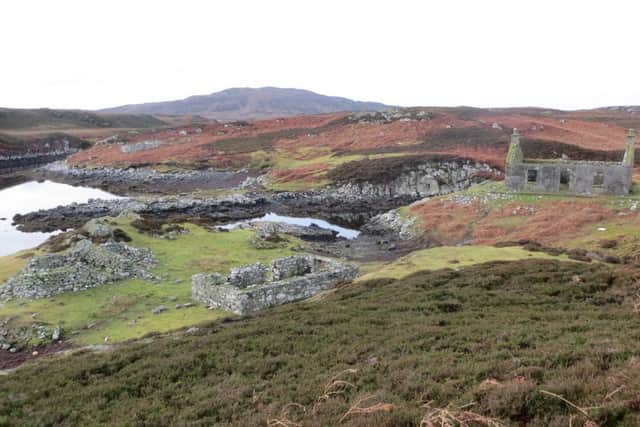


Seven Nunton Hill crofts were established under the Land Settlement (Scotland) Act 1919 to create ‘Land Fit for Heroes’ following the First World War. Nunton Hill farm was also broken up, although Lady Gordon Cathcart, who owned Benbecula at the time and is synonymous with the Highland Clearances, resisted the move.
After the scheme was approved, the new crofters faced “hardships” in their new home, but were determined to “provide a good life for their families”, a statement from the Islands Book Trust said.
"But eventually the disadvantages of their situation led to the families giving up their struggle,” the statement added. “The last of the resident crofters left Nunton Hill over 50 years ago, but the family dwellings and the remains of a small primary school they left behind are lasting reminders of the occupation of a now deserted isolated community.”
The 1919 Act instructed the Board of Agriculture Scotland to set out smallholdings, select their occupants and assist new crofters with the provision of homes, livestock, agricultural buildings and farm tools. Landowners could be forced to sell substantial acreages to the board, although it preferred to work with landowners through means of negotiation.
At Nunton Hill, plans for the new crofts were resisted by Lady Gordon Cathcart, but the Board of Agriculture for Scotland’s proposal was eventually approved by the Secretary of State for Scotland in December 1924.
The following year, Lady Gordon Cathcart, of Cluny Castle in Aberdeenshire, who inherited Benbecula, North and South Uist, Eriskay and Barra following the death of her first husband, Captain John Gordon in 1865, applied to the Scottish Land Court for compensation for “damage and injury” following the creation of the crofts.
She claimed payment of sums amounting to £2,795 – around £140,000 at today’s values. She claimed for loss on account of disturbance and deterioration of shooting ground, but the board said the claims were “excessive”.
Mr MacEachen will lead walks to the former settlements of Minish and Scaraleod on June 15 and then to Rossinish on June 22.
Ruins of the houses from the 20th-century re-settlement scheme will be reached as well as earlier periods of settlement going back several millennia to the Bronze and Iron Age. The area is also closely connected with the travels of Bonnie Prince Charlie and Flora MacDonald following the Battle of Culloden in 1746. It is said the pair left for Skye from Rossinish beach.
Comments
Want to join the conversation? Please or to comment on this article.