
Exclusive:National Trust Scotland must consider selling non-visited properties to keep finances tight: Dame Sue Bruce
Dame Sue Bruce has taken up her role as chair of National Trust for Scotland - and said the charity had to be “very cautious” about its financial future.
The new chair of National Trust for Scotland (NTS) said the heritage body must consider letting lesser-visited properties go from its portfolio to keep the charity sustainable and financially sound in the future.
Dame Sue Bruce, who took up her role last month, made the comments following her first annual general meeting, when it was reported NTS had achieved record income levels from membership numbers, bequests and fundraising.


Amid the turnaround in fortunes of NTS since the Covid pandemic, Dame Sue said the charity had to “keep a close eye” on its estate to maintain good finances going forward.
She said: “I think we have to be very cautious how we go ahead. We have had two to three bumper years and we would like that to continue, and we will do everything we can to make that continue. But we also have to be cautious about the general pressures of the economy at the moment and be careful with our resources.
“I think we have to continue to focus on looking at our portfolio of buildings, making sure we can sustain what we have got, and consider whether there is anything in that portfolio that shouldn't be there for any reason.
“Going forward, what we need to do is make sure we have got full and accurate knowledge of our whole estate, and that includes the open spaces as well as the built assets. We need to understand what we have got and understand what we would like to have.”
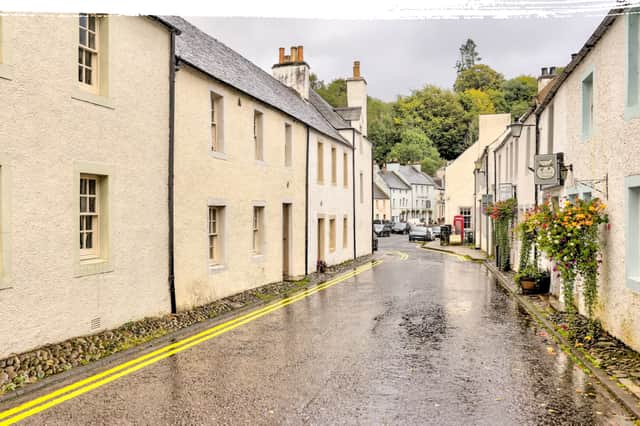
Her comments come after NTS raised £4.47 million from the transfer of homes in Cathedral Street, Dunkeld, to Perth and Kinross Council. The local authority has added the properties to its housing stock and is reducing rents for existing tenants. A parcel of land was also included.
Dame Sue added: “If we have got property that could reasonably be social housing, for example, is that something we should look at, making a contribution to wider civil society?
“But also, if a property is not visited, and it is not open to the public, is that something that should be within our portfolio if we are still managing our resources tightly?”
Other properties recently shed by the trust include two crofts and land at Balmacara, a cottage at Pitmedden, land at Kyle of Lochalsh and the Old Post Office at Plockton.

At present, NTS cares for 15 castles, 76,000 hectares of countryside, 11,000 archaeological sites and features 38 major gardens, five mills, 46 Munros and parts of eight historic battlefields.
Last year, more than 5.6m people visited its sites, up from 4.5m the year before. Membership numbers climbed to a record 330,358 - an increase of just over 4,000.
The newly-released NTS annual report from 2024/25 reveals total income and endowments amounted to £91.4m - up from £69.5m on the previous year.
Finances were significantly boosted by £12.1m in legacies - almost double the year before - which included £10.1m the charity can spend anywhere across its activities.
Meanwhile, a record £11.4m was generated through appeals and fundraising after the charity embarked on targeted campaigns linked to popular sites such as Bannockburn and Glencoe.
READ MORE: Battle of Bannockburn: NTS makes direct appeal to 330,000 members to help save battlefield from development
Dame Sue said: “Visitor members are at a record high and that really generates income for us, but we also depend on philanthropy and had a very generous legacy last year, which has helped enormously.”
She said the profile of NTS in the media had supported the charity in attracting bequests.
Dame Sue added: “There is barely a week going past where there is not something in the media about the National Trust for Scotland.
“That takes real effort and it keeps it in the consciousness of the public and what we want to do is maintain that profile and that presence, so that if people do have money they want to give through philanthropy, we would like to National Trust for Scotland to be there in their consideration
“Part of that is demonstrating that NTS is well managed, has good governance, is in good hands and that its assets are being properly managed.”
She said the need to tightly control its finances did not exclude the need for NTS to make new acquisitions.
Recent purchases include Treshnish Isles near Mull in July 2023, Mackintosh at the Willow in Glasgow in January last year, and Westing Holms islands in Unst, Shetland, in September 2024.

Dame Sue said the purchase of the Bernat Klein Studio in the Borders as part of a coalition with the Bernat Klein Foundation and Scottish Heritage Buildings Trust in July signalled an important addition of 20th-century heritage to the portfolio.
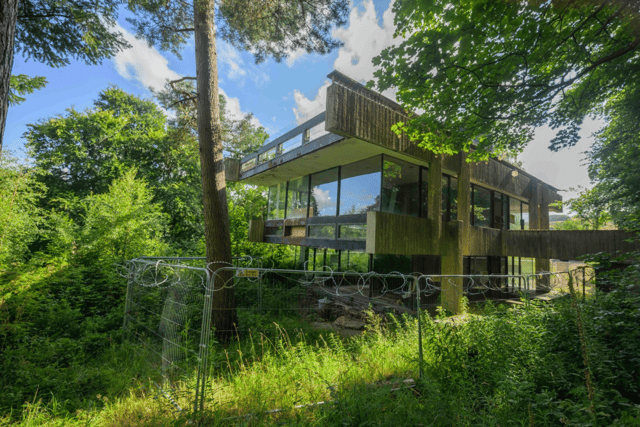
“It is right that we look at our heritage and history very carefully, including heritage from the 20th century,” she said. “Young people coming up now and joining the trust might be interested in different things than I was interested in 60 years ago.
“We need to continue to keep a very close eye on what we have got in our asset portfolio and consider what might be relevant. It might be about development of technology or industrial archaeology.
“The pace of change from the 20th into the 21st century has been absolutely astronomical. When I lived in Glasgow as a student, I lived in a flat that had gas lighting in the stair.
“It is just incredible to think of the change that has gone on from the 20th century into the 21st century. Young people now have got all of the 20th century behind them now, and that is history for them. We lived it, but for them it is history.”
Dame Sue said she has had a long association with NTS, with her late parents long supporters of the charity in the North East and both herself and her brother working as a guide at Crathes Castle. Her eldest brother worked as a gardener at Branklyn Garden in Perth for a spell.
She formerly chaired the nominations committee at the charity for a number of years.
Dame Sue is the Electoral Commissioner for Scotland and recently retired as Convener of Court at the University of Strathclyde. She also served as the chief executive of Edinburgh City Council and was the chair of Royal Scottish National Orchestra.
Of her new role at NTS, she added: “It is almost as if it has been meant to be that I would come back to the trust in some shape or form.”
Dame Sue takes over from Sir Mark Jones, who was announced as the new chair of Historic Environment Scotland on Tuesday. She said she would continue to share knowledge with Sir Mark going forward, particularly in areas such as the impact of climate change on historic properties - an area of work on which HES is taking the lead.
Comments
Want to join the conversation? Please or to comment on this article.