


Situated at the mouth of the River Almond, Cramond is one of the Capital’s most desirable places to live.
Archaeologists have found evidence of people living in the Cramond area from as far back at 8500 BC when it’s belived it was the site of a Mesolithic camp – the earliest known site of human habitation in Scotland.
It’s thought that the site was chosen due to the proximity of oyster and mussel beds at the junction of the River Almond and the Firth of Forth.
The Romans arrived in around 142 and built a fort at Cramond as part of the Antonine Wall frontier on the orders of Emperor Antoninus Pius, and later used as a base for the army of Emperor Septimiu s Severus.
Read more:
Edinburgh Old Town Heritage in Pictures: Here are 28 fascinating photos of the city's historic centre in the 1950s and 1960s - from parades to pubs
It was the fort that gave the village its name, derived from the compound ‘Caer Amon’, meaning 'fort on the river'.
Various important Roman remains have been found in the area including the Cramond Lioness, discovered in 1997, that can be seen in the National Museum of Scotland.
Very little is known about Cramond in the centuries after the Romans, until the Cramond Tower – part of a larger manor house used by the Bishops of Dunkeld – was built in the early 15th century.
Cramond Kirk was founded in 1656 and, after a brief period as an industrial village at the start of the 19th century, it became the desirable suburb of Edinburgh that it remains today – officially becoming part of the city in 1920.
Here are 45 pictures from The Scotsman archive to take you back to Cramond in the 1950s and 1960s.
Make sure you don't miss a moment of breaking news from across Scotland by signing up to our free newsletter here.
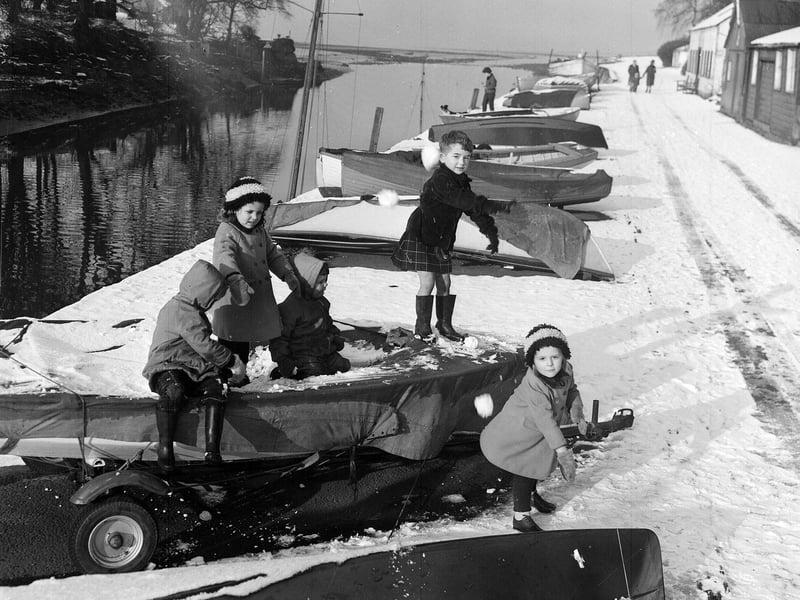
38. Snow day
Children playing on the snow-covered boats at Cramond in February 1963. | TSPL
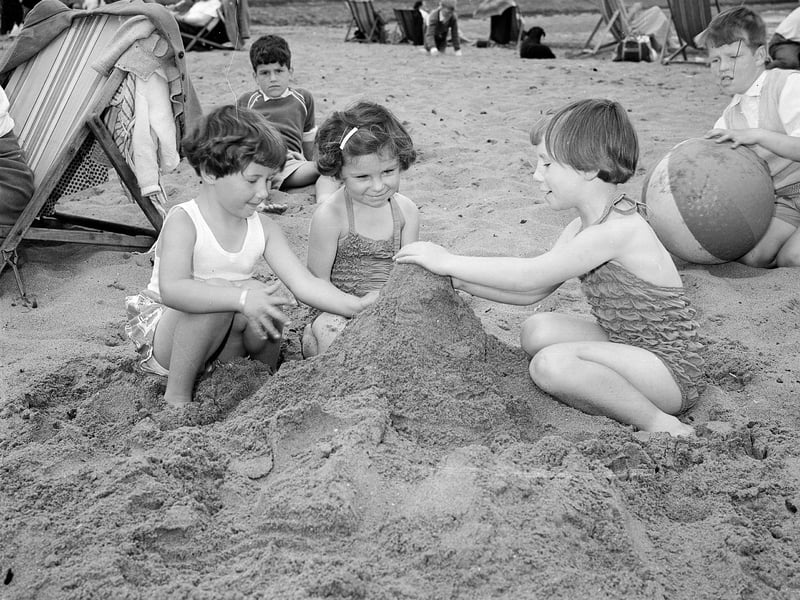
40. Child's play
Three girls building a sandcastle on Cramond Beach, in August 1954. | TSPL