
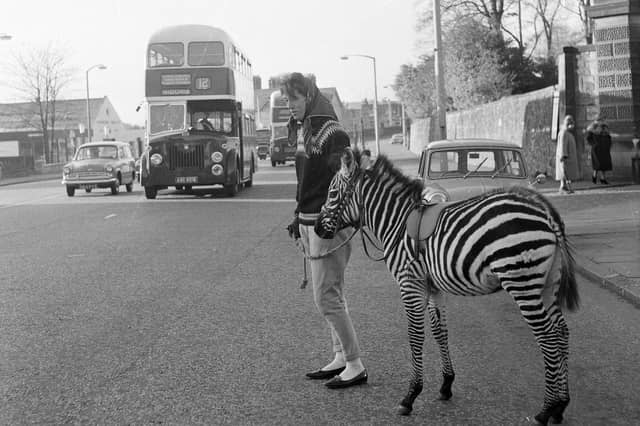

Corstorphine’s history dates back to the 12th century, when is was known as ‘Crostorfin’ – thought to mean ‘Torphin’s crossing’, in reference to a local baron who managed the crossing over the then-marshy area.
Others think it comes from the Gaelic ‘corie stoir fionn’, meaning ‘a white hollow in a wet place’, while there is also a largely-discredited story that says it comes from ‘croix d'or fine’ on account of a gold cross gifted to the local church by a Norman baron.
The land stood on a dry area between the now-drained Gogar and Corstorphine Lochs and, by the end of the 13th century, was owned by the families of Thomas le Mareschall and William de la Roche.
Read more:
Edinburgh Old Town Heritage in Pictures: Here are 28 fascinating photos of the city's historic centre in the 1950s and 1960s - from parades to pubs
The estate changed hands several times in the following centuries, with the Lords Forrester, who built Corstorphine Castle in the 14th century, among the most notable.
The castle no longer exists, but the family’s large house still stands on Corstorphine High Street, while the castle’s 16th century doocot can also be seen on Dovecot Road.
Sir John Forrester founded the Corstorphine Collegiate Church in 1429, which forms part of today's parish kirk, and Sir John was buried in Corstorphine Kirk.
Another eminent owner of the estate of Corstorphine was Sir James Dick of Prestonfield, who purchased the land in 1713 and his family remained in control until 1869.
The Dicks were a prominent family of lawyers and merchants and Sir James served as Dean of Guild and later as Lord Provost of Edinburgh.
In the late 19th century, Corstorphine was still a small village of farmers that had remained largely unscathed by industrialisation, and was not yet part of the city of Edinburgh.
But change eventually came when it started to attract middle-class employees looking for an escape from the city, becoming a dormitory area for well-heeled Edinburgh workers.
On November 1, 1920, it was formally incorporated into the Capital, although the farming remained for some years to come, supplying Edinburgh with milk, butter, eggs, potatoes and rhubarb.
Today, Corstorphine has a busy shopping street with many independent shops and is one of the city’s most in-demand residential areas.
Here are 41 pictures to take you back to the suburb of Corstorphine in the 1950s and 1960s.
Make sure you don't miss a moment of breaking news from across Scotland by signing up to our free newsletter here.
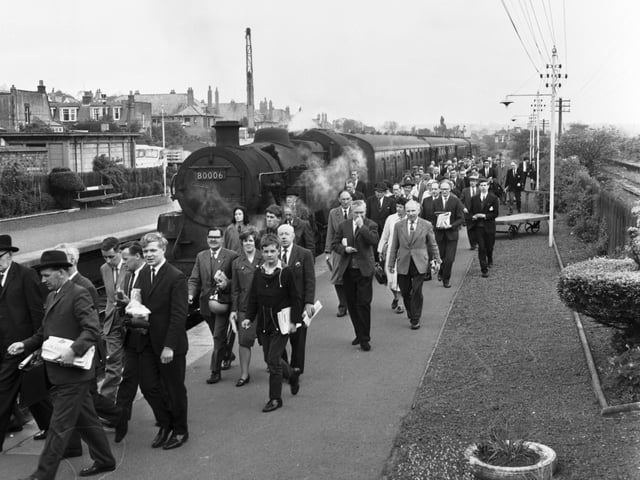
1. Arrivals
Passengers get off the train at Corstorphine Station in Edinburgh, June 1966. | Iconic Media
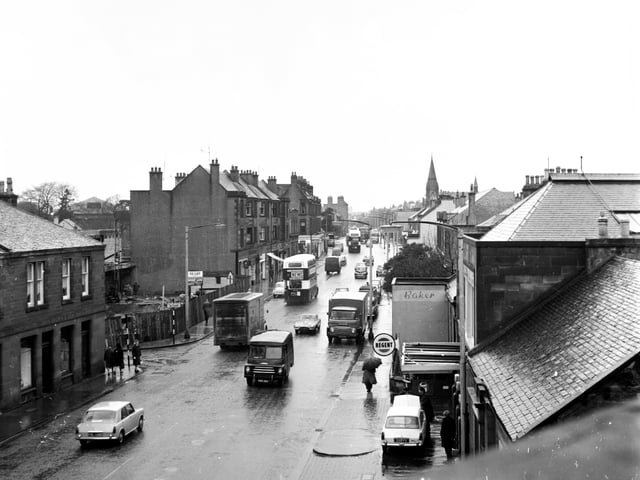
2. Window view
A view of traffic on St John's Road in Corstorphine in March 1966. | Iconic Media
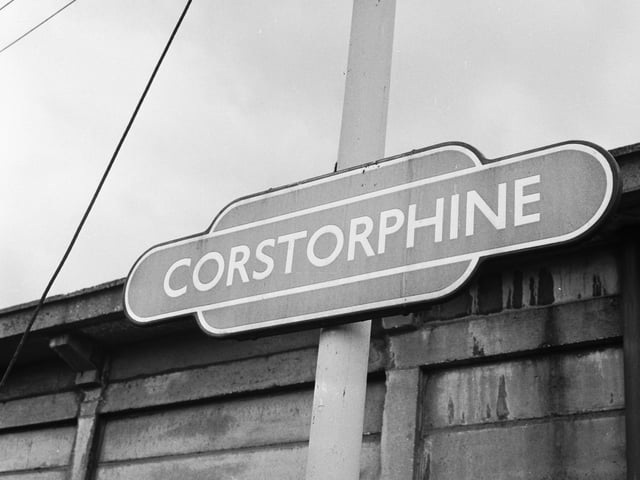
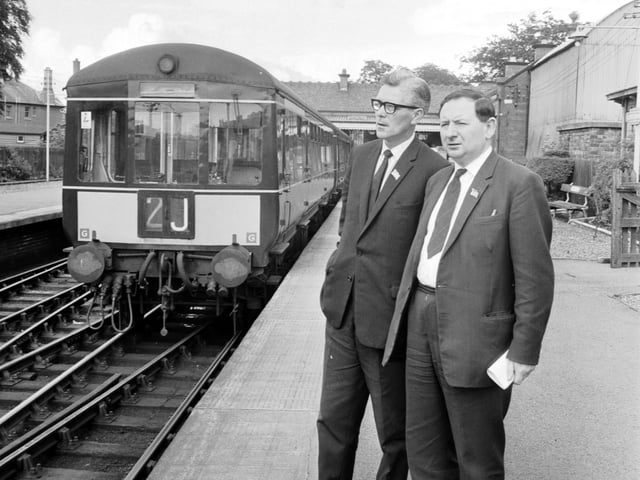
4. Given a platform
Councillors James Cook and Philip Wood at Corstorphine Station in in June 1966. | Iconic Media