
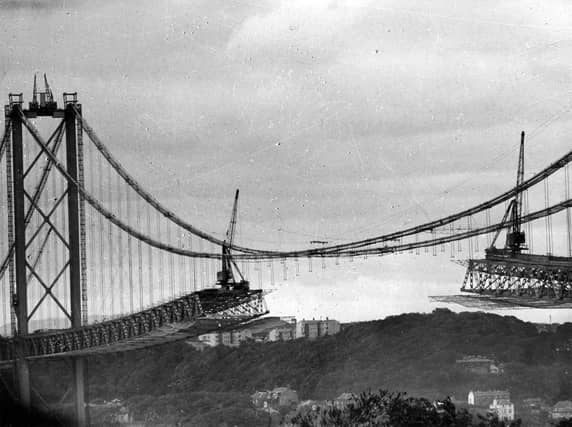

Six decades ago those wanting to take their car between Edinburgh and Fife were forced to rely on a centuries-old ferry service over the Forth Estuary.
The only other option was a long road trip to the Old Bridge in Stirling or, post 1936, the Kincardine Bridge.
That all changed in 1964 with the opening of the Forth Road Bridge, which was at the the time the longest suspension bridge in the world outside the United States of America.
Spanning the Firth of Forth between Queensferry and North Queensferry next to the Forth (railway) Bridge, opened in 1890, the two engineering feats created one of the most famous views in Scotland – even before they were joined by the new Queensferry Crossing in 2017.
It took more than four years to build from 39,000 tonnes of steel and 125,00 cubic metres of concrete. It spans over 2.5 kilometres and when first opened,
Originally it was a toll bridge, with a charge of £1 to cross in either direction in place until the levvy was scrapped by the Scottish Parliament in 2008.
At its peak it carried over 65,000 vehicles every day before it was partially retired on the completion of the Queensferry Crossing.
Now the bridge is marking its 60th birthday and is still used as a Public Transport Corridor by buses and taxis – along with pedestrians and cyclists – and occasionally brought back into use when its replacement is undergoing repair.
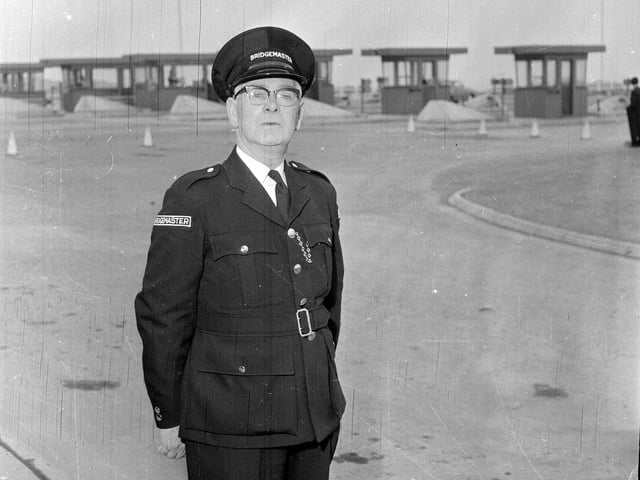
25. The boss
Mr R Wilson, the first Forth Road Bridge Master, in front of the tollbooths in 1964. Photo: Unknown
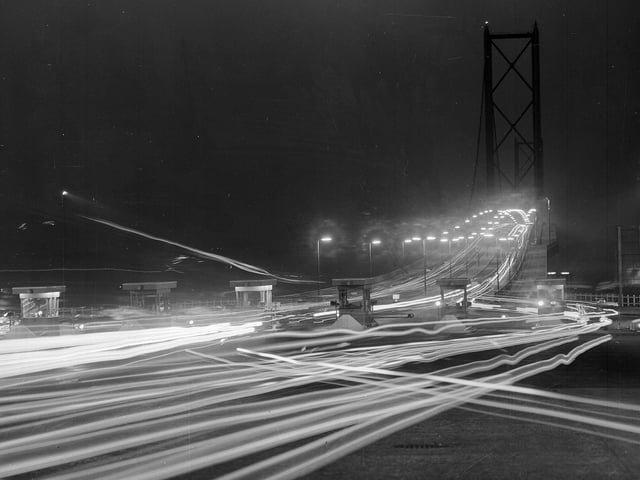
26. Light trails
A time exposure photograph shows the lights of moving vehicles on the approach to the Forth Road Bridge in October 1964. Photo: Unknown
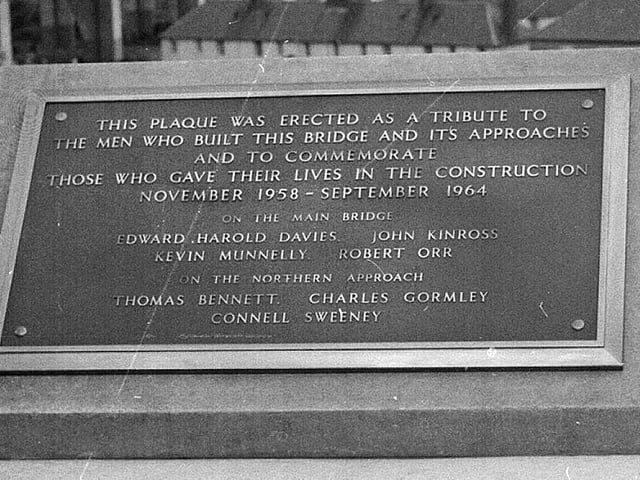
27. In memory
Lord Provost Weatherstone unveiled a plaque in memory of the seven men who were killed during the construction of the Forth Road Bridge in June 1965. Photo: Unknown
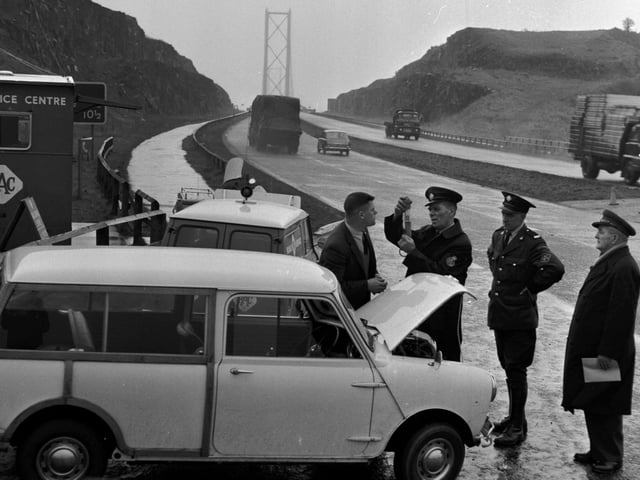
28. Drive safe
The RAC provide anti-freeze for motorists at the northern end of the Forth Road Bridge in December 1965. Photo: George Smith