
Warning Scotland's flu outbreak could 'overwhelm' NHS wards as spread raised to 'high level'

A nursing union has warned that “a surging flu virus could soon overwhelm” wards and A&E departments.
Schools have been forced to cut hours and move to online teaching after a spike in flu cases in children as health chiefs upgraded the outbreak to a “high activity level”.
The latest statistics from Public Health Scotland show the number of laboratory-confirmed flu cases has increased by 24 per cent, from 1,875 to 2,331 in the past week, while hospital admissions have gone up by 15 per cent, from 860 to 986.

Provisional registrations of deaths with flu listed as the underlying cause increased to 17, from seven the previous week, which Public Health Scotland warned is “higher than previous seasons and likely reflects the earlier onset by two to three weeks of influenza in 2025/26”.
In the North East, the number of people in hospital with flu in Grampian has more than doubled in the past week – with admissions to Royal Aberdeen Children’s Hospital (RACH) the highest on record.
A number of schools in Aberdeenshire have moved lessons online as the infection spreads to pupils and teachers.
First Minister John Swinney has warned that the NHS in Scotland will “undoubtedly face enormous pressures when waves of cases come our way” as the flu outbreak intensifies.
Yesterday, Justice and Home Affairs Secretary Angela Constance chaired a resilience meeting to talk over the rising number of flu cases and pressure on health services.
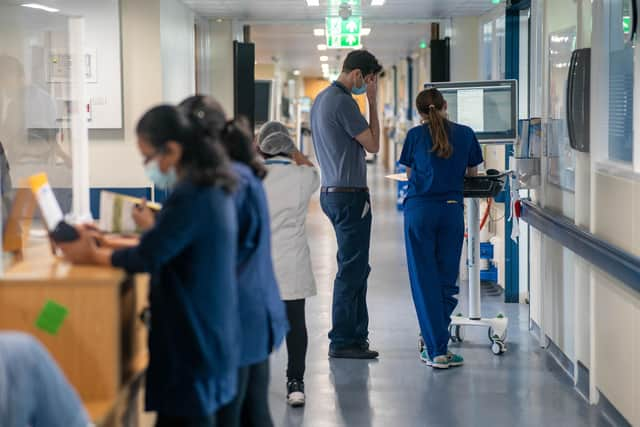
Eileen McKenna, associate director of nursing, policy and professional practice, at the Royal College of Nursing (RCN) Scotland, has warned that “wards and emergency departments were full to start with”, adding that “a surging flu virus could soon overwhelm them”.
She added: “With the peak not here yet and corridor care already rife across Scotland’s hospitals, nursing staff are deeply worried about how they will maintain the safety and dignity of patients.

“We’re clear that treating people in unsafe, inappropriate areas is not an acceptable response. The Scottish Government needs to act to protect patients this winter.”
At the Royal Aberdeen Children’s Hospital, one in six occupied beds is taken by a patient with flu – with other respiratory viruses, including RSV, also hospitalising younger people.
In total, 10 children are currently hospitalised with the influenza virus - more than triple than at the same time last year.
READ MORE: Scots should pay for flu vaccine if they can afford to, Health Secretary Neil Gray suggests
Seven children were admitted in a 24 hour period between Tuesday and Wednesday, with admissions still expected to peak.
The hospital has already implemented mask wearing for staff in clinical areas and is asking visitors not to attend if they are showing any signs of respiratory illness.
Across the Grampian region, the number of patients in hospital has doubled, with 47 people now admitted with the virus compared to 19 a week ago – the equivalent of almost three wards’ worth of beds.
At the health board’s biggest hospital, Aberdeen Royal Infirmary, one in 32 beds is currently occupied with a flu patient.
Public health consultant, Chris Littlejohn, suggested that flu numbers usually peak “some time between early January and mid-February” meaning there is potential for the number of people hospitalised, and ill in the community, to grow further in the coming days and weeks.
He added: “We’re continuing to see a sharp week on week rise in flu cases, trending towards what we would consider a high rate for this time of year.
“Across Grampian we currently we have the equivalent of almost three wards filled with flu patients across the region – and there are other respiratory viruses like RSV particularly affecting younger children.”
Some schools in Aberdeenshire have been forced to cut their hours, while pupils have been asked to stay at home and learn remotely.
An Aberdeenshire Council spokesperson said: "A small number of primary schools and academies across Aberdeenshire are feeling the impact of increased flu-related illness.
"We are monitoring the situation very closely and remain in regular contact with affected schools.
"Schools are working hard to ensure sufficient capacity to cover classes, but where absence levels are of concern and there is no available cover, some classes or year groups may be asked to stay at home and work online."
NHS Highland has become the latest health board to ask hospital visitors to wear face masks due to the spread of the virus.
Last week, NHS Greater Glasgow and Clyde joined other health boards in encouraging all hospital visitors and clinical staff to wear fluid resistant surgical masks – similar to those used during the Covid pandemic.
The board has asked people who have mild to moderate flu-like symptoms not to attend A&E or visit friends and family in hospital
Speaking at First Minister’s Questions, Mr Swinney highlighted comments by the national medical director of NHS England, Professor Meghana Pandit, who warned the “unprecedented wave of super flu is leaving the NHS facing a worst-case scenario for this time of year”.

Mr Swinney said: “I am simply saying that the health service will undoubtedly face enormous pressures when waves of cases come our way.”
Concerns have been raised over the availability of privately available flu vaccines, but the Scottish Government stressed there were no issues over supplies of NHS jags for those who are eligible.
Adam Osprey, policy and development head for Community Pharmacy Scotland, told the BBC that “some people are saying to us that they are running low while others have completely run out and have not got much hope of getting the stock back in.”
Health Secretary Neil Gray earlier told MSPs that the NHS in Scotland was “substantially ahead on vaccinations this year compared to last year”.
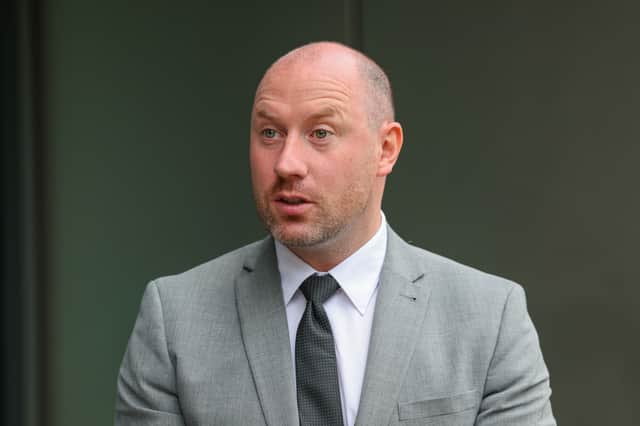
He said: “We are seeing an increase in flu cases earlier this year and we know flu hits harder for some people, especially the most vulnerable members of our communities.
“Vaccination remains the best protection against the virus and I encourage everyone who is eligible to come forward for theirs if they have not yet done so.
“As flu typically peaks in late December or January, driven by the socialising we do over Christmas and New Year, we are urging those eligible to get vaccinated before the holidays and help protect each other and our NHS this winter.”
Data published by Public Health Scotland has found that children in Scotland are 78 per cent less likely to be admitted to hospital with flu if vaccinated; with vaccinated adults in Scotland aged 65 and over 37 per cent less likely to be hospitalised.
Dr Kim Marsh, viral respiratory pathogens lead at Public Health Scotland, said: “PHS’s new vaccine effectiveness results reinforce our message that the flu vaccine offers the best protection against severe disease for those who are eligible, even with the new strain now circulating widely.
“Vaccination remains the best way to help protect yourself against serious illness from flu and is also important in reducing the spread of flu in the community, helping to keep everyone from missing out on socialising with friends and family over the festive season.
“NHS boards in Scotland are working hard to deliver the winter vaccination programme and look forward to welcoming you for your appointment. Drop-in clinics are also available in most areas.”
Comments
Want to join the conversation? Please or to comment on this article.