
Exclusive:Health boards have ‘failed to take action’ to protect women from rape and sexual assault in hospitals

Women’s Rights Network Scotland said health boards have ‘failed to take action’ to protect women from rape and sexual assault in hospitals
Health boards have ‘failed to take action’ to protect women in hospitals across Scotland nine months on from a report unveiling the scale of rape and sexual assault of patients and staff.
In March this year, grassroots feminist group Women’s Rights Network Scotland (WRNS) used freedom of information requests to uncover there had been 276 sexual assaults and 12 rapes over five years.
Only 57 of Scotland’s 198 hospitals record this information - meaning the true figures are likely to be far higher.
Since raising the issue in March, WRNS said only three health boards have since made changes to their incident recording systems.
These include NHS Greater Glasgow and Clyde, NHS Tayside, and NHS Forth Valley.
Information requests to Police Scotland for updated figures are also two months overdue.
At a roundtable event in Holyrood, hosted by Tory MSP Tess White, Carolyn Brown of WRNS said: “Nine months on we only have three boards that have made any change to any incident reports.
“Nine out of 14 health boards have no policy on male staff providing intimate care to female patients.
“Complaints about opposite-sex intimate care are effectively non existent.
“And although the Scottish Government and Health Improvement Scotland have been tasked with doing something about this, there's been no activity.”
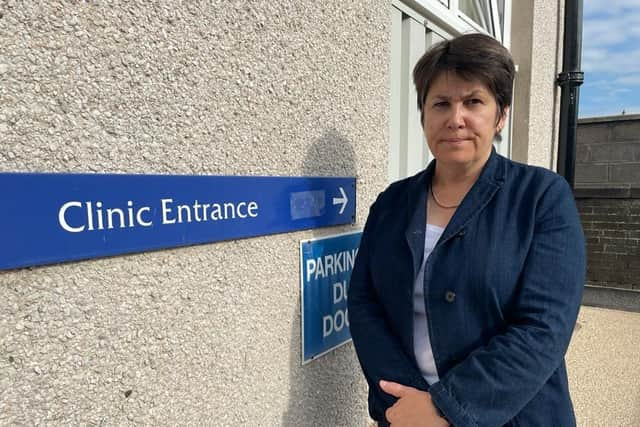

Ms Brown and her colleague Mary Howden gave politicians an update on their report.
WRNS, which is a volunteer organisation, said there have been “repeated promises” from various governments since as early as 1999 about prioritising single-sex spaces in hospitals.
Some 67 per cent - or 141 - hospitals said they did not collect data while another four per cent would not provide data for “privacy reasons”.
This would suggest, WRNS, that the numbers are significantly under-reported.
Figures for psychiatric services were “significantly higher” than facilities.
Ms Howden said: “We suggested that, on the basis of this, NHS management should act as a matter of urgency.
“An essential first step was putting systems and record keeping procedures in place to ensure patient safety.
“We also said that as a matter of urgency, we needed transparency about that and the public should have access to that.”
The groups also called for accurate data collection that included age and sex as well as the provisions of single-sex wards based on sex.
Ms Brown said WRNS had attended a “productive” meeting with Jenny Minto, the minister for public health and women’s health.
Progress, however, has stalled.
The group has tried to access updated figures from Police Scotland but freedom of information requests are currently two months overdue.
One of the issues the grassroots organisation has been pushing for is for the provision of chaperones during intimate or personal care.
Ms Brown said only a handful of health boards have chaperone policies and that patients are generally not informed that they are entitled to request a chaperone.
She added: “There was no collection of any complaints in relation to that, because people either don't know that's something that you can complain about or, if there's no policy, then you don't have an opportunity to address issues.”
Only Borders, Tayside, Grampian and Lothian health boards have written policies on male staff providing intimate care to female patients.
NHS Dumfries and Galloway said it is developing a policy.
Jackie Baillie, Scottish Labour leader, said the Scottish Government must take urgent action to push the NHS on the issue.
She said: “I worry that sometimes the treatment of this issue is more presentational than about substantive policy addressing the concerns that you're facing.
“We're now at the point where concern is not enough. Action is the thing that's required.”
Ms Baillie suggested a cross-party group of MSPs should send a letter to every health board, asking what action they are taking.
Ms White praised the work of WRN Scotland for exposing safeguarding issues around women’s safety in Scottish hospitals.
She said she is “appalled” that no groups funded by the Scottish Government have raised the issue and that health boards.
Ms White added that oversight organisations have also failed women by “not recording these incidents and having preventative plans in place”.
She said: “Also, why is there no leadership from the Scottish Government on enforcement of the Public Sector Equalities duties?
“Sex is a protected characteristic and it is clear that many public bodies do not have an understanding of their duties and are not doing risk assessments.
“This should alarm us all.
“Not having single sex spaces when women are at their most vulnerable nor chaperone policies is a huge concern.
“Scotland deserves better. Women are watching.”
A Scottish Government spokesman said patient and staff safety is an “absolute priority”.
“Boards have a legal duty, and reporting systems in place, to record data on sexual assault, violence and aggression - we strongly encourage staff to report any instances of this behaviour,” he added.
“All instances should be reported and escalated to Police Scotland as quickly as possible for consideration of necessary action.”
To address issues of sexual harassment in NHSScotland workforce, a spokesman said, a national network has been created to bring together Health Boards to explore and share approaches to preventing sexual harassment across NHSScotland.
A new “Sexual Harassment Guide” has been recently published to support employees and managers who are currently experiencing or have experienced sexual harassment in their workplace.
Comments
Want to join the conversation? Please or to comment on this article.