
'Waste of public money and effort' - FOI casts doubt over Scottish Government's deer management proposals

Civil servants warned ministers about details of current deer management proposals being ‘a waste of public money.’
The legality and effectiveness of proposed government intervention powers in deer management have been thrown into doubt following the release of previously withheld advice to ministers.
Scottish Land & Estates (SLE) obtained a Freedom of Information (FOI) document showing a June 2023 civil service briefing to the then minister for Green Skills, Circular Economy and Biodiversity, Lorna Slater MSP.
The dispute is about Section 6ZB of the Natural Environment (Scotland) Bill, now at Stage 2 in Holyrood. The clause would allow NatureScot, on behalf of ministers, to proactively reduce deer numbers to achieve “nature restoration” — a term not defined in the legislation and instead delegated to a future code of practice.


MSPs are due to debate amendments relating to deer management in the Bill today.
Conservationists argue overgrazing by dense herds strips the landscape of young trees and reduces biodiversity, meaning deer culls are of increasing importance.
While there is no exact figure on how many deer there are in Scotland, reports suggest the population is at an all-time high of almost one million, and has likely doubled in the last three decades.
Some rural groups, however, have argued that the Scottish Government’s proposed powers to control deer are “wholly unworkable.”
Peter Clark, director of the British Association for Shooting and Conservation said the move would “severely risk rural jobs.”
SLE said it would risk undermining a long-standing system of collaborative deer management—80 per cent of which it said is delivered voluntarily by private estates.
The organisation said the Bill also fails to offer a mechanism to differentiate between the impacts of deer from those of other herbivores, including sheep, feral goats and mountain hares.
The advice given to Ms Slater in 2023 by civil servants shows ministers were warned about the current proposal, and that cutting deer numbers alone would fail to deliver environmental benefits if livestock numbers remained unchanged.
The briefing read: “Significantly reducing deer numbers, without corresponding reductions in sheep numbers, or making only marginal reductions in either species will not produce the required results in terms of carbon and nature and will therefore be, in effect, a waste of public money and effort.”
The FOI comes after the Scottish Government made it clear earlier this year that it has no plans to reduce herds across the country to meet climate emissions targets.
Cabinet Secretary for Rural Affairs Mairi Gougeon MSP told an audience at the Royal Highland Show this year: “Let me be crystal clear: this government has no policy, and will have no policy, to cut livestock numbers.”
SLE said it supports the government’s position on maintaining livestock numbers. However, the organisation said there remains serious doubt on how the new deer powers could realistically achieve ministers’ stated climate and nature goals.
SLE also warned the proposed shift from intervening only to prevent damage toward broader nature- and climate-driven intervention carried significant legal risk.
The briefing said the change represented “a significant shift in balance between public and private interests” and could prompt legal challenges under the European Convention on Human Rights, specifically the protections for property (A1P1).
Despite this, the Scottish Government introduced the Bill—including the contested provisions—in February 2025, after the collapse of the Bute House Agreement.
The delay in receiving the FOI was partly down to SLE having to make an appeal to the Scottish Information Commissioner after it was refused release by NatureScot twice.
SLE said the advice to Scottish ministers backed up its view and that of other rural stakeholders that state intervention was “seriously flawed” and “should be removed” from the Bill.
Ross Ewing, Director of Moorland at SLE, said: “It is deeply concerning to learn that, as far back as June 2023, civil servants had already warned ministers of these very issues—yet the Scottish Government pressed ahead regardless.
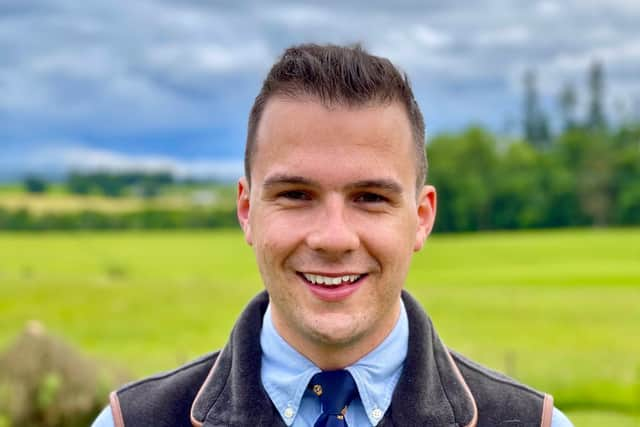
“Ministers must now urgently remove this section of the Bill. To proceed would be to introduce legislation that their own officials say will waste public money and effort, while exposing the Government to entirely avoidable legal challenges.”
Tom Turnbull, Chair of the Association for Deer Management Groups (ADMG), said: “Taking a one-size-fits-all approach to habitat damage and only focusing on deer risks targets being missed.
“Deer numbers will need to be considered in some circumstances along with a wide range of other factors. Whilst we are not opposed to regulation where needed, we have had no clarity on how this new trigger for intervention will be used, and its subjective nature could risk jobs and livelihoods in the deer sector.”
Agriculture Minister Jim Fairlie said: "Our priority is working in partnership to achieve our climate and biodiversity aims, in a way that works in partnership with our rural land managers and communities. We can only make progress by working with rural land managers and communities whose knowledge and understanding of our natural environment will help us shape this legislation.
“The Natural Environment Bill is about restoring nature and meeting climate targets and the new powers for NatureScot will only be used as a backstop where voluntary action fails.
“These new powers will be applied proportionately, based on evidence, with clear safeguards and rights of appeal. Where conflicts do exist, we will work as we do now to find solutions that work for everyone.
“We want to see a flourishing rural economy with more jobs. Rural people, from gamekeepers to land managers and farmers, are central to the aims of this bill - this is about supporting them to take action.”
Comments
Want to join the conversation? Please or to comment on this article.