
Veteran deer stalker warns of 'empty glens' as deer cull set to reach 50,000 a year
The Scottish Government wants to increase deer cull to meet ambitious biodiversity targets.


One of Scotland’s leading voices on red deer has urged the next government not to “wreck” deer-related employment as he steps down from Scotland’s leading gamekeeping body.
Peter Fraser, former vice chairman of the Scottish Gamekeepers Association (SGA), warned the ever increasing cull target for deer to meet biodiversity targets could impact rural communities and lead to “empty glens.” The SGA said deer management in Scotland currently sustains around 2,500 jobs.
It has been estimated an annual increase of 25 per cent in the national cull, or 50,000 deer, is needed over several years if ambitious Scottish Government biodiversity targets are to be met.

While the number of deer in Scotland is unknown, NatureScot estimates that there are around 1 million of the animals, a population that has roughly doubled since 1990.
Red and roe deer are recognised as an important part Scotland’s biodiversity. However, in high numbers, along with increasing numbers of the invasive Sika deer, conservationists argue the mammals’ trampling the nibbling of plants, including young trees, has a negative impact on habitats, particularly woodlands.
NatureScot said most of deer management in Scotland, around 80 per cent, is carried out by private landowners and individuals at their own expense. Deer stalking has taken place for centuries, with the 19th century seeing a massive growth in the popularity of stalking as a sport for shooting tenants and landowners. The activity continues to be of cultural and economic importance to rural communities in Scotland.
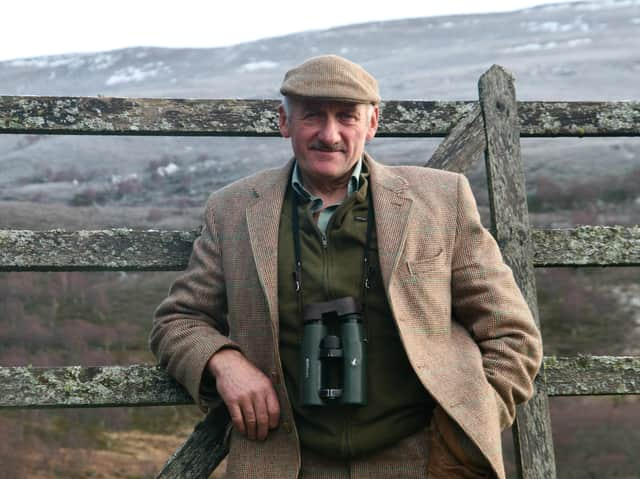
Mr Fraser, who spent 43 years at Invercauld Estate in Royal Deeside, said culling “too deep too fast”, could push sporting estates, which typically host deer stalking, to the brink.
“We are in real danger of wrecking a lot of estates’ business models now because of the pace of the culls and the continuous demand for more,” he said.
“If you look at the Cairngorms National Park, for example, they are wanting to reduce deer densities to a very, very low level in some places but they also want less sheep on the hills and cattle, too, because they want to look at impacts of all herbivores on the environment.
“For a lot of estates, that is the entire business model - or a large part of it - so I can’t see how that won’t have impacts on jobs. During the pandemic I walked the whole of one of the Invercauld beats on a clear mid-summer day. Twenty five Stags a year and 40 hinds used to be culled from that beat. There were two stags and one hind on it. That’s all I could see.”
The Cairngorms National Park Authority (CNPA) advocates active deer management citing biodiversity improvement and aims to reduce red deer densities to 5 to 8 per kilometre squared by 2030.
Mr Fraser added: “Some people might think that’s great, but what people don’t realise is the amount of private investment that goes into deer management. If we lose that, the onus for deer management will just revert to the squeezed taxpayer, so there needs to be common sense and a balance.”
In documents obtained by investigative publication The Ferret, it was revealed that the taxpayer has paid nearly £135m on deer management in the last decade. This includes culling, fencing and equipment.
The SGA claims private investment from estates in deer management dwarfs that figure.
Meanwhile, initiatives to bring venison more into the food chain have been gathering momentum across Scotland. Loch Lomond and the Trossachs National Park Authority is looking into its own brand of venison while investing in community-based deer processing facilities intended to strengthen local food supply chains and create new markets for wild venison.
Comments
Want to join the conversation? Please or to comment on this article.