
'Traffic light' system helps young salmon as businesses learn to share river water

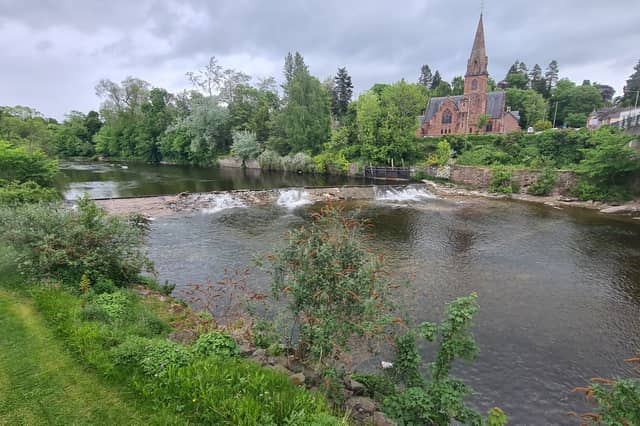

With salmon officially classified as an endangered species, businesses have been cooperating to protect the young fish as they migrate downstream
For years, the arrival of dry spring weather on the River Ericht led to a regular and distressing sight.
Young salmon, known as smolts, unable to find enough water to make their way downstream, would gather at two Victorian mill weirs where they become easily trapped in shallow pools and therefore exposed as easy prey for otters and fish-eating birds.
A lack of rain, however, has not been the only problem for the fish. Water taken from the river by local businesses operating under legitimate abstraction licences can leave even less for the young fish attempting one of the most important journeys of their lives.
But a new initiative that asks businesses to change when they use water has started to show promising results.
A traffic light system introduced by the Tay Rivers Trust has now completed its second consecutive year without observed smolt mortality at the weirs located in Blairgowrie. The Trust said the results are particularly striking given that the past two springs have been among the driest in recent decades.
The system works by letting businesses know when conditions are good or bad for salmon, which are an endangered species, so that they can control when and how much water they are extracting to help the fish.
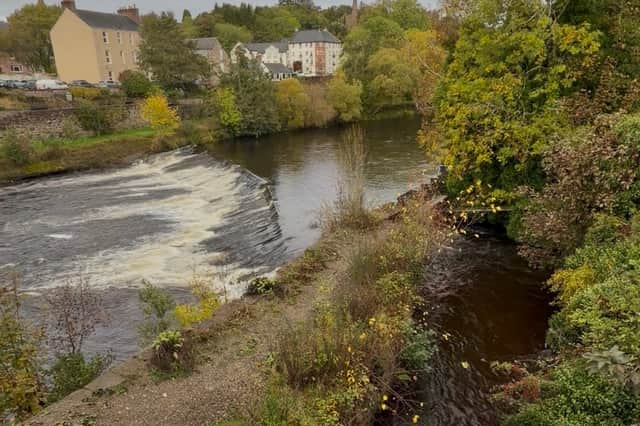
The system was developed after researchers examined 15 years of river-flow data to understand when migrating smolts were most at risk. During red-light periods, the Trust contacts businesses holding abstraction licences from the Scottish Environment Protection Agency (SEPA), asking them to voluntarily reduce their water consumption.
Their cooperation can leave up to 25 per cent more water in the river during critical periods, helping salmon negotiate the weirs.
If that is still insufficient, gates to an adjoining mill lade – an artificial channel originally built to supply water to mills – can be opened, creating an alternative route around the barriers before the fish rejoin the river further downstream.
Amber-light periods let businesses know the water level is being monitored and action could be taken, while green-light periods is business as usual.
Jerry Saunders, of the Trust, said that the success of the project has been the result of research, persistence and a willingness among different interests to compromise.

“When we went into the project four years ago, I didn’t think it would be a traffic light system,” he said.
“Our first year was about doing the research and working out how smolts react in these difficult situations. It was all part of developing the project, but it is something we are very proud of. We’ve just experienced arguably the two driest springs in 60 years and there has been no smolt mortality observed.
“As part of the community buy-in, local people act as river watchers during the critical red light periods and they report that predation is far lower than they’ve seen in earlier years, so the system has been proven to be highly successful.”
One of those supporting the scheme is local farmer Peter Thomson, who operates a hydroelectricity scheme. For the past two years, he has voluntarily taken less water than his licence permits during red-light periods.
“At these relatively low flows, it makes sense for the water to go down the river so that the salmon can continue on,” he said.
“If we can work with the salmon interests and make sure there is always enough water for the salmon, but that we get the surplus in higher flows, then it can work well together.”
The River Ericht is an important spawning and nursery ground within the wider River Tay catchment, which covers about 10 per cent of Scotland's land mass.
Supported by Crown Estate Scotland and the Scottish Government, alongside local businesses, Perth and Kinross Council and other partners, the project is now informing further conservation work across the Ericht catchment.
Comments
Want to join the conversation? Please or to comment on this article.