
The 'poor' state of the Scottish Highlands and islands revealed - how residents are being failed

‘Too many people in Highland and Islands are hungry, homeless, without access to healthcare, and the basics for everyday life’ - chairwoman of the Scottish Human Rights Commission professor Angela O’Hagan
The Scottish Human Rights Commission (SHRC) has stepped in over a deep concern for access to basic needs for people living in the Highlands and Islands.
There is an apparent failure to meet the minimum international obligations related to the right to health, the right to housing and the right to food, according to a new report by the SHRC.
The report said food affordability was “a critical issue” in the Highlands and Islands, “with many people relying on food support initiatives due to high costs”.

For those in more remote areas, physical access to food is “a significant challenge”, authors said. Housing in the regions also failed to meet the minimum core obligations, which include access to basic shelter.
The report said there are “high levels of homelessness” and “a significant number” of people are living in conditions of “rooflessness”, which is with no access to temporary accommodation or shelter. This includes individuals in temporary caravans, camping pods and those “sofa-surfing”. There are also concerns about the ability of most people to heat their homes exacerbated by high energy costs.
The state of the health service in these regions was also poor, with the report highlighting “significant concerns raised about access to sexual and reproductive health services”.
One human rights defender quoted in the report spotlighted the risks endured by pregnant women having to travel long distances for care, saying: “Women suffering pregnancy loss driving themselves to Raigmore [Hospital in Inverness], not well equipped to support women in these situations – cases of individuals giving birth in cupboards in the hospital, some with no recollection of getting home, obviously deeply emotional and in pain – 120-mile journey with no support, risk to safety.”
The report said there were “critical concerns” about the lack of physical and financial accessibility for many services across the Highlands and Islands, and about the insufficient availability of services related to GPs, sexual and reproductive health, dentistry, mental health, and drug and alcohol support services.

It noted there were no systems in place to deal with patients travelling long distances for appointments, or if there was transport disruption such as ferry cancellations, which could be a regular occurrence for islanders.
On education, the report found general deterioration in all aspects of the adequacy of the right to education.
The SHRC visited 20 communities across the region, including in Orkney, Caithness, Lochaber and Badenoch, Na h-Eileanan an Iar and Argyll and Bute, interviewing a total of 146 people.
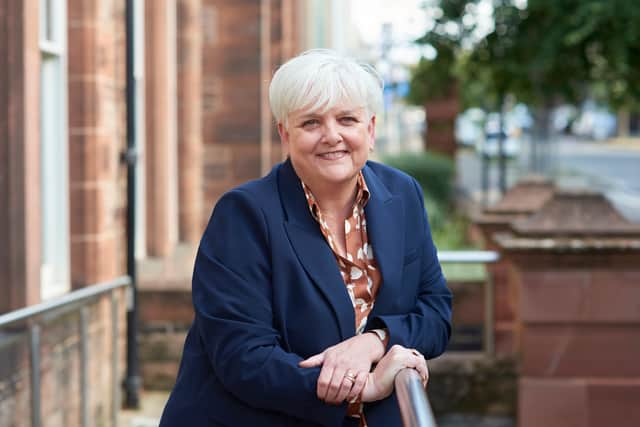
Professor Angela O’Hagan, chairwoman of the SHRC, said: “The commission is very concerned about the poor state of economic, social and cultural rights in the Highlands and Islands.
“Too many people in Highland and Islands are hungry, homeless, without access to healthcare, and the basics for everyday life. With this work, we are piloting a new way of monitoring, one that brings the commission closer to communities and enhances their voices and struggles.
“While we continue to develop this way of working, we expect that all duty bearers will reflect carefully on the evidence found in this report, and the action now required from them to meet their human rights obligations.”
A Scottish Government spokesperson said: “We believe that no one should have to compromise on food or other essentials and have published a plan, grounded in human rights, to tackle this. We are taking forward nine actions to improve access to food, using a cash-first approach so that fewer people need to turn to food parcels.”
The spokesperson said from April 2016 to March 2023, ministers supported the delivery of more than 10,000 affordable homes across rural Scotland, and were committed to deliver 110,000 affordable homes, of which at least 70% will be for social rent and 10% in rural and island communities.
They added: “We have established a National Centre for Remote and Rural Health and Care to support health and social care providers to establish long-term sustainable healthcare in rural and island areas. The aim of the Centre is to help reduce remote, rural and island health and wellbeing inequalities through focused work on improving sustainability, capacity and capability of remote, rural and island primary care and community-based workforce and service delivery.”
An NHS Highland spokesperson pointed to a 2016 review of health services which recommended the current model of maternity services in Caithness.
They added: “We are currently looking at developing some specialist nursing roles for Caithness to add resilience to the service, and running an endometriosis trial which will look at the care pathway for these patients. These are just some of the service developments that we are working with and in discussion with the North Highland Women's Wellbeing Hub group. We appreciate them bringing ideas, concerns and suggestions forward and as a team we work to achieve improvement.”
Comments
Want to join the conversation? Please or to comment on this article.