
Scottish farmer questions suitability of 'ancient cattle' introduction after visiting the breed abroad

Farmers have said an extensive list of native breeds in Scotland could do the same job.
The Scottish farming community has challenged a charity’s plan to introduce a wild ancestor of domestic cattle to the Highlands, including one farmer who travelled abroad to inspect the breed himself. Rewilding charity Trees for Life announced last week that it aims to introduce a herd of up to 15 tauros from the Netherlands to its 4,000-hectare Dundreggan estate near Loch Ness in 2026.
Tauros are cattle that have been bred to be as similar as possible to the ancient aurochs - a mega-herbivore that for a millennia played a vital role in shaping landscapes across Europe, including Scotland. They are believed to have been extinct since approximately 1627.


The move is part of the ‘Tauros Project’, that was established in 2013 by Rewilding Europe, in collaboration with the Dutch Tauros Foundation.
Buy our new annual subscription package & enjoy our award-winning journalism plus everything The New York Times has to offer, including The Athletic, Games and more. Subscribe here.
Some farmers claim the move is unnecessary given an “extensive” list of native breeds in Scotland that can perform the same objectives within the ecosystem.
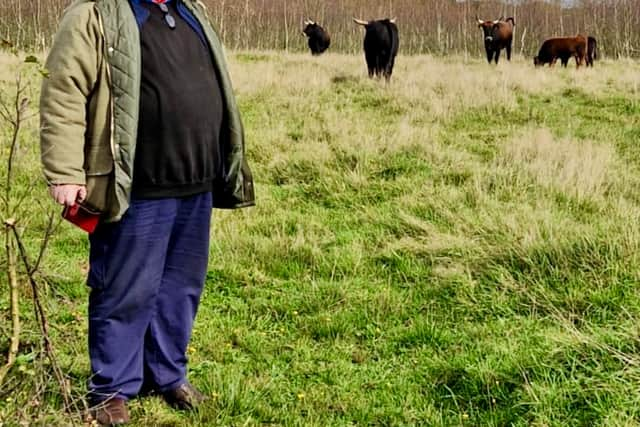
One of those critical of the project was Ruaridh Ormiston, who farms in the Cairngorms, and who travelled to two reserves in the Netherlands on the weekend, Keent and Masshorst, to inspect the tauros.
“I do not think they are that different to our own native cattle or particularly wild to favour their use over our own native breeds,” he said.
“In fact, looking at photos at the tauros visitor centre, it looks like there is already a lot of Highland Cattle genetics in them.”
He questioned whether tauros would resist certain parasites and diseases, including some tick-borne diseases found in the Highlands, which he said some native breeds have adapted to over generations.
And being a bovine species in the UK, the farmer said the herd of tauros would have to be “tagged and tested like all other cattle and that would not be easy if the breed is truly wild without very experienced handlers and handling facilities.”
Mr Ormiston said tauros in the Netherlands were grazing at sea level on what farmers in the Highlands would class as “very good meadow land with very good grass.”
“This would not be the case on places like Dundreggan or Affric or Corrour where the ground is much poorer with much less grassland,” he said.
“Any trial would need to be very small to avoid winter deaths.”
In response, Richard Bunting, a spokesperson for Trees for Life, said: “Tauros are well-suited to outdoor living, and live in similar conditions in Croatia, for example, to those they will find in the Highlands.
“This project is significant because tauros are different from other cattle, having been bred to be as genetically, physically and behaviourally similar as possible to the aurochs – a species native to Scotland which played a vital role in shaping landscapes and boosting biodiversity – and to survive in the wild.
"Being larger and more active than native breeds like Highland cattle or Galloways, they are likely to have a greater impact on vegetation and bring a wealth of biodiversity benefits to the Highlands, including by scything down long grass, and by depositing their dung and dispersing seeds across wide areas. Another dramatic ecological game-changer is tauros’s creation of ‘bullpits’ – bowls in the earth carved out by rutting bulls using their horns and hooves – which support insects, mammals and birds, and allow pioneer plant species to establish."
Comments
Want to join the conversation? Please or to comment on this article.