
Scottish estate home to 'one of Europe’s last remaining wildlands' tops the rest for conservation
Landowner the Duke of Westminster ‘incredibly proud of the team’

A 96,000-acre Highland estate owned by one of Britain’s wealthiest aristocrats has been hailed by Scottish ministers as a model for Scotland’s environmental ambitions, offering what one described as “hope” in the drive to halt biodiversity loss and reach net zero.
Grosvenor’s Reay Forest Estate in Sutherland — part of the vast landholdings of Hugh Grosvenor, the 7th Duke of Westminster — became the first estate in the UK to receive gold accreditation from Wildlife Estates, a European conservation network. It also secured the highest overall score ever awarded within the organisation’s international portfolio, achieving a rating of 91.75 per cent.


The accolade places the north-west Highland estate at the forefront of private land management in Europe. Scotland now ranks second only to Spain in the league table of Wildlife Estates-accredited land.
The Duke of Westminster, who inherited the Grosvenor empire in 2016 on the death of his father, Gerald, becoming one of Britain’s youngest billionaires, said he was “incredibly proud of the team at Reay Forest”. The recognition, he said, reflected sustained investment “over many years to protect and enhance this special place”.

Scotland has a legally binding target to reach net zero greenhouse gas emissions by 2045, five years earlier than the rest of the UK.
Since 1990, emissions have fallen by around 51 per cent faster than the EU average, according to official figures. But ministers say more action is needed to stay on track. Some of the country’s targets include increasing woodland cover from around 19 per cent of land to 21 per cent. Last year, ministers committed to £250 million over 10 years to restore 250,000 hectares of degraded peatlands by 2030.
Speaking at an event this week to honour Reay Forest Estate’s award, which was attended by MSPs and conservation leaders, Gillian Martin, the cabinet secretary for climate action and energy, said: “I would like to congratulate Reay Forest Estate for achieving the first-ever Wildlife Estates Gold accreditation.

“It’s a huge achievement that sets a high bar, showing exactly what can happen when land managers combine productive land use with a real commitment to looking after nature.”
Addressing the estate’s employees directly, she added: “The jobs you are supporting, the education you are supporting, the rural communities that you are supporting — it’s a great example of how caring for the environment is a net gain for everyone.
“Thank you, from the bottom of my heart, for making my job that little bit easier and giving me hope that practices like this exist, that we can get where we need to be in terms of steadying biodiversity loss, reducing our emissions and reaching Net Zero.”


The duke told The Scotsman: “I’m grateful to the Cabinet Secretary for her kind words and support for what we are doing at Reay Forest. The award reflects the investment we’ve made over many years to protect and enhance this special place, from restoring the River Laxford to understanding the estate’s natural capital in greater depth.
“We’re seeing real results, not just for nature but for the local community and rural economy too. It's vital we protect these rare and rural landscapes, keeping them in their natural state while helping them thrive for the future."
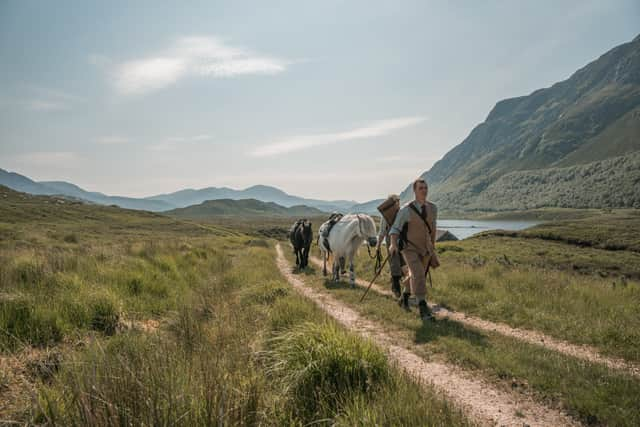
Reay Forest Estate hosts traditional country sports, including stalking and salmon and trout fishing, which sit alongside conservation management. It is home to Ben Stack, the peaks around Arkle and Foinaven and six Sites of Special Scientific Interest, areas designated by NatureScot as among the most important for Scotland’s natural heritage.
In recent years, the estate said it has invested heavily in science-led land management. Teams have undertaken airborne laser surveys to produce 3D models of the terrain accurate to within five centimetres, carried out soil organic carbon sampling to assess the land’s capacity to store carbon and water, and launched pilot studies into the use of environmental DNA in soils as an early indicator of biodiversity and soil health.

In partnership with the Atlantic Salmon Trust, Reay Forest is delivering one of the most extensive landscape-scale river restoration projects in the UK. The initiative aims to restore 118 square kilometres of habitat — an area roughly the size of Manchester — and plant up to one million trees in an effort to reverse the decline of the endangered wild Atlantic salmon.
Deer management, long a contentious issue in the Highlands, is also conducted under what the estate describes as a science-led framework. Population counts and habitat impact assessments are used to determine sustainable densities.
The parliamentary event brought together estate representatives including Ben Mardall, Reay Forest Estate’s estate manager; David Allison, head stalker; and Jo Holden, head of sustainability at Grosvenor Rural Estates.
They were joined by MSPs from across the political spectrum, including Alexander Burnett, Finlay Carson, Tim Eagle, Ariane Burgess, Edward Mountain, Emma Roddick, Graeme Dey, Emma Harper and the minister for agriculture Jim Fairlie, as well as representatives of the Scottish Government, NatureScot, the Atlantic Salmon Trust, RSPB Scotland, the Game and Wildlife Conservation Trust and Scottish Land & Estates (SLE).
Mr Mardall, who gave a talk at the event, said: “Everything we do at Reay Forest centres on our commitment to delivering a lasting economic, social and environmental benefit in our communities and safeguarding the estate’s sensitive environmental habitats.
“Wildlife Estates offers the right framework to evaluate and record strategies which have worked well and enables us to cooperate and share best practice with other land managers and conservation organisations. Everyone at Grosvenor is absolutely delighted to have secured this international recognition.”
Miles Montgomerie, chairman of Wildlife Estates Scotland, said accredited landholdings were increasingly viewed as trusted partners by government and regulators.
“I’m incredibly impressed by the exceptional work undertaken by Reay Forest as part of the Wildlife Estates family and I congratulate them on their achievement,” he said.
Wildlife Estates, launched in 2005 by the European Landowners Organisation, now encompasses more than 580 estates across 19 European countries, managing over two million hectares. The scheme seeks to recognise private landholdings that balance commercial activity — including farming, forestry and tourism — with high standards of habitat protection and biodiversity conservation.
In Scotland, the national branch, Wildlife Estates Scotland, is administered by SLE and is open to any size and type of landholding, farm, or estate.
As a billionaire landowner, the duke is one of Britain’s wealthiest people, managing a global property portfolio through the Grosvenor Group. According to the Sunday Times Rich List 2025, the duke and Grosvenor family were ranked 14th in the UK.
Comments
Want to join the conversation? Please or to comment on this article.