
Scale of tax changes to farmers 'not seen before' will cause 'seismic' change in farming community

The Chancellor claims three quarters of farms will not be impacted by the tax changes, but the move has been met with widespread opposition from the farming community and politicians
Scottish farmers have demanded the Labour government amend its change to inheritance tax, claiming it will have an “immense mental and financial impact” on food producers.
Rural consultants said the changes announced in Chancellor Rachel Reeves’ budget are exposing agricultural businesses to tax “in a way that we haven’t seen before”.


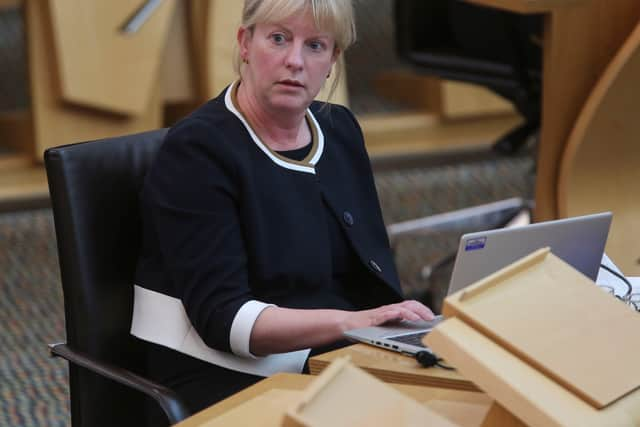
Shona Robison, the Scottish Government’s Finance Secretary, said while taxes are reserved to the UK government, “the alarm that has been expressed by farmers about the chilling impact of this on farming communities is a serious concern”.
Meanwhile politicians across the UK have said the move shows how “out of touch” the Labour government is with farming.
Under the current tax rules, families can inherit farmland assets of any value without paying inheritance tax thanks to the Agriculture Property Relief (APR). But from April 2026, only assets up to £1m will be tax-free, with assets above this threshold qualifying for 50 per cent tax relief, resulting in an effective 20 per cent tax charge.
Ms Reeves said the government is closing a loophole for the "wealthiest landowners", bringing their tax burden more in line with middle class homeowners.
The Chancellor said some 73 per cent of agricultural property in the UK will not be affected by the tax changes.

“They will pay no more inheritance tax,” she said. “So, this does protect smaller farms.
“Twenty-seven per cent will be affected, but with a discount on inheritance tax of 20 per cent compared to 40 per cent that others pay.”
However, the National Farmers Union Scotland (NFUS) said the move will have a “seismic impact” on the farming community, and will be devastating “to the vast majority of farms and crofts”.
Jonnie Hall, director of policy at NFUS, said: “This is something we will demand the UK government to review and amend as the pressures both financially and mentally this will put on family farming businesses will be immense.
“The shear lack of understanding of how agriculture works throughout the UK has been highlighted by this government which has clearly gone back on its word.”
Andrew Coalter, an agriculture consultant with Scotland’s Rural College (SRUC), said scrapping APR for agriculture property over £1m will have a significant impact on farms given many are “significantly” above that threshold.

“The key problem we’re seeing here is you are not able to buy much of a farm for £1m at this stage,” he said.
“For a lot of agricultural businesses in Scotland, their total asset value will be significantly above £1m.
“So what this means is we are now exposed to inheritance tax in a way that we haven’t been before.
“And for larger agriculture businesses, this could result in a very significant tax bill which potentially has the impact to question the viability of those businesses in the long term in terms of succession planning.”
Mr Coalter said geography plays a huge part in how viable an agriculture business is and therefore the value of it.
“Some of these farms are very large farms and are just blessed with their geography and are in good farming areas,” he said.
“But in some areas to get to £1m in value does not necessarily mean that the farm is a viable business. It may need to be larger than that to make it viable.”
Mr Coalter said while the tax changes are aimed at businesses, it will impact working people.
“We do have unintended consequences here,” he said.
“If you have a farm with a value of £3m, this could result in an inheritance tax of £400,000 and that starts the question of the viability of the business.
“The increases that we’re seeing are significant, particularly with the NLW figures.
“The cost you’re taking on by employing an individual has gone up by about 10 per cent. It goes up by about £2,000 to £3,000 a year. And that’s a combination of increase in gross pay through the NLW, and the increase in employers NIC contributions. If that’s extrapolated across an entire business, that starts to become really expensive.”
Mr Coalter said this could heavily impact agriculture businesses that employ low-paid and low-skill seasonal workers, including soft fruit pickers.
Earlier this year, one of Perthshire's best-known berry growers quit production at its Dunning farm citing a hike in labour costs following the NLW increase in April. The Corrigall family, who run Leadketty Farm, said rising production costs and lack of support from supermarkets forced them to make the "heartbreaking" decision to shut up shop.
Jack Ward, chief executive of the British Growers Association, said at the time while the labour force is essential to the food supply, and that they are paid a living wage, there has been little thought given to how much it costs for the producers to make food.
Scottish farmers also insisted the latest £3.4bn rise to Scotland’s Barnett Formula share means “no more excuses” from the SNP for the outstanding £46 million of uncommitted funds from previous Scottish Government budgets.
The Labour budget redefined agricultural funding for the devolved nations, consolidating it within each region’s broader block grant rather than maintaining separate, ring-fenced allocations.
NFUS’s Mr Hall said: “Effectively, the UK government has said to the devolved administrations, ‘we’ll give you your block grant, but it’s up to you as to how you spend it across all of your devolved responsibilities’.”
This shift leaves agricultural support to compete with other regional priorities such as health and education, potentially impacting long-term funding and stability for farming in the devolved nations.
Former secretary of state for Scotland Alistair Carmichael said: “As well as cutting into the network of local family-owned farms, and tenant farmers, this tax change alone will be a blow to many small businesses that depend on their trade.
“Our rural communities are vibrant but they are also vulnerable. What may appear to be an issue affecting just the occasional farm-owner risks hollowing out communities in a short span of time.”
The MP for Orkney and Shetland said by removing the ringfenced cash, the UK government is giving “a carte blanche to the SNP to pilfer agricultural funds to pay for pet projects elsewhere”.
Farmer and MSP for Highlands and Islands Edward Mountain said: “Rachel Reeves’ tax and spend budget has, with a stroke of the pen, hastened the end of many small family farms. Their loss will not only remove food from our plates but also have huge implications on the rural economy.”
In response to the budget changes, Ms Robison said: “It is disappointing that this settlement will penalise Scottish farming and fishing industries by failing to reverse the real terms cuts of previous years, nor providing the multi-year certainty they require and which was lost with Brexit.”
She said Labour’s “short-term settlement” has been imposed contrary to the recommendation of collective engagement when agreeing to future intra-UK allocations mentioned in the Bew Review - an independent review of how domestic farm support funding was allocated across the UK.
Ms Robison added: “The UK government must now set out how and when this meaningful engagement will take place in order to inform the UK Spending Review process.”
Comments
Want to join the conversation? Please or to comment on this article.