
Rural villages in ‘imminent danger’ of wildfire spread as experts look to evacuation training
Calls have been made for more funding to support wildfire prevention and response - action that relies purely on volunteers.

Villages in rural Scotland are in “imminent danger” from increasingly intense wildfires, land managers and fire experts have warned, as the country faces what one described as a “perfect storm” of climate change, land-use shifts and human behaviour.
The warning came during a meeting of Holyrood’s rural affairs committee this week, where representatives from estates, the Cairngorms National Park Authority (CNPA), the Scottish Fire and Rescue Service (SFRS), the James Hutton Institute (JHI) and the University of Edinburgh gave evidence on the growing wildfire threat and how risks might be reduced.
Scotland experienced what experts described as the worst wildfire episode in its history last year. Flames swept across Dava Moor in Moray and an estate near Carrbridge in the Highlands. The fires were devastating for wildlife and, according to keepers on the ground, came perilously close to homes in Grantown-on-Spey.


In Galloway, residents of the village of Glentrool were evacuated when a wildfire spread across surrounding hills in April.
Calum Kippen of Bright Spark, a specialist firm offering muirburn and wildfire management training, told MSPs: “There are villages within the Highlands that are in imminent danger from wildfires.
“The Carrbridge fire could easily have ended up in Grantown-on-Spey. But the other thing we have to consider with these large-scale wildfires is public health from smoke. It’s something we don’t address. It’s not just about flames.”
He said that some Highland communities had begun training local resilience groups to protect infrastructure until emergency services arrive. “People are taking it upon themselves to do some good work,” he said.

Jon Henderson, assistant chief officer and director of prevention at the SFRS, echoed concerns about the growing threat to residential areas.
“It is absolutely foreseeable that wildfires will start to interact with communities more than at present,” he said.
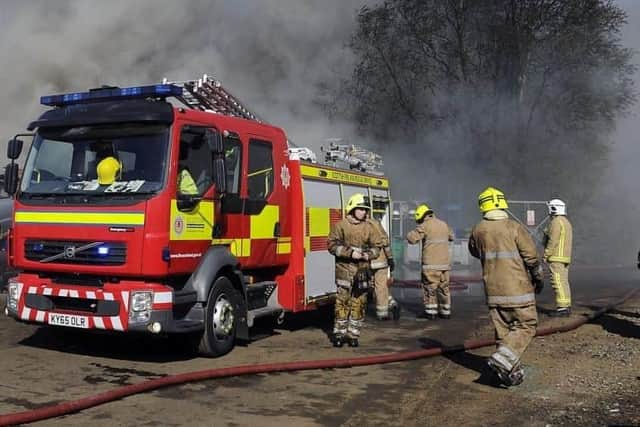
He told the committee that the SFRS is developing “multidisciplinary teams” that can be deployed to major incidents and is training for a test response in the event that a village evacuation is required.
MSPs heard that current wildfire response efforts in Scotland rely on volunteers. Stakeholders at the meeting called for more structured funding not only to tackle fires but to prevent them.
Michael Bruce, director of Firebreak Services, urged financial backing for the Scottish Wildfire Forum, an informal collective of public and private stakeholders focused on wildfire risk and mitigation.
“The SWF is a voluntary association that combines public and private sectors and everybody who participates in it is doing it on top of their day job,” he said.
“There are no real resources behind the SWF and it desperately needs them.”
Mr Bruce, who runs the family-run estate Glen Tanar, said funding for wildfire risk should be added to farming and forestry grants to encourage land managers to carry out fire prevention management, such as heavy grazing around settlements.
Grant Moir, chief executive of the CNPA, said tackling wildfires would be impossible without the level of voluntary support.
“There is a reliance on voluntary help to make this happen,” he said, pointing to estates, farmers and others who assist the SFRS on the ground.

“Without that level of resource alongside the SFRS, we would not be able to deal with the wildfires we have.”
More than 100 staff from at least 33 rural businesses and 27 estates assisted the SFRS during the Carrbridge and Dava Moor fires last June, which burned almost 11,827 hectares. Estate workers deployed equipment valued at £3.1 million, including more than 110 all-terrain vehicles, fogging units and diggers.
While large-scale wildfires are not new, experts told the committee that their scale and intensity appear to be increasing.
The precise cause of individual incidents is often difficult to determine, yet fire officers and land managers agree that most are started by people.
CNPA analysis of SFRS data collected in the Cairngorms National Park from 2010 to 2023 found that 13 per cent of primary fires were linked to campfires, 19 per cent to intentional burns and 4 per cent to bonfires. Mr Moir, however, said that there was “a lot of noise” in the statistics because pinpointing ignition sources “is not always straightforward”.
Dr Mike Rivington, a senior scientist at the JHI, cited rising visitor numbers as another pressure when it comes to wildfires. So-called “cool tourism” — as travellers avoid hotter parts of southern Europe — has increased footfall in remote areas. While economically welcome, he said, it may also raise ignition risks where visitors lack awareness of fire danger or the Scottish Outdoor Access Code. Rangers have also reported increasing incidents of antisocial behaviour and fire damage.
Yet experts stressed that ignition is only part of the problem. The committee heard that greater attention must be paid to land management and to why fires spread as far and as intensely as they do.
Professor Robin Pakeman, an ecologist and senior scientist at the JHI, said the key issue was not necessarily more ignitions but “the chance of it actually spreading and building the heat within the fire to make the impact worse”.
Longer-term climate trends show increasing variability, he said, with wetter years encouraging vegetation growth followed by drier spells that leave abundant fuel ready to burn.
“You can never say it’s climate change from the behaviour of one year,” he said.
“But the risks are building.”

Professor Pakeman added that changes in upland management — including fewer livestock grazing hillsides and shifts in deer control — may also influence fuel loads.
He suggested a guiding question for land managers: “If the fire started here, where could we stop it?”
Strategic fuel breaks, targeted grazing near settlements and modest adjustments to vegetation management were among the measures proposed to limit long-distance spread.
Mr Kippen, who is also a member of the Scottish Gamekeepers Association, described the current situation as a “perfect storm”: several wet years building vegetation, followed by a dry spring, combined with human ignition sources.
“This means the fires become of a greater ferocity and a greater scale,” he warned.
Scotland has two main wildfire seasons, driven largely by vegetation type and weather patterns. The primary season is considered to run from early spring in March until May. The secondary season is usually from July until September.
Spring is generally considered the more risky time because vegetation, particularly dead vegetation, is in abundance and therefore a huge risk when it dries out in dry weather.
Comments
Want to join the conversation? Please or to comment on this article.