
Royal Highland Show 'a wee light' in challenging times as public urged to support farmers


‘Bring a car load of people to the show and have two coffees, two pints, two pies and buy a tractor.’
As farmers grapple with uncertainty over the onset of the so-called “family farm tax”, alongside rising fuel and fertiliser costs, there remains a stubborn optimism at the heart of Scotland’s rural calendar.
The Royal Highland Show, the country’s largest outdoor event, has been described as a “wee light” in what has become an increasingly fragile period for those working the land.
Those were the words of James Logan, chairman of the Royal Highland and Agricultural Society of Scotland (RHASS), the charity behind the annual event, which draws more than 800 exhibitors, 2,000 livestock competitors and upwards of 200,000 visitors to Ingliston each year.
“It’s the best show in the world,” he said. “I am biased, I know, but it’s definitely the best show in the country.”

Mr Logan’s comments come as a new inheritance tax regime for farms and family businesses came into force this week, a change that legal experts say marks one of the most significant shifts in agricultural taxation for a generation.
The policy arrives at a time when input costs have surged amid geopolitical instability, with conflict affecting global trade and driving up the price of fuel and fertiliser. Farmers are also braced for the likely arrival of bluetongue, a devastating livestock virus that has already spread across the rest of the UK.
Against this backdrop, Mr Logan said the show plays an important role in supporting wellbeing in the sector.
“Farming is a challenging job,” he said.
“The show is a chance for people to come together and have those softer conversations. After a couple of coffees or a couple of beers, it’s easier to sit down and say: ‘This is hard work, is it not?’
“We don’t measure that side of it, but it has a big part to play.
A potato and arable farmer himself, Mr Logan said the disruption to any sense of continuity, something famers rely on, has been detrimental to the sector.
“Inheritance tax bought in just like that, war producing huge change in fuel and fertiliser prices instantly and imports coming in from Europe now, it’s these changes made halfway through a season and that’s really difficult and really tricky to manage,” he said.
“It can be devastating for some.
“The Royal Highland Show is that wee light that people can come to, enjoy themselves and find confidence that others are supporting each other.”

Yet the event, Mr Logan insists, is not just about farming. Organisers have increasingly sought to balance the needs of core agricultural audiences with a broader, more urban crowd.
The summer event makes a conscious effort to demystify agriculture, something that has been helped along by “the Clarkson effect”, he said. The broadcaster Jeremy Clarkson has been credited with a surge in public interest in farming, an increased demand for local produce, and rising university applications for agricultural courses since his hit Amazon Prime show Clarkson’s Farm.
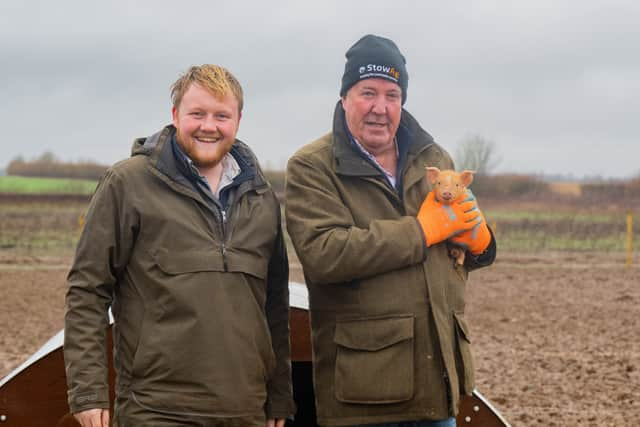
Educating younger generations on where food comes and the opportunities that a career in the agricultural industry can bring is a core aim of RHASS and the annual show.
“Children under 15 can get in for free,” Mr Logan said. “There aren’t many events in the UK that have that anymore and it’s something that’s really important to us that we still offer that.
“Sadly, agriculture is quite low down on the school curriculum of a job to do.
“It’s still very much perceived as a manual labour job in schools, but it’s not. Come to the show and see there's science, there's engineering, there's food production, there's holidays and tourism.”
Earlier this year, Scotland launched a first-of-its-kind Agritourism Investment Scheme (AIS). The £1m fund provides up to 40 per cent funding, capped at £50,000, for farmers and crofters to develop visitor experiences, enhance on-farm retail, and improve infrastructure.
“I don't think people appreciate the depth of the jobs that there are in agriculture,” Mr Logan added.
Ticket sales for this year’s show are on track, with a particular push for Sunday as a “family day”, billed as offering “101 things to do”.
Mr Logan, who steps down as chairman this year, repeated a simple message that he has for those attending: “Bring a car load of people to the show and have two coffees, two pints, two pies and buy a tractor...maybe you don’t have to buy one but you can at least admire one.
“What I mean by that is the way we support the show moving forward is by getting people through the gate.
“That’s how these events survive.”
Tickets for the Royal Highland Show begin at £45.00 per day for adults. Scotland’s Larder, a spread of food and drink stands at the show will include ten new Scottish producers this year. Other highlights of the show include live sheep shearing, musical entertainment and a visit from Scottish athlete Sheli McCoy aka Sabre from the 2024 BBC reboot of Gladiators.
The UK Government’s controversial changes to Agricultural Property Relief (APR) and Business Property Relief (BPR) came into effect from Monday.
Before this week, family farms and estates were able to be passed down through generations without large tax bills. Under the new rules, however, full relief will be capped at £2.5 million per person. Anything above that will only receive 50 per cent relief.
While married couples and civil partners can combine their allowances, many farms will face inheritance tax for the first time in decades. For modern farming businesses, rural experts said the change will be significant given high land prices, costly machinery, livestock and diversified income streams mean many farms are worth far more than the new threshold.
Andrew Linehan, president of the Scottish Agricultural Arbiters and Valuers Association (SAAVA) said as a result, “value now becomes a liability – a reversal of the position that has underpinned growth, consolidation, and efficient land use since the mid-1990s.”
Comments
Want to join the conversation? Please or to comment on this article.