
£20m committed to 'keeping lights on in rural villages' across Scotland

The move is aimed at keeping people rooted in rural Scotland
A total of £20 million has been awarded to support first-time buyers and families to secure affordable homes in Scotland’s rural and island communities, as new funding pledges were also made to farmers.
First Minister John Swinney announced the fresh round of housing funding, to be staggered over four years, at the annual National Farmers Union Scotland (NFUS) AGM on Friday.


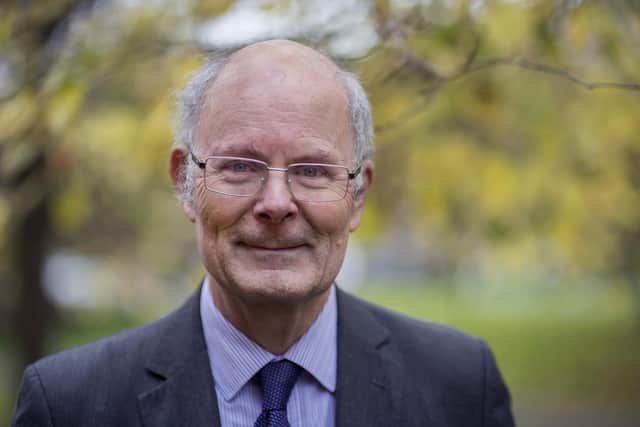
Farmers and agricultural business representatives descended on Glasgow for the gathering, with guests including Professor Sir John Curtice, who offered political insight ahead of the Holyrood election, and the National Farmers’ Union president, Minette Batters.
The SNP leader said tackling rural depopulation remained a key focus for the Scottish Government, adding that the funding was intended to help “keep the lights on” in rural villages and encourage people to stay rooted in their communities.
“We want to ensure that if people want to put their roots down in rural Scotland or move back to where they grew up, they can actually do that,” he said.

Officials said the new Rural and Island Housing Grant Scheme will provide capital grants to help meet the cost of securing a home and support more properties being used as permanent residences, including suitable farm buildings. The scheme will add to the 12,000 affordable homes delivered in rural and island communities between April 2016 and March 2024.
During a question-and-answer session, Dumfries and Galloway-based farmer Dr John Locke asked whether ministers could make changes to what he described as the “adversarial process” of planning to support farmers seeking to self-fund homes on their land for workers.
Mr Swinney said ministers could “try” through planning policy to encourage “a sensible level of development with future planning for future generations”.

The first minister also reassured those in the room of his commitment to stability in agricultural funding, emphasising there would be no abrupt changes or “cliff edges” that could undermine confidence, business planning or long-term investment in farming and crofting.

A new round of £14.2 million was announced for this year’s Future Farming Investment Scheme (FFIS), an initiative set up to encourage farmers and crofters to improve the environmental performance of their land.
The handling of the 2025 FFIS round was widely criticised after many farmers considered to be in “priority groups” for the cash, including young farmers and small organic producers, were turned down. Some 7,500 applications were submitted, yet more than 3,500 were found to be ineligible. David McKay of Soil Association Scotland said that among organic farmers, only two thirds of those who applied were unsuccessful.
However, small producers welcomed the tripling of funding for agri-food diversification and small-scale horticulture, from £500,000 this year to £1.5 million next year. The money is intended to support non-traditional income streams on farms, such as agritourism, direct farm-gate sales and environmental improvements. According to the Farm Advisory Service, more than 58 per cent of Scottish farms have already diversified.
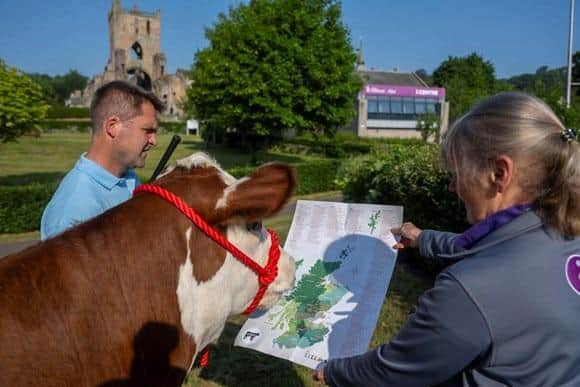
Mr Swinney said ministers were developing more targeted support, particularly for small-scale producers, to ensure that more of the fruit and vegetables consumed in Scotland are grown domestically.
A further £400,000 has been committed to support investment in abattoirs, helping facilitate small-scale private kills. An additional £9 million was committed to Scotland’s food and drink sector, aimed at strengthening domestic processing capacity, supporting supply chain resilience and helping Scottish produce reach the market, was also welcomed by farmers.
The farming event heard Mr Swinney reiterate that any reintroduction of lynx to Scotland will not happen under his government. The issue was addressed at last year’s NFUS AGM, when the first minister ruled out the Scottish Government’s support for the return of the species. The announcement came shortly after four lynx were found illegally dumped in the Highlands in January 2025. It was widely criticised by rewilding groups who argued that if the country was serious about tackling climate change, “we need lynx back”.
At this year’s AGM, the first minister said there needed to be “a balanced and pragmatic approach” to land use and wildlife policy.
He confirmed a £1 million investment in Scotland’s Sea Eagle Management Scheme to support mitigation measures and advice for farmers and crofters in areas affected by lamb predation.
However, Mr Swinney was challenged on the long-awaited National Goose Policy Framework, which farmers noted was due in 2022 but has yet to be finalised. High goose numbers, including migratory and domestic greylag populations, can have a significant impact on croft and farmland, particularly in coastal and island communities.
A farmer from Islay called on the first minister to allocate funding and resources to improve local goose management schemes.
“The local scheme in our area was last costed in 2015,” he said during a question and answer session. “At that point, we had an intervention rate of about 40 per cent, so that meant us farmers were contributing 60 per cent of the damage costs. It’s now about 75 per cent of that damage that we have been funding, which is a bit immoral and unsustainable.”
Mr Swinney said he would treat the issue as a priority “as much as we can”, acknowledging how “damaging” the goose problem can be. Ministers said a National Goose Forum would take place later this month, during which a more detailed plan will be discussed.
NFUS president Andrew Connon welcomed the funding announcements for the farming sector.
“Today’s announcements send a strong signal that the voice of farmers and crofters is being heard,” he said. “Predictability in funding, targeted capital support and a more practical approach to species management are all essential building blocks for a profitable and resilient future for Scottish agriculture. This level of alignment gives our members greater confidence to invest, plan ahead and continue delivering for rural communities and the wider economy, but we continue to ask for direct support to remain in place until 2030 and beyond to consolidate that confidence.”
The announcements come after the Scottish budget committed £660 million to the agriculture sector. Mr Swinney described the fund as “the most generous and substantial package of support anywhere in the UK”. Critics, however, said that in cash terms, the sum is broadly the same as the year before, with leaders in the sector describing it as a real-terms cut — or, at best, a standstill — once inflation and rising costs are taken into account.
Comments
Want to join the conversation? Please or to comment on this article.