
Underwater speakers planned to scare seals from Scottish salmon river

The move comes after other scaring methods, including using jet skis, proved to be ineffective.
An underwater sonar system to deter seals from swimming up rivers to catch fish has secured funding.
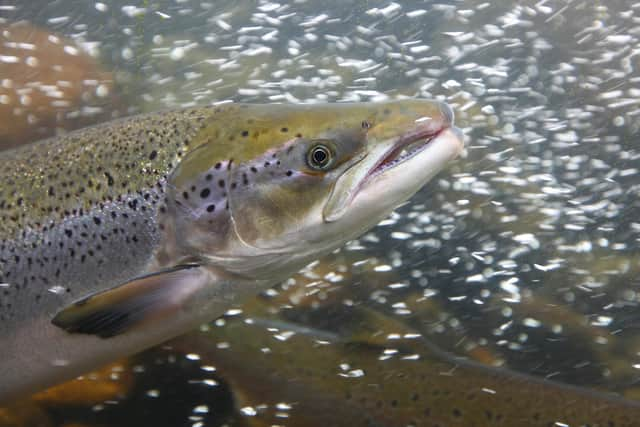
The equipment has been developed in an attempt to reduce predation on the fragile Atlantic salmon population in Scotland.
The idea is that the speakers emit a sound that puts seals off heading further upstream.


In the last decade, ghillies on the River Dee in Aberdeenshire claim the number of grey seals spotted at the lower end of the river have increased, with some found some 15 miles inland.
Previous sound technology used to try scaring the seals relied on the devices being operated manually.

However researchers are now looking to use artificial intelligence to monitor sonar readings and set the speakers off every time the mammals are detected in the river.
The Sea Mammal Research Unit (SMRU) based at the University of St Andrews has just secured £160,000 of funding to test out a prototype device on an 80-mile section of the Dee.
If successful, the devices could be dropped into rivers that are home to critically endangered wild salmon.
The move comes after an initial trial of similar equipment on the smaller River Esk showed promising results.
Atlantic salmon numbers have seen a marked decline in many Scottish rivers over the past four decades.
Rising river temperatures, water quality and human activity at sea, including contamination from fish farms, are said to be some of many contributing factors in the species’ decline.
Anglers and ghillies on the Aberdeenshire river, a location once considered one of the premier worldwide destinations for fly fishing, said the decline on their patch had accelerated in the past five years.
They point to the seals being one of the main reasons as the mammals increase predation pressure on salmon on top of other species including the non-indigenous goosander.
The latest technology development comes after various methods to deter seals, including using jet skis to drag an acoustic device through the river, proved to be ineffective.
Dr Carol Sparling, director of the SMRU, said: “Researchers at SMRU are looking forward to working in partnership with the DDSFB team to further develop the detect and deter system.
“The prototype system has been used in the River North Esk and results so far have been promising. We are hopeful we can now adapt the prototype system to protect salmon from seal predation within larger rivers”.
Lawrence Ross , Chair of the Dee DSFB, said: “We are in a race against time to save our threatened Atlantic salmon as both grey and harbour seals are now coming into the river on a regular basis and eating these fish in significant numbers, therefore they cannot make it back to their up-river spawning grounds and struggle for survival in any meaningful numbers.
“We are pleased to have the expertise of researchers at the SMRU to help us find a solution to seal predation on Dee salmon and the funding from the Marine Scotland Fund to enable them to do this game-changing work”.
Research shows the grey seal population in Scotland is generally increasing, with significant increases seen in the east coast populations.
Meanwhile, harbour seal numbers have experienced steep declines in certain areas, including Orkney and the east coast, leading to complex dynamics between the two species.
Comments
Want to join the conversation? Please or to comment on this article.