
Previously forested peatland restoration a 'success' for river flow and fish in south of Scotland

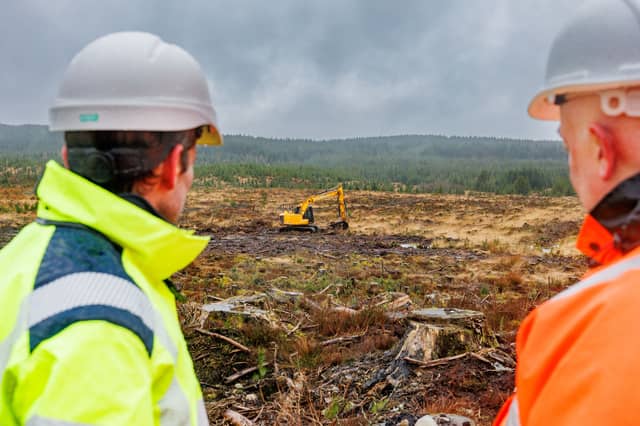

The works have been celebrated as a success for the river.
Anglers from the south of Scotland are celebrating now that previously forested peatland has been restored to help river flow for fish.
Network operator SP Energy Networks (SPEN) has completed peatland restoration around Loch Moan to improve the health of Dumfries and Galloway’s beloved River Cree.
Involving work across an area roughly equivalent to 32 football pitches, the project focused on rewetting the previously forested peatland, so water can flow more naturally into the river, improving water quality, creating stronger conditions for wildlife and supporting healthier fish populations.

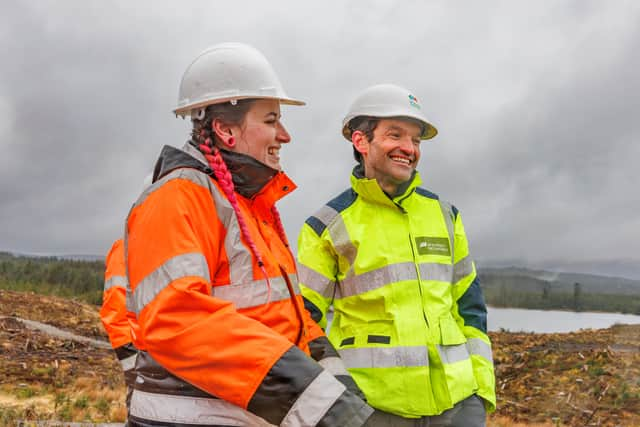
A popular angling destination, the River Cree is famed for its salmon and trout and home to one of only three remaining populations of sparling in Scotland, a rare species that depends on clean, healthy water to survive. Covering a total of 22.5 hectares, the restored peatland is said to play a vital role in strengthening the wider ecosystem in years to come. Black grouse are expected to benefit, alongside reptiles, amphibians and a host of other species that depend on rich, undisturbed natural habitats.
Healthy peatlands store huge amounts of carbon, which can be released into the atmosphere if the peatland is drained or damaged.
SPEN partnered up with Forestry Land Scotland and the Galloway Fisheries Trust to carry out the work as part of its commitment to ‘nature positive’ development.
Kacie Jess, project manager at Galloway Fisheries Trust, said: “The River Cree is a special place, and work like this helps it in the ways that matter: cleaner water running off the land, more stable conditions, and a healthier river for fish and other wildlife.
“It’s great to partner with an organisation that’s not just talking about being ‘nature positive’ but backing it with real support on the ground.”
Dr Ed Turner, planning and environment manager at FLS said peatland restoration is an important part of FLS’s land management strategy.
“In the right place, it makes a long-term impact on carbon storage, water quality, and habitat provision. The partnership approach by SPEN and GFT at Loch Moan has resulted in a really successful project delivery mechanism that we hope to continue to build upon,” he said.
Forestry activities, particularly felling, road construction, and land preparation for clearing, can negatively impact Scottish waterways through sediment runoff (muddy water), pesticide and fertilizer leaching, fuel spills, and acidification in sensitive areas. These pollutants can choke aquatic life, damage spawning grounds, and disrupt ecosystem chemistry.
Native woodland on some waterways, however, is a vital part of the water ecosystem. It can help regulate the temperature of the water to keep it cool for species such as the endangered Atlantic salmon. It can also stabilise riverbanks and protect them from erosion, thus reducing sediment settling in waterways.
The peatland project is the latest being delivered through SPEN’s Action Plan for Nature, ensuring that network investment not only powers homes and businesses but also supports Scotland’s natural environment and local communities.
The company has recently launched a consultation for its controversial Gala North Substation at Threepwood Moss, near Lauder, in the Borders.
The proposed substation is a key component of the new Cross Border Connection project, intended to connect a 400kV overhead line down to a proposed Teviot substation near Whitrope, and on to the Scotland-England border.
The proposal has been met with local opposition, which residents concerned about the industrialization of the area near Threepwood Moss, a dedicated Special Area of Conservation.
Comments
Want to join the conversation? Please or to comment on this article.