
Panic on the moor after herd of feral goats reported missing
Land managers in the area say the semi-wild animals damage habitat


A community which has worked tirelessly to protect semi-wild goats roaming Scotland’s moors have reported a herd missing.
The Wild Goat Conservation Trust (TWGCT) claim 35 of the feral herbivores have disappeared from the hills in the Hermitage valley in the Borders.
The wild goats of Langholm moor are a familiar feature of the landscape and have, for generations, been a source of pride for locals. Visitors to the area are known to drive up onto the moor to look at the goats.
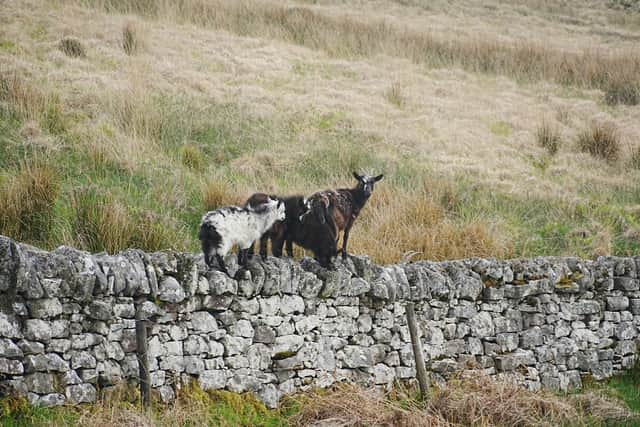
An announcement to cull a number of the feral herd to protect tree planting and habitat projects from relatively new landowner to the area, natural capital firm Oxygen Conservation (OC), caused an outcry locally.
A petition was lodged to give the goats protected status which reached some 22,000 supporters. It was, however, rejected earlier this year on the grounds that the animals were ineligible for protection because they are considered a non-native species, NatureScot said.
The WGCT, which was formed in reaction to OC’s cull announcement, said the herd has come under increasing pressure from landowners carrying out certain nature projects, including tree planting initiatives. As well as OC, community group the Langholm Initiative, which led the south of Scotland’s largest community buyout, confirmed it also manages the goat numbers. The herbivores browse on young trees and have been blamed by some conservationists for damaging habitats.
The WGCT estimated that more than 200 animals were shot in 2025. Local reports suggest there are somewhere between 800 and 900 of the feral goats in the Langholm area in total but calls have been made to do an official count.
David Braithwaite, WGCT chairman, said: “The wild goat kidding season has now all but ended and we have been hoping that the heft of some 35 animals would reappear in the Hermitage valley.

“With every day that passes those hopes are fading. We have been out in the hills in the past weeks and have not seen any sign of them. Whilst it would be wrong for us to speculate exactly what may have happened to the goats at this stage, we do fear that they may no longer be alive.”
Landowners have already said herd culls will continue this year.
The semi-wild animals are believed to be descendants of abandoned or escaped livestock. For generations, they have been popular with locals and visitors alike.
The Langholm moors were originally part of the Duke of Buccleuch’s estate but large parts of it have been sold off. Some 10,000 acres went to the Langholm Initiative, who now run the Tarras Valley Nature Reserve. Oxygen Conservation acquired the Blackburn and Hartsgarth farms, around 11,390 acres of Langholm moor, in March 2023.
Keepers in the area said historically the old and infirm goats were culled on the estate to keep the numbers in check.
Farmer Lawrence Scott, who is in the process of selling his farm, Dinley Farm, near Newcastleton, has previously spoken about how the animals “are getting out of control.”
“They’ve eaten everything,” he was reported as saying.
“ I don’t mind a few of them but they will have to be controlled at some point.”
Comments
Want to join the conversation? Please or to comment on this article.