
New puffin colony staircase to be built on enchanting Scottish island
The move is part of ongoing infrastructure improvements to help with the volume of visitors to the island.

A stairway to puffins and a path towards a magical cave are among the works to be completed for one of Scotland’s island nature reserves.
Staffa, which sits around six miles to the west of Mull, has been undergoing infrastructure changes to improve the location for visitors.
Rising numbers of tourists visiting the island each year led National Trust for Scotland (NTS) to plan an upgrade to the basic and often challenging access to the geological wonder.


The conservation charity said previous access infrastructure on the Staffa National Nature Reserve was more than three decades old and no longer suitable for the volume of annual visitors.
Figures from 2023 show around 100,000 people visit the small Inner Hebridean island each year.
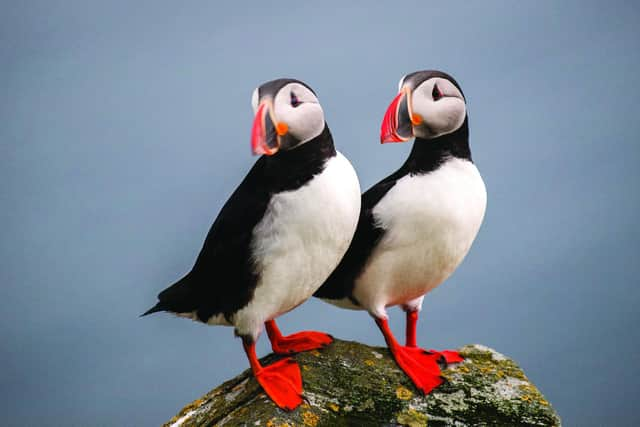
This new phase of work includes replacing the staircase to the upper island and puffin colony and making it wider, stronger, less steep, and more able to withstand extreme weather events.
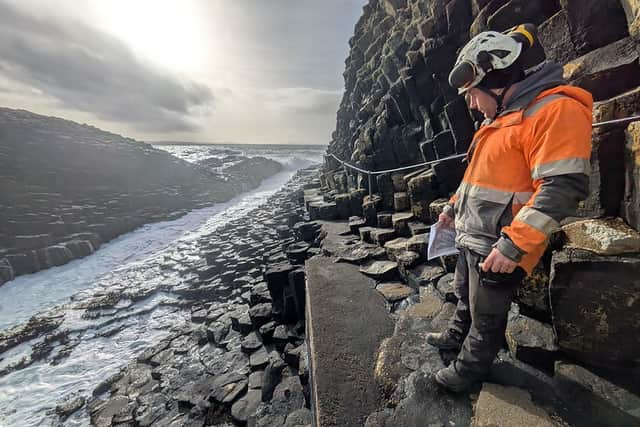
The work will also see repairs and improvements to the first section of path towards Fingal’s Cave, one of the island's key draws and has seen the likes of Queen Victoria, Lord Tennyson, Jules Verne, Robert Louis Stevenson, and John Keats visit its hexagonal rock columns.
The island was first closed to the public for the works in 2022.
Reports said the project was due to be finished in 2024, but the NTS said it will be more like March next year.
The charity said the complex project has been delayed by unpredictable weather and difficulties accessing Staffa over the winter months.
Last year, the NTS undertook a nine-month programme of work to install a new landing jetty on Staffa, battling significant weather challenges over the winter.
The new access infrastructure has reduced congestion when arriving and leaving the island.
To mitigate disruption to wildlife and the busiest time of the visitor season, all major work on Staffa is carried out during the autumn, winter, and spring months. NTS said a biosecurity and breeding bird protection plan is in place, and any environmental or wildlife impacts will be monitored.
Clea Warner, of NTS, said: “Staffa is a magical place that draws people from around the world, and we are working hard to ensure that every one of these visitors has the best possible experience. As a conservation charity, it is our responsibility to both share and protect Staffa, and the work we are doing to improve the infrastructure is a key part of the Trust’s 10-year strategy to care for, share, and protect Scotland’s nature, beauty, and heritage for everyone to enjoy.
“This responsibility includes improving overall accessibility and the efficiency of people’s time on the island. These investments address these issues and should create a long-term improvement on the visitor experience. We are also committed to sharing Staffa’s history, wildlife, and dramatic scenery through interpretation and engagement, and we look forward to welcoming more people and sharing these stories for many decades to come.”
Defined by towering geometric basalt columns created from volcanic lava flows some 60 million years ago and home to the legendary Fingal’s Cave, Staffa has been a magnet for tourists since the 1700s.
Comments
Want to join the conversation? Please or to comment on this article.