
Ministers set to double organic land in Scotland ahead of Holyrood election

In Scotland, the value of the organic market has grown by 20.6 per cent in five years.
The Scottish Government said it is on track to double the amount of land farmed organically by the time voters go to the polls later this year.
Under a new Scottish Organic Action Plan, published with industry body Scotland Food & Drink, ministers said they were making “strong progress” in expanding organic farming from just over 100,000 hectares in 2021 to more than 200,000 this year.
The January budget committed £200,000 in the first year of a new three-year strategy aimed at scaling up production and stimulating demand.
David McKay, of Soil Association Scotland, one of the partners in the action plan, said there is “strong evidence” from Europe that effective and targeted Organic Action Plans can drive growth in the production and consumption of organic food.
He said with organic farming removing the use of artificial pesticides and bringing more biodiversity on organic farms, investment in the Scottish organic sector can help deliver on climate and nature goals while also meeting a growing consumer demand for organic food rather than relying on imports.


Now worth £3.7 billion to the UK market, the value of organic food and drink has grown for 13 consecutive years while, within Scotland, the value of the organic market has grown by 20.6 per cent in the last five years. Dairy and fresh produce dominate - reaching 20 per cent of sales.
To meet increasing demand, growers have been adapting. Between 2021 and 2024, the area of Scottish agricultural land committed to organic production (either fully organic or in conversion) grew by 26.6 per cent, from 103,900 hectares to 131,500 hectares.

Despite the growth, organic farming still accounts for less than 3 per cent of Scotland’s agricultural land, and the sector remains marginal. Ministers, however, pointed to a sharp rise in conversions since 2022, largely due to changes to the Agri‑Environment Climate Scheme (AECS), which removed long-standing limits on the area eligible for conversion. This resulted in a rush of Scottish farmers applying for organic conversion grants, with 34 farms applying to convert 8,000 hectares through the AECS.
The wider Scottish budget confirmed more than £660 million for farmers, crofters, and land managers in 2026‑27, including £170.5 million for AECS and the Agricultural Modernisation Fund, both of which support nature-friendly and organic practices.
Critics argue, however, that expanding the area of organic land will not automatically increase organic produce. Most organic land in Scotland is permanent grassland, with limited arable or horticultural output. Cereals, fruit and vegetables — the products most visible to consumers — remain heavily dependent on imports.
Figures also show that while organic land has grown, the number of certified organic businesses has fluctuated, and in some years fallen, reflecting the cost and complexity of conversion. Farmers said they typically face at least two years of reduced yields before premiums are realised.
The action plan includes efforts to increase organic produce in public sector catering, including schools and hospitals, through the Food for Life Served Here (FFLSH) scheme. The programme awards Gold certification to councils spending at least 15 per cent of their catering budgets on organic produce and meeting standards such as 75 per cent freshly prepared food.
Currently, East Ayrshire is the only council in Scotland to hold Gold certification. Five councils have Silver (requiring 5 per cent organic spend), and ten hold Bronze, which focuses on local and organic produce without a minimum spend requirement. Other institutions are also joining, including Glasgow Caledonian University, which has held Gold since 2025, serving Ayrshire’s Mossgiel Farm organic milk across its menus.

Ministers claim the push will deliver measurable gains in soil health, biodiversity and emissions reduction, while also supporting rural incomes.
The plan describes organic as “no longer niche” and “a route to resilience” for both farms and food supply chains.
Mr Mckay said: “With no artificial pesticides and more biodiversity on organic farms, investment in the Scottish organic sector can help deliver on climate and nature goals while meeting the growing consumer demand for organic food, rather than relying on imports.”
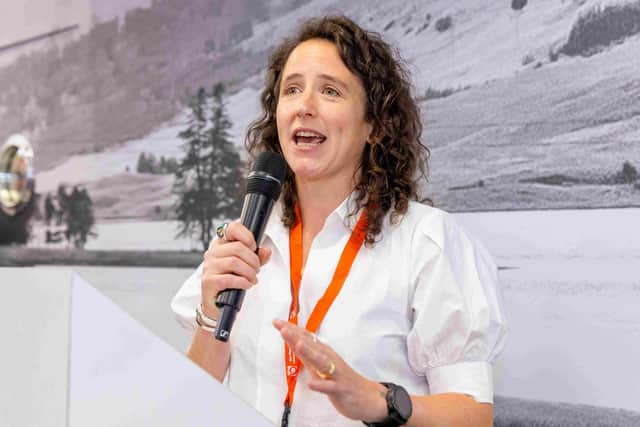
Commenting on the launch of the plan, Rural Affairs Secretary Mairi Gougeon said: “With Scotland leading the way on organic production across the UK, publication of this Scottish Organic Action Plan marks an important step in growing Scotland’s organic market. It will help producers access new markets and connect more closely with local supply chains, while bringing the benefits of organic food to more people across the country.”

Amanda Brown, Programme Director at Scotland Food & Drink, said: “Scotland is leading the way on organic production within the UK but there is a huge opportunity to grow further.
“Consumers are actively seeking high-quality organic food and drink products, and the Scottish Organic Action Plan marks an important step forward in our commitment to growing an already burgeoning sector.
“The plan sets out clear priorities to scale up production, meet demand, and support the long-term development of organic food and farming in Scotland, and we’re excited to be part of the delivery team ensuring the industry makes strong progress.”
Delivery of the Action Plan will be overseen by a coalition of organisations made up of Scotland Food & Drink, Scottish Agricultural Organisation Society (SAOS), Soil Association Scotland and Soil Association Certification, among others.
The Scottish Government recently came under fire for “inconsistencies” in the way ministers handled its flagship £21m Future Farming Investment Scheme (FFIS).
The funding initiative was set up to encourage farmers and crofters to improve the environmental performance of their land. Groups that were to be prioritised for the cash included young farmers, tenants, organic producers and small farms.
However industry leaders in the organic sector said among organic producers in Scotland, two thirds of those who applied were unsuccessful. The Scottish Agroecology Partnership (SAP), a coalition of Scottish food and farming organizations promoting a regenerative agricultural system, said priority groups were “largely ignored” in the scheme.
Comments
Want to join the conversation? Please or to comment on this article.