
Lego heiress expands massive Highland estate after £25 million land purchase

Billionaire Sofie Kirk Kristiansen has made another land purchase in the Highlands
The heiress to Lego has expanded her estate portfolio after purchasing land in the Highlands in a multi-million pound deal.
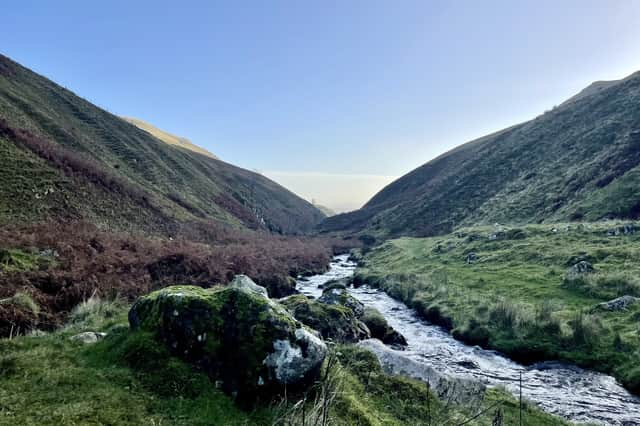
Billionaire Sofie Kirk Kristiansen has bought 3,525 hectares of land in the Highland region Ross and Cromarty for £25 million. The land is mostly part of Scatwell Estate, which lies at the foot of her 33,500ha Strathconon Estate.
The latter was bought in 1995 by her father, Kjeld Kirk Kristiansen, whose father invented Lego, via his company Kirkbi Estates Ltd.
Now his daughter is the director of the family company, which she has since renamed Strathconon Estates Ltd.
The company now owns a total of some 42,730 ha today, including neighbouring Scardroy and Ledgowan estates, which were bought in the past decade.
Ms Kirk Kristiansen’s personal fortune last year was estimated at $6.96 billion [£5.46bn].
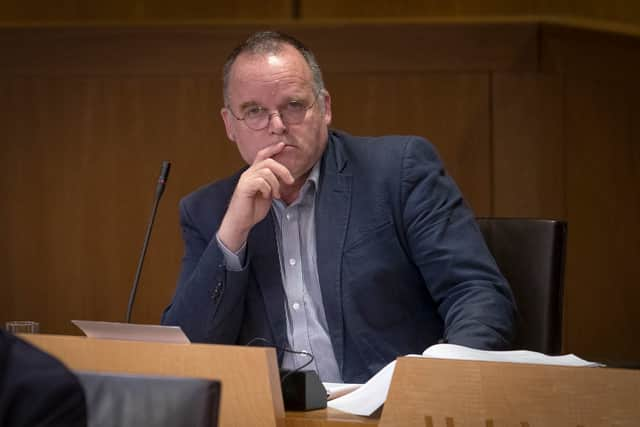
The deed for the sale was obtained by land reform campaigner and former Green MSP Andy Wightman and published on his Land Matters blog.

Ms Kristiansen has previously said she aims to shift Strathconon from a “classic Highland shooting estate” to a “wholehearted nature restoration project”.
Meanwhile, Lisbet Rausing, a Swedish academic and heiress to the Tetrapak packaging company, owns Corrour estate, close to Fort William, which her family bought in 1995.
Corrour, which spans 23,000 ha, is now the biggest estate Loch Abar Mor, a partnership between landowners looking to pursue nature restoration and to help communities thrive.

The most prominent Scandinavian landowner in the Highlands, however, is Anders Povlsen, a Danish billionaire who is the richest man in Scotland. Mr Povlsen is a major investor in the Shetland Space Centre, where his company, Wild Adventures Ltd, now owns more than half the shares.
Mr Povlsen, who owns fashion brand Bestseller and significant stakes in Asos, Zalando and Klarna, owns up to some 90,000 ha across what is believed to be around 13 estates in Sutherland, Cairngorms and Lochaber.
Though his company, Wildland, the landowner uses his Scottish estates primarily for landscape-scale conservation alongside deer stalking and tourism.
Details of the Scatwell Estate sale emerged just as the Scottish Government passed its new Land Reform (Scotland) Bill last week.
For the first time, the new legislation could lead to the break-up of large estates when sold through its new “lotting” rules.
A “transfer test” will be triggered when “large landholdings”, which, according to the new Bill are more than 1,000 hectares, are sold so that ministers can intervene and decide whether, in the public interest, the estate should be broken up.
The idea is to give communities more say and agency over what happens to the land they live on and to make community buy-outs more feasible. Some lawyers and rural experts have warned provisions in the Bill could lead to an "infringement" on property rights and present legal issues.
Other land campaigners said the Bill does not go far enough in tackling concentrated landownership.
Mr Wightman points out in his blog that with some estates, including that belonging to Ms Kirk Kristiansen, the Bill would have no impact.
He wrote: “The change of ownership from Kjeld Kristiansen to Sofia in 2023 was achieved through the reallocation of shares in Strathconon Estates Ltd. Ownership as a matter of law did not, in fact, change. It remained with Strathconon Estates Ltd.
“Such changes in control are exempted from the provisions of the Land Reform (Scotland) Act 2003 (as amended by the current Bill). Thus the Bill has no impact at all.”
He also pointed out ministers can only make a lotting decision if it is in the public interest.
But, in the case of Stratchconon where, to the west there is no known community body in the vicinity, no lotting decision would be able to be made.
Comments
Want to join the conversation? Please or to comment on this article.