
'It breaks my heart': Scottish anglers at wits' end over salmon decline as seals move up River Dee
‘We have more seals in the river than we’ve ever had’.

On the banks of the River Dee, about a mile up from where it meets the sea, a fishing bothy sees anglers from the surrounding area meet regularly.
Despite the historic property being the Aberdeen and District Angling Association’s (ADAA) de-facto headquarters, no fish are caught there anymore.
“You just see seals here,” said the ADAA’s chairman Paul Adderton. “We have more seals in the river here than we’ve ever had.”


Atlantic salmon are endangered, with numbers having seen a marked decline in many Scottish rivers over the past four decades.
Rising river temperatures, water quality and human activity at sea, including contamination from fish farms, are said to be some of many contributing factors in the species’ decline.

The James Hutton Institute is monitoring levels of paracetamol and ibuprofen found in the River Dee, with scientist Dr Zulin Zhang saying more research is needed to check various chemical levels in the river to understand potential impact on fish populations.
Anglers and ghillies on the Aberdeenshire river, a location once considered one of the premier worldwide destinations for fly fishing, said the decline on their patch had accelerated in the past five years.
They point to the seal presence on the river being one of the main reasons. A reported increase in the mammals swimming upstream adds more predation pressure on salmon on top of other species, they said, including the non-indigenous goosander.
In the past year, seals, which are protected and normally found in estuaries and the coastline, have been spotted some 15 miles up stream in the Dee, as far as Banchory.
Experts debate whether the mammals are moving in due to a lack of food source in the sea or because they have simply smartened up to it being easier to catch salmon in the river.
“Either way, we have the protected predating on the endangered,” Mr Adderton said.

“We have people culling deer to protect trees, in some cases not even native ones, like Sitka spruce. We have others managing grey squirrels to protect the red squirrel. So, why can’t we manage the seals to protect the salmon?
“So far, we do not have an effective means of controlling seals in the river.”
In Scotland, it has been illegal to kill seals under the Marine (Scotland) Act 2010. This Act protects both grey and harbour seals.
St Andrews University reported the number of harbour seals has dropped by a quarter in just seven years, which some researchers have linked to the ever increasing population of the much larger grey seals. They have been known to kill or partially eat harbour seals and their own pups.
Licences to kill or take seals can be granted, but are determined on a case-by-case basis. Applicants are required to demonstrate that killing is a last resort, after all other non-lethal attempts have been considered.
Only 220 salmon were recorded on Dee rods last month compared to 773 in the same month last year, according to figures by the Dee District Salmon Fishery Board.
So far this year, some 500 have been recorded on the river compared to around 1,700 at the same point last year. Some beats on the Dee reported as little as six to eight fish recorded in a year.
Experts said the decline in the number of fish recorded this year is particularly stark and has been compounded by mini heatwaves this summer during which angling is not permitted due to low water levels.
For years, anglers have been required to release salmon once caught due to conservation regulations.
Seal scaring methods have been trialled over the years, including the use of jet skis and underwater acoustic systems. With the latter, however, one ghillie warned seals can just keep their head out of the water and continue to swim up the river.
Robert Harper, a ghillie due to retire after 49 years’ of service on the River Dee, and who recently won a national conservation award, said the seal impact has been “absolutely disastrous” for the salmon.
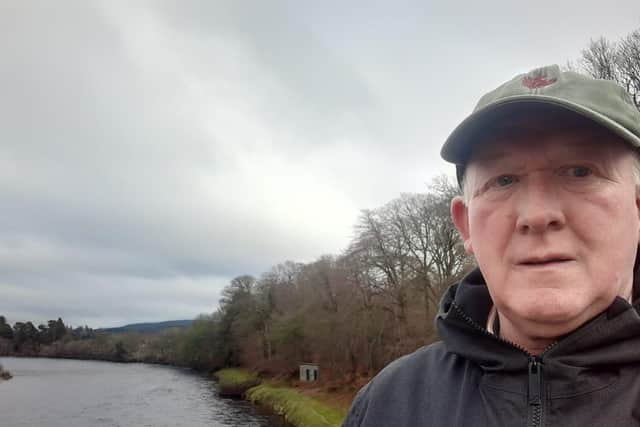
Mr Harper said: “With the very low water this year, seals haven’t been so far up stream as they usually come, but unfortunately they have stayed in the river big time. It has been absolutely disastrous. I spent a lot of time during early summer collecting evidence, photos and videos and it’s very disturbing indeed.”
Mr Harper, known for being so dedicated to his beat he often patrols at night, has travelled miles, personally compiling a dossier of seal activity on the Dee, arguing how predation is impacting salmon.
He said: “This scandalous situation just goes on and on. Government agencies have closed ranks and won’t do what’s needed to at least try and save our remaining salmon. Seals come first.”
Angler Murray Hourston, 68, who has been fishing on the Dee since he was 17, said a physical barrier to block the seals needed to be looked at more seriously.
“Places like Norway are introducing physical barriers to stop seals getting in, but still allow salmon to swim up,” he said. “Public opinion is such that I don’t think we will ever convince politicians to cull seals, which is why I think we need to look into a physical barrier.
“It’s probably going to be horrendously expensive, but it’s something the Scottish Government has to be on board with otherwise they will see salmon disappear.”
It is not just the salmon the anglers worry for, but also the economy and culture that surrounds the fish.
“The salmon that run a river employ a lot of people,” Mr Adderton said. “Fishing tackle businesses, hoteliers, chefs in local pubs and restaurants, mechanics and many, many ghillies, who are the custodians of the river and who have had skills and knowledge of the rivers handed down through generations, are all at risk.
“And of course the angler could go, who is really the best friend of the salmon as they are the ones reporting pollution incidents in the river and who are putting the pressure on policy to protect these species. It breaks my heart the salmon are going down and that people are losing their jobs.
“We’re talking about one of our national treasures, our culture and social heritage.”
The Scottish Government said it was “supporting research” into non-lethal solutions to address the impact of seal predation on wild Atlantic salmon numbers, including the development of an automatically triggered acoustic detect and deter device.
A spokesperson said: “Evidence from a trial version of this device proved 100 per cent effective, with all seals immediately stopping travel upriver and moving downstream, with analysis of further field trials underway.”
Comments
Want to join the conversation? Please or to comment on this article.