
Hundreds of sheep die on St Kilda each year as welfare concerns mount, according to new report


The current management of the flock is follows a least-intervention, wild-status policy.
An average of 600 Soay sheep are estimated to die each year on Hirta, the largest island in the remote St Kilda archipelago, from starvation and parasitic infections, according to figures from a long-running scientific study.
Campaigners said the report showed deaths amount to about 35 per cent of the adult flock each year which, over a decade, would represent roughly 6,000 sheep.
The findings were drawn from the long-term Soay Sheep Project which has been tracking the wild, unmanaged population of primitive sheep for decades.
The figures were presented to the convenor of Comhairle nan Eilean Siar at a full council meeting by councillor Gordon Murray after he questioned how many sheep had died.
He said the percentage of deaths has prompted renewed questions over the management of the island’s world-known feral flock, and whether a policy of ‘least intervention’ is compatible with animal welfare.
The sheep, first brought to the group of small islands and rocky sea stacks thousands of years ago, are largely unmanaged, with the population fluctuating according to the availability of food and the severity of winter conditions.
For animal welfare campaigners and veterinary experts, however, concern is mounting over the number of deaths revealed in the study.
“Death through starvation is prolonged and painful,” said Professor Ranald Munro, a forensic veterinary pathologist.
“Indifference allows continuation of the neglect and suffering of the sheep. Comhairle needs to act to protect the reputation of the Western Isles.”
David Buckland, a veterinary surgeon, said the authorities could not separate themselves from responsibility for the animals while participating in the management of St Kilda.
“As a signatory to the St Kilda Management Plan, the Comhairle cannot deny responsibility for the welfare of the sheep,” he said.
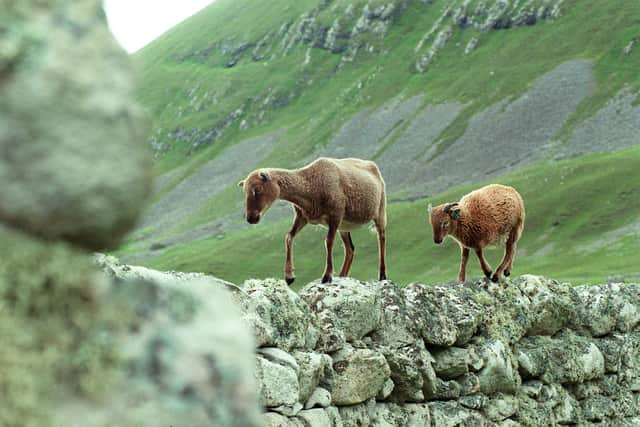
Mr Buckland argued that the combination of a confined island environment, the absence of predators and the current policy of minimal intervention inevitably produced periods of overpopulation, followed by high levels of starvation and parasitism.
“Analysis of the Soay Sheep Project census data, covering a period of 20 years, shows that a yearly average of six hundred sheep (35 per cent of the adult population) suffer and die in this way on Hirta alone,” he said.
The vet also questioned the interpretation of animal welfare legislation, saying that some people concerned with animal welfare believed the Scottish Government had misinterpreted the law.
The current management of the flock is to follow a least-intervention, wild-status policy.
“By ignoring the duty of care, the current Management Plan is, in our opinion, not only inhumane but also unlawful,” Mr Buckland said.
At the council meeting, Cllr Murray said he asked what responsibilities Comhairle nan Eilean Siar has as a co-signatory to the St Kilda Management Plan. He also asked whether the council had obtained independent legal advice on whether the sheep were protected under the Animal Health and Welfare (Scotland) Act 2006, and whether it would work with other organisations to clarify the position and consider measures to reduce suffering.
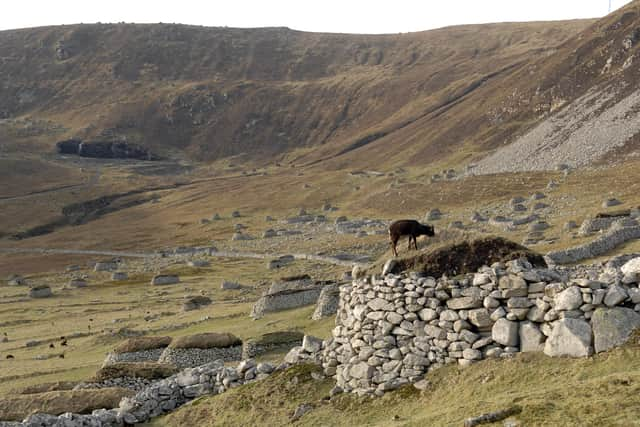
He said the council's responses indicated that it has not obtained specific independent legal advice on the issue and instead relies on the Scottish Government’s position that the sheep are not protected animals under the relevant legislation.
The council said it was willing to engage with partner organisations if further clarification of the position would be helpful.
Cllr Murray said he will continue to to press for independent legal advice and for the Comhairle to work with the National Trust for Scotland, the Scottish Government and others “to find practical ways to reduce this level of preventable mortality while respecting the World Heritage status of St Kilda.”
The Soay Sheep Project, run by researchers at the University of Edinburgh, has monitored the flock since the 1980s. One of the study’s original objectives was to investigate the effects of starvation and other natural pressures on the population.
Comments
Want to join the conversation? Please or to comment on this article.