
How do you spend £40million on Lewis, Uist and Barra?

New roads, harbours, housing and refurbished culture centres are on the agenda for these islands.
Moving to a Scottish island is often presented as an escape from the pressures of urban life: a remote cottage by the sea linked to sparsely populated communities by single-tracked roads.
For many island residents, however, the realities of distance, weather and limited infrastructure can be less romantic.
Poor transport links, a shortage of housing and an ageing demographic have made daily life and sustaining rural island communities increasingly difficult.
However, much-needed investment into infrastructure, including new roads, social housing and culture projects, has reached the islands after a combined £40million cash injection from public funding.
Earlier this month, Lewis, the northernmost island in the archipelago, was awarded £20 million from Westminster’s Pride of Place (PoP) fund. The award forms part of a wider £280 million programme targeted at 14 Scottish “neighbourhoods” identified as having high levels of deprivation and weak social infrastructure.
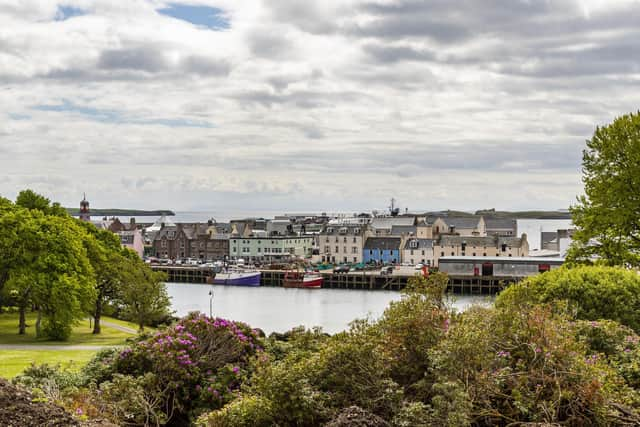

Torcuil Crichton, the Labour MP for the Na h-Eileanan an Iar, said the PoP funding for Lewis, which includes Stornoway, the biggest town on the Outer Hebrides, will go to areas “most in need” on the island.
Meanwhile, an additional £20 million of already committed UK Government funding has been pledged to the islands through the Western Isles Community Regeneration Partnership.
This will be delivered over the next two years, primarily to Uist and Barra.

Mr Crichton described the two packages as “a double win” for the islands after what he said has been a period of “neglect” post funding from the European Union.
Reports suggest pre-Brexit, at least £90m was channelled to projects in the Outer Hebrides over more than two decades.
Speaking to Scotland on Sunday, the MP said: “This combined funding marks the most significant regeneration investment since the end of European Union structural funding following Brexit.
“Major infrastructure projects were delivered from that funding 20 to 30 years ago.
“This investment allows us to complete unfinished work and address new pressures.”
A total of £8.8m has been given to the Uist & Barra Roads and Causeway Resilience Programme.
A central priority is the long-proposed completion of the islands’ “spinal road” running up the centre of the archipelago, of which a three-kilometre stretch will be dualled on South Uist.

The programme will also see reinforcement of vital causeways connecting island communities and mitigating flood-risk hotspots across the road network.
Housing will account for £3.5 million of the overall package. Mr Crichton said shortages of social housing remained one of the most significant barriers to sustaining population levels in remote island communities.
“The grant you get at the moment for building or restoring a croft house is up to £38,000,” he said.
“This doesn’t do the job fully.
“We have a housing emergency here and so I think the most exciting part of this funding is the money going towards finding innovative ways to improve it on the islands.”
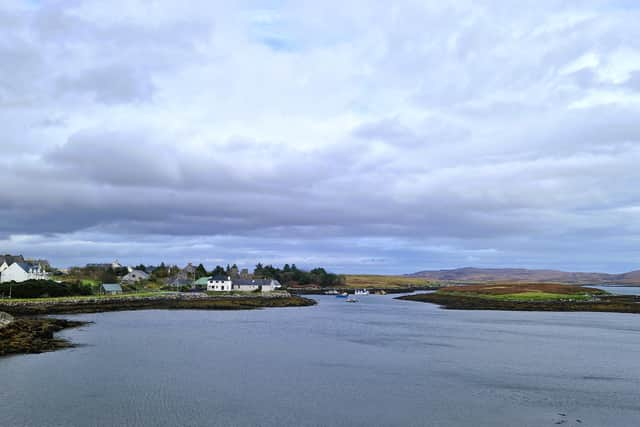

Land no longer being used by the Ministry of Defence (MOD) on Benbecula, situated between North and South Uist and connected by causeways, will also be transferred from MOD ownership for £500,000. The site will be used instead for developing a mixed-use site including affordable housing and business units.
Some of the multimillion pound sum will also go towards a series of community-led projects across the islands, aimed at strengthening social infrastructure and tackling isolation.
On Eriskay, which lies between South Uist and Barra, £1.5 million will be invested in the third phase of redeveloping the former school at Ionad Eilean na h-Òige into a multi-purpose community hub.
The development will incorporate a museum, café, meeting rooms, wellbeing suites and facilities for heritage, health and enterprise.
In North Uist, a further £1.5 million will be used to transform the former Carinish School into a heritage centre, providing access to artefacts, genealogical records and Gaelic learning, alongside heritage-themed accommodation to support tourism and local activity.
Meanwhile, £1.2 million has been allocated to the Uist Indoor 3G Project in Daliburgh.
The development will see a covered all-weather sports facility designed to provide year-round access to physical activity, support mental wellbeing and help address long-standing challenges around health and youth retention.
The islands’ longstanding culture of seafaring and fishing is also set to benefit from the funding.
Around £2 million will be go towards a new harbour at Vatersay, the southernmost inhabited island in the Outer Hebrides, within the Barra council area.
The project aims to deliver a safe, all-weather working harbour, with improved berthing, storage and access facilities, supporting local fishermen and strengthening marine infrastructure.
A further £1m will go towards Barra’s biggest pier — Ardveenish Harbour — for essential repairs and upgrades and work to enable berthing of larger vessels.
Mr Crichton said: “Overall, this funding is here to repair the fabric of our places, to develop the economy and to improve the health of the islands.”
Leader of the Western Isles Council Paul Steele, who played a key role in obtaining the funding for Uist, said the level of investment was “significant” for island communities in the years to come.

He said as well as infrastructure, the funding will help support innovative solutions for families and young people in relation to housing and childcare.
“We have good ideas,” Mr Steele said, “but sometimes you just want a bit of funding to take them forward.
“This is really a significant amount of money for us and will help us deal with problems we have like depopulation.
“The islands aren’t an easy place to live in sometimes and this funding will help make them more attractive.”
Mr Steele said there was a noticeable improvement to how the government funding was allocated.
“What we usually have with Scottish Government and UK funding is there can be a lot of strings attached,” he said.
“But with this funding there’s been a lot more engagement with communities.
“Rather than a ‘here’s some money and you have to meet this criteria’ approach, there was a lot more flexibility that allowed you to direct priorities rather than government priorities.”
Comments
Want to join the conversation? Please or to comment on this article.