
Battery storage plant with 28 containers to be built near Glen Affric reserve as north east summit launched
Calls to pause large-scale energy developments until energy policy is improved for communities have spread to Scotland’s north-east

Controversial plans for a battery storage site in the Highlands are set to be given the green light as momentum for calls to pause nationwide renewables projects has spread to the north east.
The proposed battery energy storage system (BESS) at Cannich, Glen Affric, will be decided on at a Highland Council committee meeting this week after being recommended for approval by local councillors.
The eight hectare-site, if approved, will involve 28 energy storage containers each measuring 76m long and 3m high. The area will be surrounded by a 3m-high weldmesh security fence, with the rest covered by a timber fence reaching 4.3m, along with lighting and security cameras.
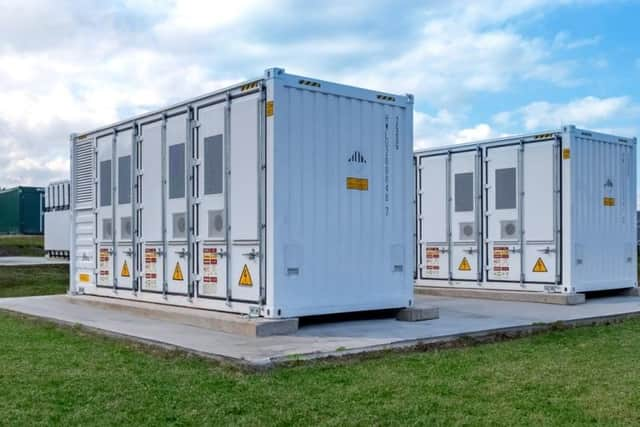

The proposed site, which saw nearly 70 local objections among a population of a few hundred people, does not sit within any natural or built heritage designations. It is, however, close to several sensitive areas, including the Glen Affric National Nature Reserve.
The main concerns raised were visual impact, safety, ecology, site selection, noise, lighting, tourism, traffic and local benefit. It comes as community councils from the north-east of Scotland will gather at a convention to demand a pause on renewable energy developments until “a more coherent strategy is in place”.
The event, taking place this weekend, comes as plans to build 550 pylons up to 190ft tall across the north east regions were lodged by Scottish and Southern Electricity Networks (SSEN) Transmission last month.
The section 37 application for a 400kV overhead line running from Kintore in Aberdeenshire to Tealing in Angus comes under the company’s £22 billion “Pathway to 2030” investment programme to upgrade the electricity grid for a low-carbon future.
A community council convention on renewables first happened the Highlands, with Scottish Conservative councillor Helen Crawford leading a gathering of more than 50 individual community councils to debate the roll-out of large-scale renewable energy projects and call on ministers to halt planning decisions.

The Scottish fishing industry added its voice in calling for a moratorium on offshore wind consents, with First Minister John Swinney saying their concerns would be heard. Some 125 community councils from Aberdeenshire, Aberdeen, Angus, Dundee and Moray have been invited to the north east’s first of such conventions.
Aberdeenshire councillor Tracey Smith, a co-founder of campaign group Save Our Mearns, said: “Not once has a Scottish Government minister met with us, which is why we have invited SNP energy secretary Gillian Martin to finally listen to our concerns.

“Local communities must be front and centre of any proposals and should have a veto when it comes to new energy infrastructure being built.”
Scotland’s energy secretary Gillian Martin has turned down invites to the previous community council conventions in the Highlands.
In a letter to MSP Maree Todd earlier this year, Ms Martin said refusing to receive applications under section 36 and 37 of the Electricity Act would set the Government up for legal challenges by the industry.

Yet Ms Martin said it was “vital” that communities who see the most developments should be directly benefitting from them, including through shared ownership opportunities and community benefits.
The minister said community benefit regulations were reserved to the UK government and that she had been pressing ministers south of the Border to mandate community benefits from onshore renewables.
The UK government launched a consultation in May on proposals to make community benefits and shared ownership - a model where community groups take a financial stake in a renewable energy project, alongside the developer - are mandatory for private developers.
Ms Martin said the Scottish Government recently consulted on its Good Practice Principles for developers to inform “a refresh of our guidance” on the voluntary community benefit.
She said: “The last UK government didn’t act to make community benefits mandatory. I am hopeful that the current UK government will take a different approach.”
Comments
Want to join the conversation? Please or to comment on this article.