
Hebridean metal detectorist and his rare finds to feature in new BBC series


Filmed across Uist and Barra, the new series paints a portrait of island communities sustained by Gaelic culture, crofting traditions and a strong sense of place
A metal detectorist from the Outer Hebrides is to feature in a new BBC series exploring the people, traditions and histories that shape life across the islands.
Donald MacPhee, a crofter and builder from Benbecula, has spent more than a decade uncovering artefacts that offer glimpses into the past of his homeland.
His discoveries range from coins dating to the reign of Mary, Queen of Scots to a Jacobite rose button, regularly revealing island history while other finds pose questions as to how they ended up there. One year, he found a wedding ring belonging to his friend’s mother 50 years after she’d lost it in a potato patch.
Mr MacPhee’s most recent find, a Dutch duit from 1768, was, he believes, dropped by Dutch engineers who came over to the islands to plan the main drains.
“Pretty cool!” he said, explaining he’d found another from 1620. “The Dutch were famous sailors, fishermen, traders back in the day.”
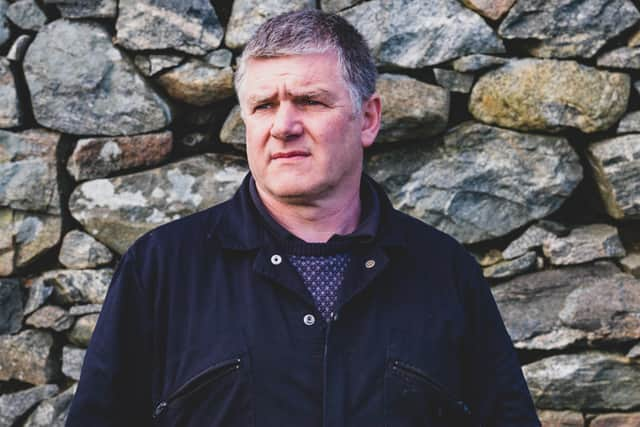

Many of the finds have been unearthed around Nunton, where Mr MacPhee lives and runs the Nunton House Hostel. His discoveries, and the stories they reveal about the islands’ past, will feature in the new six-part BBC ALBA series Suas gu Deas, which begins next week.

The series follows the people, customs and events that shape daily life across the southern Outer Hebrides. Filmed across Uist and Barra, the programme paints a portrait of island communities sustained by Gaelic culture, crofting traditions and a strong sense of place. New episodes will air weekly over six weeks.
Across the series, viewers are introduced to musicians, crofters, fishermen, dancers, choir members and families preparing for festivals, competitions and gatherings that fill up the island calendar.
The opening episode follows pupils from Castlebay School as they prepare for the return of Barralive, one of Barra’s best-known music festivals. Other programmes revisit the tradition of quadrille dancing during Ceòlas in South Uist, accompanied by music from Ruairidh Gray, and travel to the annual sheepdog trials in Berneray, which attract competitors from across Scotland, Ireland and Europe.
The cameras also follow crofter Joan Macdonald as she balances work on the family croft with nursing duties and preparations for the North Uist Show. Lifelong crofter Donald Angie Macaskill appears alongside his sheepdog Zoe and granddaughter Faye, while fishermen Rory MacGillivray and his grandson Peter are filmed at sea around the islands.
Elsewhere, the series documents Barra Gaelic Choir and the Uist Drama Group preparing for the Royal National Mòd in Lochaber, and captures long-standing island traditions including the fishermen’s mass and blessing of the boats in Castlebay. It also visits Anne MacLellan’s campsite and farm shop in Balranald, and joins musicians, singers and storytellers at the weekly Cidsin ceilidh at Cnoc Soilleir in South Uist.
Alasdair Fraser, executive producer for BBC ALBA, described the programme as “a genuine portrait of island life across Uist and Barra.”
He said: “The series captures the strength of community, the importance of Gaelic culture and the people who continue to shape and sustain these islands. It offers viewers a real insight into life across the Outer Hebrides, told by the people who know them best.”
The series was produced for BBC ALBA by Corcadal Productions. Its producer and director, Christine Morrison, said the programme celebrated “the people and traditions that shape life across Uist and Barra”.
“The islands are beautiful without a doubt,” she said, “but what makes them special are the people who live there and are proud to call these islands home.”
Suas gu Deas begins on 19 May on BBC ALBA and BBC iPlayer.
Comments
Want to join the conversation? Please or to comment on this article.