
Growing anger in communities caught up in Oxygen Conservation's fast-paced natural capital expansion

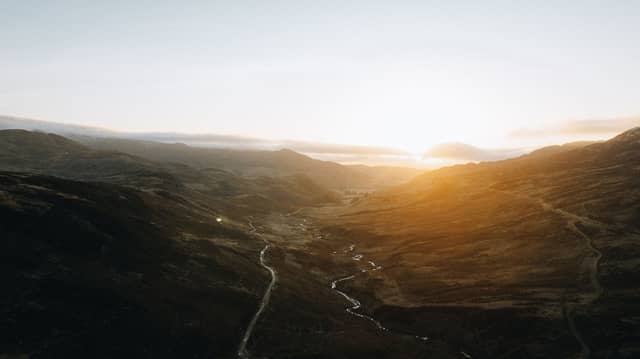

Oxygen Conservation’s portfolio is growing, but so is unease among communities living among the landscape its changing
From the Highlands to the Lowlands, contention surrounding land ownership in Scotland has been embedded in the landscape for centuries. That appears to remain the case for a relatively new landlord driving landscape change across multiple of Scotland’s former shooting estates and farms.
Oxygen Conservation, the Exeter-based land and natural capital firm, has in just a few years become one of the most prominent, and controversial, new landowners in Britain. It recently announced plans to expand into Europe, but to raise capital rather than acquire land abroad.
Since launching in 2020, the company has built a portfolio of about 50,000 acres across the UK, including five estates in Scotland. It plans to expand to 250,000 acres within the next four years, positioning itself at the forefront of a growing “natural capital” market, while promising high-end ecotourism destinations in the Highlands by the end of the decade.
Its chief executive, Richard Stockdale, has been explicit about both the financial ambition and the risks involved, describing the business as “unashamedly capitalist”.
But while millions have flowed into projects framed around climate action and ecological restoration, relationships with communities living and working on the land have often proved more fraught.
Across Scotland, and in parts of England and Wales, residents and community representatives say they feel excluded from decisions reshaping their local environments and economies, with some drawing stark comparisons to the legacy of the Highland Clearances.

A common sticking point for communities has been the publicly-funded rush of large-scale tree planting across moorlands. Tensions have tightened since Oxygen Conservation was, in February, awarded £3.3million in taxpayers cash to plant 1.5million trees on Invergeldie Estate in Perthshire as part of its “100-year commitment to deliver 20,000 acres of new native woodlands and restored peatlands.” The woodland scheme will be one of the UK’s largest to date.
The money, which Oxygen Conservation is topping up with £4m of its own money, was awarded as part of the Scottish Government’s tree planting initiative to reach NetZero targets.

It comes after Oxygen Conservation bought the already controversial Kinrara Estate from Brewdog earlier this year. The beer giant had tried and failed to plant its ‘Lost Forest’. Millions of pounds in public money were awarded to the corporation but with the mass planting project leading to an “exceptionally high mortality rate” of around 50 per cent - far above the typical 10 to 30 per cent for commercial forestry.
Residents at Invergeldie, which Oxygen Conservation is turning into “a premier ecotourism destination” for next year, have accused the company of a lack of transparency about land changes, including the reduction of farming on the estate.
Concern over loss of local work
Pete Guile, a long-term resident at Invergeldie, said relations started well, with plans to keep up agriculture. However, in time, he said it appears the company was speaking “warm words.”
“There used to be about 2,000 sheep on the farm, now there are none,” he said.
“This place used to be a buzzing rural community with a number of local jobs managing the land, now there is very little activity outside of the forestry work – the place is dead, it has become a finance commodity.”
Lisa Mackay said that she and her family, who had been living and working on the estate for twelve years, were effectively pushed out once the firm took it on after claiming to have been told jobs were not at risk.

Mrs Mackay, whose husband, Jim, was the former farm manager, said within a year, the sheep numbers had halved, and machinery was slowly being sold off.
“We knew changes were happening yet not once did the owners discuss this with us or keep us informed of any plans moving forward,” she said.
“We continuously had to ask what the future of farming would be but had a feeling that we had never been part of their plan for Invergeldie from the beginning.
“My husband’s job was no longer going to be needed and we would need to move out the property - apparently they wanted the house for clients and investors.”
Mrs Mackay said she and her family were offered a property on a short-term let on the estate but logistically, with two young children, it was easier to leave altogether.
“They were unwilling to pay any attention to the wishes of any workers, tenants on the estate or the local community”, she said.
“This should not be allowed.”
Oxygen Conservation said land use change at scale "will always generate a diversity of opinion” and said the criticism is just "one part of that picture."
The company defended its role in transparency, pointing to its online "story maps", detailing its vision for the three Scotland estates. The first one, for Invergeldie, came after communities asked the company to provide more information on its plans. The maps for the estate, plus Dorback, another one of its newly acquired estates, were updated just earlier this month.
In response to local employment concerns, Oxygen Conservation claimed to be increasing jobs.

Invergeldie, which was a shooting estate, currently employs two full-time staff: an estate manager and a ranger.
At Dorback, another one of the firm’s Highland estates and which also used to be a family-run sporting estate, the employees include an estate manager, two rangers, a gardener and an ecotourism manager.
A spokesperson for the company said: “Alongside this we are investing millions of pounds in partnerships with innovative Scottish businesses focused on restoring nature – across tree supply, tree planting, ecological survey works, regenerative farming, fencing and ground preparation, peatland restoration, and mycorrhizal fertiliser.
“These partnerships are creating a wave of new, highly skilled and highly paid jobs.”
The company also pointed to its “Oxygen Accelerator”, an investment programme which it said supports local businesses to help “scale their operations and deliver growth and employment.”
Supporters within the sector argue that such investment represents a necessary evolution in land management. Rab Robertson, founder of the Perthshire-based contractor Taiga Upland, which works with Oxygen Conservation, said the firm’s approach shows “real value and long-term opportunity” in conservation-led rural economies.
Complaints in other corners of the UK
Questions over community engagement, however, appear to extend beyond the Highlands.
In Dartmoor, where Oxygen Conservation also owns land, local councillor Cat Frampton spoke about a lack of community consultation over “extensive woodland planting on biodiverse sites”, and the removal of a popular old non-invasive rhododendron garden on the estate.
Similar complaints were made at a farm owned by the firm in Wales. Councillor Elizabeth Evans said the community at Arth Farm in Aberarth, have been concerned about a “lack of any proper communication.”
“Oxygen practically had to be forced to arrange a meeting with the community and that meeting went very badly,” she said.
“Any consultation has been very poor. It has become clear that Oxygen has no interest in the agricultural side of the farm and the whole emphasis is on trees. But whatever people think of the plans, there is a lot of concern that communication with the community has been awful.”
The company’s dealing with renewable energy developments have also caused friction.
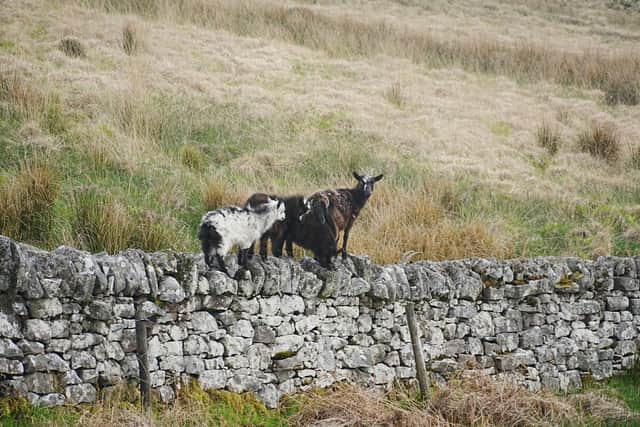
The firm caused uproar in the Borders and Dumfries and Galloway last year after announcing a cull of the feral goats that roam Langholm moor claiming the herbivores were bad for trees and local habitats. Yet, months later, the company’s sister company, Low Carbon, lodged plans for an 18-turbine wind farm in the same site “to help with Scotland reaching its renewable energy targets.”
‘Akin to the Highland Clearances’
Back at Invergeldie, residents also accused Oxygen Conservation of poor communication over its renewable energy plans. Despite promises of transparency and claims there was no discussion of turbines on the estate, within months, Low Carbon brought forward proposals for 19 turbines, up to 200m high. These have since been rejected by the Perth and Kinross Council.
Read more: Firm buys historic 15,000-acre Scottish Highlands estate to 'rewild' and sell carbon credits
Comrie-based resident Jen Newall, a former climate scientist who now consults on best practice in ecosystem restoration, said: “Oxygen Conservation have been dishonest and disrespectful to our community from the moment they announced their purchase of Invergeldie estate.


“All the while they spin a spurious environmental vision in their public comms, designed to seduce the big money investors they need to make their extractive business model work.
"If the Scottish Government and their agencies continue to support OC's endeavours without listening to local people then I'm afraid they'll be complicit in something akin to a contemporary wave of Highland Clearances.”
Her neighbour, writer and photographer Felicity Martin, said: “My first experience of Oxygen Conservation was the open day that they held in September 2023 at Invergeldie Lodge. During their talk, they batted away questions as to whether they had plans for renewable energy projects with mutterings about only micro hydro generation.

“Two months later, Low Carbon held a drop-in session in Comrie to display their plans for the Glen Lednock Wind Farm, which they had obviously been preparing from soon after taking ownership in 2022. It was one of many things that changed my open mind to one of distrust.”
Oxygen Conservation denied claims that the company said it would not consider wind farm opportunities. It said plans for turbines were not discussed straight away until Low Carbon assessed whether turbines were appropriate.
The team said in the last five years of owning land in Scotland, they have acknowledged that communication from the start, even when ideas are in the early stages, is important.
“That is something we are applying going forward,” an Oxygen Conservation spokesperson said, adding: “For each estate, we had (and continue to hold) a deep commitment to community engagement from the outset.
“Community engagement is a constantly evolving process and it is never ‘finished’— it requires taking the time to understand how a community works, what it needs, and how it wants to engage with a new landowner. That looks different in every place and can evolve over time, and we have always approached it that way.
“What we have learned, and continue to invest in, is that having the right people on the ground is everything.”
Community councils and local trusts, representing hundreds of voices, however, appear to continue to disagree.
Andrew Scobie, chairman of Comrie & District Community Council, said he has received reports from residents and outdoor access interests that the company has been “less than honest, disrespectful, and even attempting to cause division in their response to valid community concerns.”
The community leader said he hopes the company has learnt from its mistakes, and that the community group would welcome more constructive and open conversation.
Fiona Blacke, chairperson of Comrie Development Trust, a community body with over 400 members, added: “We recognise that for many of these companies, like Oxygen Conservation, the sensitivities and nuances of working in partnership with communities is new territory.
“However, best practices are out there and it is incumbent on these landowners to seek out those who can show them how it is done. Sadly to date , our experience of Oxygen Conservation is that they have failed to do so and consequently have alienated the very community who could be their best ally.”
Call for investigation
Community Land Scotland (CLS) accused the natural capital firm of “falling well short” of the expectations in Scottish Government’s Land Rights and Responsibilities Statement, a government policy that encourages community engagement and transparency. CLS’s director of policy Dr Josh Doble went as far as saying the widespread concern about Oxygen Conservation’s management should be investigated.
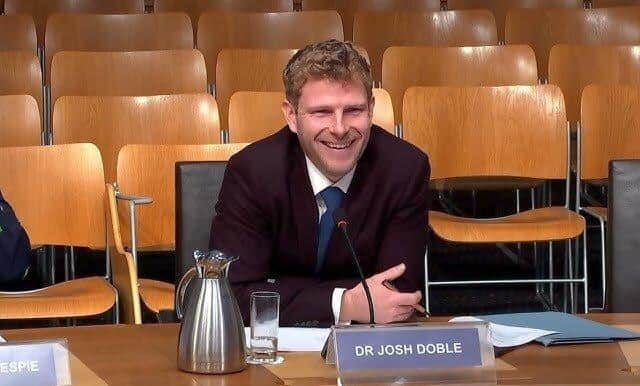
Dr Doble said community voices around the UK decrying the company's behaviour "raises serious concerns about Oxygen Conservation’s credibility."
"The level of concern raised by communities across a number of different landholdings about Oxygen Conservation’s pattern of behaviour is unusual and requires investigation," he said.
“Oxygen Conservation may be bombastically stating their capitalist credentials, but as these community voices make clear, their approach falls far short of their expected behaviour as landowners in Scotland.”
Dr Doble added: “Land use change can divide opinion, and while changing livestock densities can be a valid part of a shift in land management, poor or non-existent communication, broken assurances and the loss of local jobs, housing and local populations is not acceptable and clearly goes against Scottish Government landownership protocols.”
A spokesperson for Oxygen Conservation said the company "strongly rejects any assertion that we have sought to mislead communities or silence critics."
"We remain committed to engaging respectfully and constructively with all local stakeholders," they said.
Questions over conservation
Elsewhere, some conservationists are challenging a core assumption underpinning market-led “nature restoration” — that more trees are always the answer. Peat expert and ecologist Dr James Fenton points to evidence that parts of the Highlands’ treeless uplands are not degraded landscapes, but largely the results of a natural evolution in upland soil function.
He said that approaches taken by firms such as Oxygen Conservation “illustrate a complete lack of understanding of the ecological history of the Highlands over millennia” and risk “contributing to the destruction of the Highland landscape and its biodiversity.”
Oxygen Conservation said it is confident in its approach with tree planting, saying it works with TreeStory, a specialist woodland consultant and partner of rewilding charity Trees for Life.
Comments
Want to join the conversation? Please or to comment on this article.