
'Genetically unique' forest on 10,000-acre estate in Scottish Highlands given special designation
The forest is the first of its kind in the UK to achieve such status

A forest on an estate in the Highlands has been given special European designation for its diversity.
Rewilding charity Trees for Life said its juniper forest on its Dundreggan estate had been recognised among a European network of genetically important sites known as Gene Conservation Units (GCU).
GCU status is reserved for long-standing native tree areas that meet a specific criteria.
There are at least five more sites in Scotland, with NatureScot’s Beinn Eighe National Nature Reserve in Wester Ross being the first GCU in the UK for Scots pine in 2019.
The others include Ariundle, Creag Meagaidh, Glasdrum and Muir of Dinnet National Nature Reserves, which conserve the genetic diversity of a range of native trees between them, including alder, aspen, sessile oak, ash, silver birch, rowan, Scots pine and hazel.
The juniper forest at Dundreggan, to the west of Loch Ness, is believed to be the first of its kind in the UK to achieve such status.
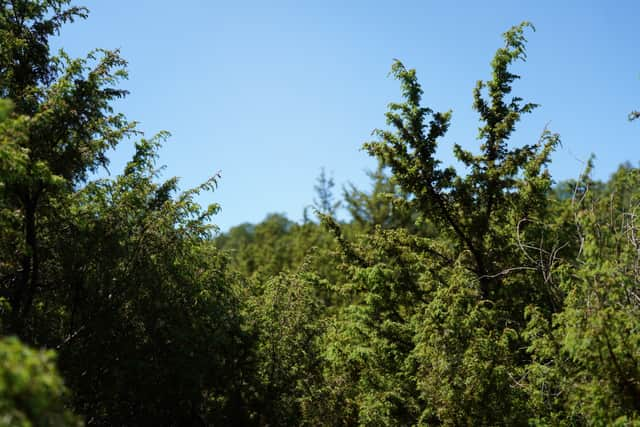

Juniper is a slow-growing evergreen shrub or small tree, with small blue-green needles and berries that ripen to a dark, blue-purple colour. It is more abundant in the drier, eastern part of the Highlands, where it reaches a larger size.
Dundreggan has relatively high rainfall for juniper, with Trees for Life saying this could have driven some local adaptation.
The species of tree helps biodiversity by providing shelter and food for a range of wildlife, including insects, mammals and birds. Juniper is also valued for its culinary, medicinal and ritual properties, including use of its berries in game dishes and its role in flavouring gin.
Trees for Life said parts of its silver birch woodlands at the 10,000-acre estate also received the classification.

Estate staff said woodlands on the lower part of the estate were home to some 50,000 juniper and 80,000 silver birch.
Commenting on the new status, estate manager Gwen Raes said: “This designation underlines why letting our ancient woodlands grow back naturally is so important to us at Dundreggan, and it celebrates the remarkable remnants of naturally occurring and locally adapted juniper and silver birch that still survive on the estate.
“The unusually wet location for juniper, and the extreme westerly location of silver birch, have contributed to making their populations at Dundreggan very special.
“Through this designation and further management, we aim to ensure these unique woodlands secure the extra care and attention they need, so they are protected and enhanced going forwards.”
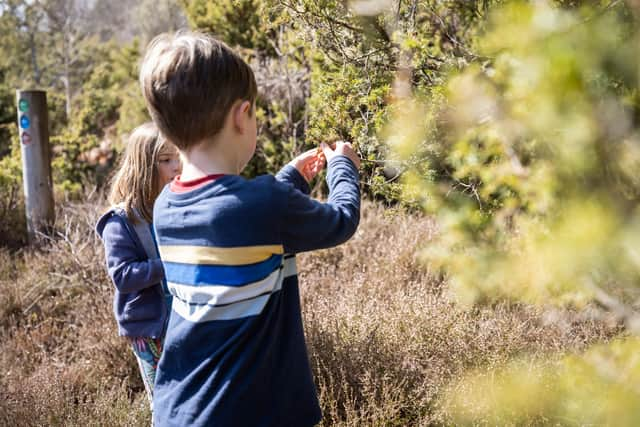
Ms Raes said also key to the designation was the estate’s use of “dynamic conservation”, which helps protect the trees’ genetic diversity.
Genetic diversity, she said, was essential for nature’s resilience to pressures such as climate change and diseases, allowing populations to adapt to new pests, pathogens or other pressures.
The network of GCUs in the UK are managed by Forest Research, an organisation that provides research services relevant to UK and international forestry interests.
Forest Research scientist Tom Sim said: “The juniper and silver birch at Dundreggan are naturally occurring without historic planting, and have likely adapted to their local conditions over many generations.
“As a result, we would expect the stands to be representative of distinct genetic variation for each species at a UK and European level.”
Comments
Want to join the conversation? Please or to comment on this article.