
Funding push after community set to take 'egregious' 500-hectare Scottish Borders forestry project to court

The Scottish Government’s forestry agency has been accused of acting unlawfully.
A community taking a Scottish Borders forestry plantation to court is campaigning for funding to help them fight the legal battle.
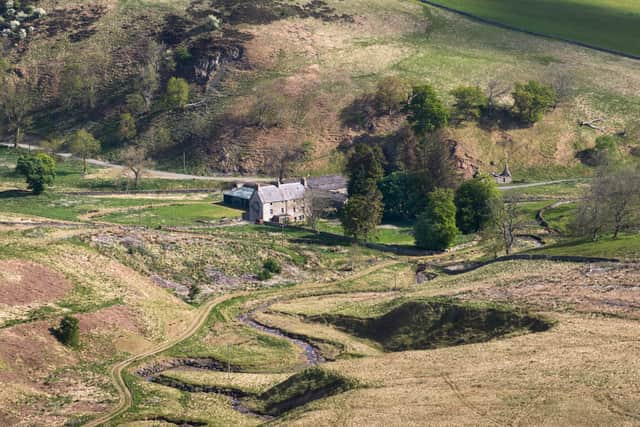
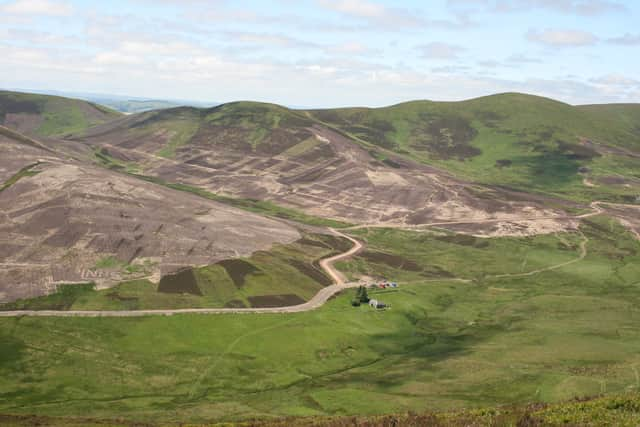
Save Todrig is hoping to raise £30,000 to cover legal fees to help them block a predominantly Sitka spruce forest stretching more than 500 hectares at Todrig Farm, near Hawick.
Campaigners said they are concerned about the impact the plantation will have on the current moorland habitat and surrounding communities.

A petition was lodged claiming that Scottish Forestry, the public agency responsible for regulating forestry and distributing grants, acted unlawfully by screening out an Environment Impact Assessment (EIA) in December last year and claiming there will be no significant environmental impacts before a public consultation was done.
The applicant, Gresham House Forest Growth and Sustainability Fund LP, of Gresham House Ltd, applied to the agency for the EIA decision before applying for grant funding under the Forestry Grant Scheme, which would have triggered a public consultation.
Campaigners accused Scottish Forestry of “acting in secret” by making a decision on the EIA before the consultation. It meant NatureScot and RSPB among other groups who put their arguments in, which included comments claiming bird surveys were inadequate, were seen months after a decision on environment impact had already been made.
David Lintott, of Restore Nature Ltd, the organisation behind lodging the petition, said: “I think it is a particularly egregious case because they [Scottish Forestry] determined there will be no harms before the RSPB and organisations like Butterfly Conservation were able to put their points across, so their arguments weren’t taken into account.
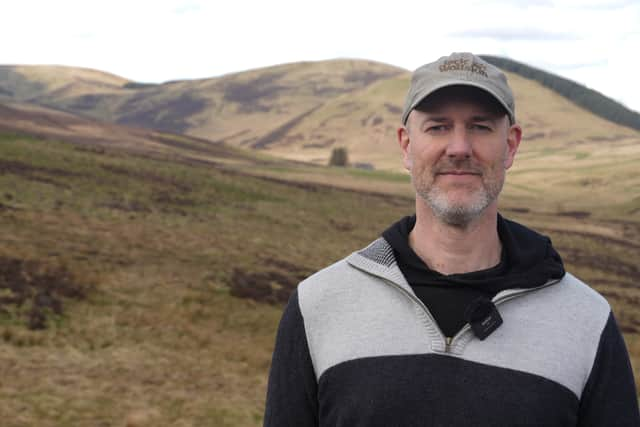
“That’s really poor when your dealing with such a huge area and something that is going to cause transformative change.”
The planned Todrig forest would link to another proposed 700-hectare predominantly Sitka forest at Whitslaid. It means the area will see some 11 square kilometres of conifer plantations across the moorland habitat, campaigners said.
The proposed schemes, which, together, would be larger than Selkirk and Hawick combined, fall into a pilot map created by Scottish Forestry for the Upper Ale area. It shows an area the agency deems suitable for planting either large scale or medium scale spruce plantations.
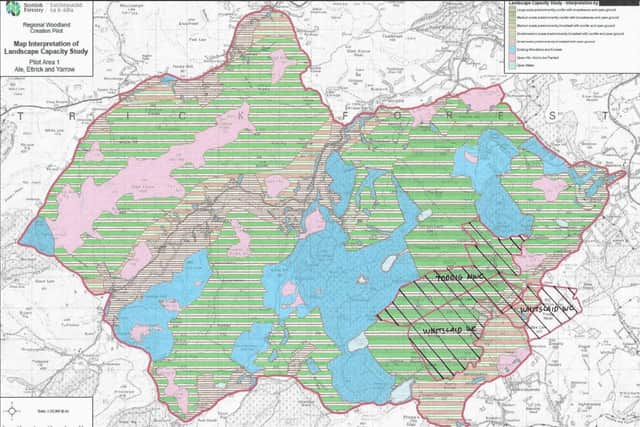
Save Todrig said, with the exception of narrow areas along the main river valleys and isolated hill tops, “pretty much everywhere is eligible for predominantly conifer plantations”. The group said, in effect, the whole area could be covered in conifers, and if extrapolated across the Scottish Borders, pretty much everywhere outside SSSIs and other protected areas.
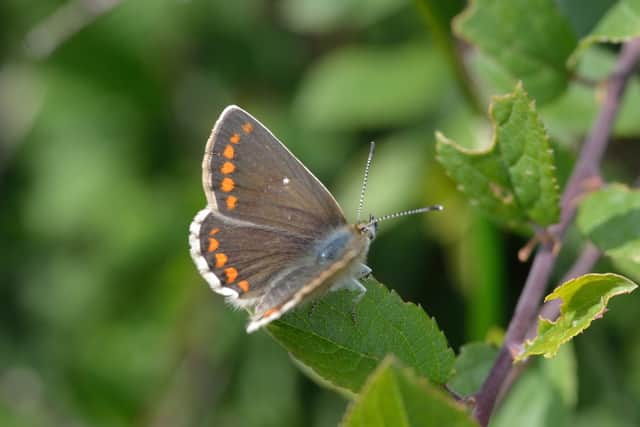
Campaigners said blanketing the area in conifer plantations will lead to “the permanent loss of a unique rolling moorland landscape in the Scottish Borders,” which provides a natural habitat for wildlife including the red-listed black grouse and northern brown argus, which is classified as “vulnerable” on the butterfly red list.
Butterfly Conservation was recently awarded £730,000 in public funding to enhance conservation efforts for the rare butterfly, which is found in limited areas of the UK, one of those being the Scottish Borders.
According to the petition, research on brown argus carried out by the charity found the “prime threat was found to be the increasing risk of afforestation being driven by generous woodland grant incentives.”
The upcoming court case comes after a successful judicial review of a plantation at Stobo Hope, also in the Scottish Borders, forced Scottish Forestry to suspend planting and a £2m grant contract they had awarded to the applicant: Forestry Carbon Sequestration Fund, which is managed by True North Real Asset Partners.
The court case was triggered by warnings from Stobo Hope Action Group that hundreds of hectares of the site had been sprayed with herbicides prior to the forestry application being submitted.
In Scottish Forestry correspondence, obtained by Freedom of Information requests, an agency staff member described the site looking like it had been “napalmed” following the spraying.
Mr Lintott, who was also involved in the Stobo Hope case, said: “You would think they [Scottish Forestry] would be more careful after seeing that. But the fact they haven’t been in the Todrig case has been disappointing and particularly concerning.”
Community groups have been set up in response to the proposed forestry schemes, including the Upper Ale Water Conservation Group who met with Scottish Conservatives MP John Lamont and MSP Rachael Hamilton to discuss their concerns.
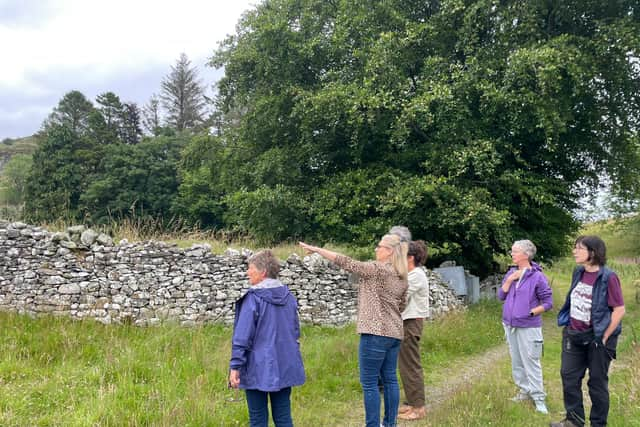
Speaking during a visit on Wednesday, Ms Hamilton said: “The local community are rightly concerned by these forestry applications and the lack of scrutiny around the consultation process.
“There needs to be more accountability of Scottish Forestry to ensure that swathes of forestry are not forced upon communities against their interest.
“That’s why I brought forward an amendment to the Land Reform Bill for the Scottish Government to implement an Ethical Framework for Natural Capital Investment that ensures local community have a voice, but it was shamefully voted down at stage two.”
Scottish Green Party candidate for Dumfriesshire, Clydesdale and Tweeddale Dominic Ashmole backed the Save Todrig petition saying it was “a fine public service.”
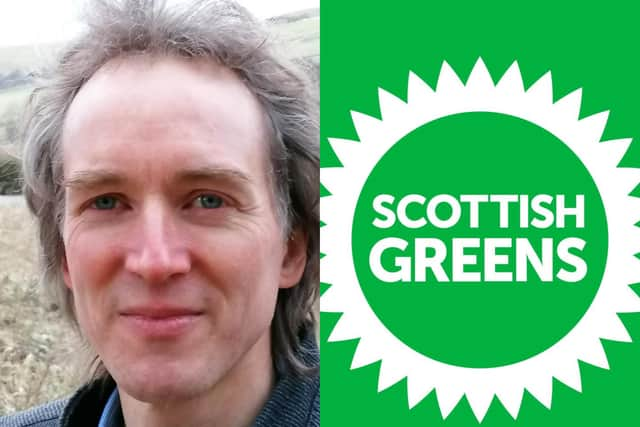
Mr Ashmole, who was recently selected by the Greens as a South Scotland regional candidate for the upcoming Scottish Parliament election, said: “If successful, the case could set a precedent ensuring routine and substantive EIA of proposed forestry schemes, which could steer us to a place where we have locally-led, nature-friendly, continuous cover forestry that provides a whole host of co-benefits.
“At the moment, it seems that a scary big climate target is being wielded very much as a blunt instrument, perhaps with pressured civil servants reaching for ‘big corporate’ solutions rather than funding communities and smaller players to create a future closer to what locals and the wider public actually want.”
Gresham House insisted it adheres to regulatory standards and industry best practice across all its projects.
A spokesperson for the company said: "Community engagement is really important.
“For the Todrig proposal, we’ve undertaken a formal public consultation and invited feedback from statutory bodies including SEPA, NatureScot, and RSPB Scotland.
"In response to early input, the current design includes a commitment to retain approximately 40 per cent of the site as open ground, primarily to support biodiversity and habitat creation. Once operational, all planting, felling, and management plans will be made publicly available - and as with any forestry project, we actively look for ways to deliver wider community benefits through improved public access, educational opportunities, and support for local initiatives.”
A Scottish Forestry spokesperson said: “It is inappropriate to comment as litigation is now underway.”
Comments
Want to join the conversation? Please or to comment on this article.