
Fourth stoat spotted on Orkney island after three trapped and killed

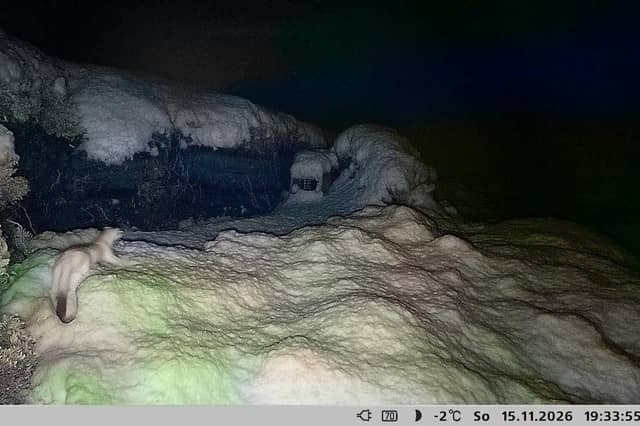

Conservationists said the climbing number of stoats found on Rousay is ‘deeply concerning’ for local wildlife and the island community.
A fourth stoat has been spotted on one of Orkney’s smaller islands as efforts continue to trap and kill the animals to protect local bird populations.
The animal was caught on camera on the island of Rousay earlier this month.
Stoats are not native to Orkney and prey on ground-nesting birds, from breeding seabirds to birds of moorland, peatland and lochans like curlews, hen harriers and short-eared owls, as well as a subspecies of vole, the Orkney vole, that is not found anywhere else in the world.
The sighting comes after three stoats, all adult males, were trapped on Rousay and killed in the last couple of months.

The first one of them spotted on the island was caught on October 9 near Loch of Loomachun.
The trapping took place as part of a wider £16m project to eradicate the predator from the archipelago using dogs, AI cameras and extra traps. The Orkney Native Wildlife Project (ONWP), which is leading the project in Rousay, said the latest sighting on 16 November was concerning news for the island’s native wildlife, and for the whole island community.
Stoats were first spotted on the Orkney mainland in 2010 and then on the surrounding smaller islands that are linked by road.
It is unknown as to how the animals reached Rousay, which has no fixed link. However, stoats are strong swimmers, and conservationists at NatureScot believe they may have reached the island by swimming the narrow stretch of sea called Eynhallow Sound from mainland Orkney.
Graham Neville, head of north of Scotland operations at NatureScot, told BBC Radio Orkney: "We are all incredibly disappointed and it is deeply concerning for Rousay and the community and the volunteers who have been helping us with this incursion."
He said it was not believed that stoats had established themselves on the island. Mr Neville told the programme while swimming is a possible reason for their spread, there is also a chance that someone has broken the law and moved to the stoats to the island.
"The silver lining in all of this is that we have got such a good monitoring network on Rousay now,” he added.
“The surveillance is working."
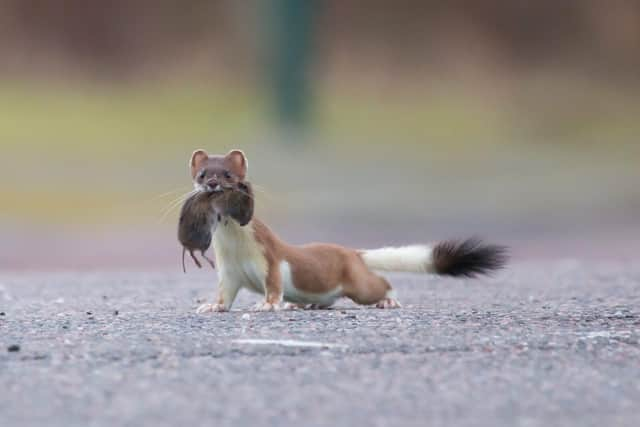
The ONWP has been leading an ongoing multi-million pound stoat eradication project for about seven years. Since 2019, figures showed more than 9,100 stoats have been removed using humane lethal traps and Europe's first stoat detection dogs.
Critics, including leading wildlife and conservation experts, have argued the project has taken too long, is too costly, and has failed to meet its initial objectives quickly enough, with some calling it a "flop" and a "waste". One of those, conservationist and moorland expert Ian Coghill, has previously claimed the issue could initially have been resolved cheaply and quickly by experienced gamekeepers, but instead escalated under the RSPB’s management despite significant funding.
NatureScot supports the ONWP which has secured £150,000 to continue its monitoring and eradication project until March.
The ONWP said it looks to New Zealand for lessons about stoats. The mammals, which are in the same family as weasels and otters, were introduced to the island in 1884 to control rabbits with catastrophic consequences. While rabbits remain a problem, stoats contributed to the extinction of New Zealand’s laughing owl, mātuhituhi, and South Island Kōkako, all within 100 years.
Comments
Want to join the conversation? Please or to comment on this article.