
Forestry chief warns Scotland set to miss planting targets again

Scotland’s forestry sector is facing an increase in interest from rural communities.
Forestry leaders have warned Scotland will fail to meet its planting targets for yet another year amid concern investment is going elsewhere.
Since annual targets for woodland expansion were set, the Scottish Government has missed the goal every year apart from 2018, when it was met for the first time.
In recent years, planting rates have often fallen significantly short of the set targets, with the year from 2022 to 2023 seeing only 8,190 hectares of a 15,000 target planted.
Read more: How these changes to Sitka spruce plantations could help improve biodiversity in Scotland
Jon Lambert, of Goldcrest Land & Forestry Group, an independent UK firm of chartered surveyors and foresters based in Edinburgh, warned the figures are down because of the lengthy and clunky grant application process.
“The amount of planting in Scotland is way down than it should be,” said Mr Lambert.


“At the moment, 18 months to two years is pretty common when it comes to processing these applications for grants. I find that quite extraordinary.”
“We still have huge swathes of countryside that will be more appropriate for timber production than having a dozen sheep marching over it.
“Scottish Forestry are not doing their job properly.”
Scottish Forestry, the agency responsible for forestry policy and grants, said the claim targets will fail this year were premature given the statistics for this year will not be released until June 2026.
The wider sector has blamed the slow growth on funding cuts, delays to grants and a lack of long-term planning and investor confidence.
Mr Lambert said planting conifers needs to increase to reduce the UK’s reliance on timber imports.
Industry leaders have regularly pointed to the fact that Britain is the second highest importer of timber in the world, bringing in around 80 per cent of its wood products from overseas.
Conifers, including the non-native Sitka spruce, are popular with the timber industry due to their fast-growing qualities compared to the slower native species.
“There’s too much emphasis on broadleaves at the moment,” he said.
“The conifer planting is much better than what is was in 1980s but there’s still a lot of resistance to them going on. And because of this, people who are interested in buying land to plant will certainly prefer to go to England and Wales.”
Commercial forestry projects have been highly contentious for some rural communities, with some plantations embroiled in legal cases.
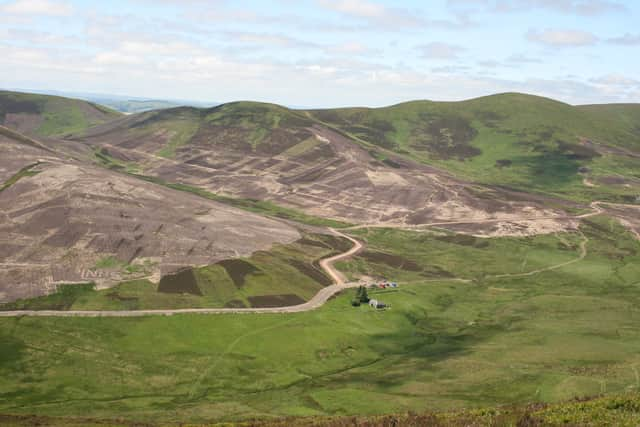
Campaigners have pointed to environmental concerns surrounding conifer plantations, including impact on moorland species.
The Royal Society of Edinburgh (RSE), Scotland's national academy, also published a report last year recommending that the Scottish Government discontinue public subsidies for commercial conifer plantations, arguing they deliver fewer climate or biodiversity benefits than native woodlands for the cost.
Scottish Forestry said planting schemes today are subject to “much more scrutiny” and are attracting an increasing interest from communities.
The agency said this has led to raised expectations in terms of transparency, community consultation and assessment.
Where this is done well, Scottish Forestry said projects generally progress “within a reasonable timeframe.”
A spokesman for the agency said: “We don’t agree with the pessimistic view being expressed here.
“Scotland is still very much the place for forestry and we are doing all we can to support it.
“Over 70 per cent of all the UK’s new woodlands in the past five years have been created right here in Scotland and we fully expect to continue producing the lion’s share of woodland creation.
“It is important to note that this has been achieved through a very challenging time too - through Covid, Brexit and the worst winter storms for a decade.
“Added to this, everyone knows there has been very tight public spending, however we have had nearly a 20 per cent rise in funding for woodland creation in this current year.
“We are very alive to the fact that applying to plant larger scale new woodlands is a complex process, but it is vital that projects consider relevant environmental information and take account of sensitivities in their scheme design.”
Comments
Want to join the conversation? Please or to comment on this article.