
Muirburn licensing 'should be delayed' in wake of wildfires, say farmers

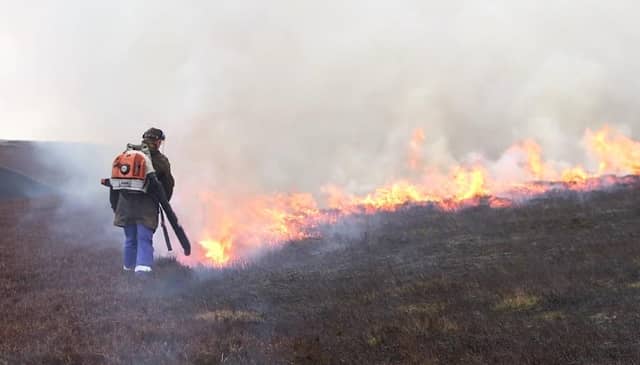

The new muirburn licensing rules are due to come into force next month.
Farmers in Scotland have called on the Scottish Government to delay its new legislation for muirburn - controlled burning of vegetation - in the wake of devastating wildfires.
The new rules, which come into force next month, makes it an offence to carry out muirburn in Scotland without a NatureScot license.
Muirburn is often used on grouse moors to lightly burn heather to encourage fresh shoots for wildlife to feed on. The longstanding land management practice is also an essential tool in wildfire mitigation for some estates and farmers for creating “fire breaks” to prevent the spread and intensity of flames.
New rules under the Wildlife Management & Muirburn (Scotland) Act, which have been delayed already over questions about their effectiveness, require land managers to provide evidence of muirburn training and provide peat depth reports for estates. NatureScot said the aim is to ensure muirburn is carried out safely.

The National Farmers Union Scotland (NFU Scotland), however, has called for the legislation to be delayed, claiming that it would create unnecessary barriers at a time when effective vegetation management is more important than ever.
The union’s calls come after a large-scale wildfire broke out in the Cairngorms three weeks ago - and continues to burn.
Other rural groups, including Scottish Land and Estates, an estate membership organisation, argue that the application process for a licence has become unnecessarily burdensome, particularly with peat-depth reports, which can be costly and time consuming, and have called for it to be simplified.
Debbie Playfair, chairwoman of the environment and land use committee at NFU Scotland, said: “Wildfire prevention starts long before the first emergency call is made. The people managing these landscapes every day need the right tools, support and flexibility to reduce risk.
“Responsible muirburn, carried out by skilled practitioners in appropriate conditions, remains one of the most effective tools available to manage vegetation and reduce fuel loads.
“We are asking the Scottish Government to delay the introduction of the licensing regime to ensure it is practical, proportionate and does not unintentionally increase wildfire risk. We have been working constructively with stakeholders and government since a licence was announced, however given the recent devastation of the fires, we do not believe now is the time to increase barriers to active prevention.”
The union also called for a Wildfire Resilience Strategy that recognises the role of active land management and provides targeted support for measures such as upland livestock grazing, firebreak maintenance, vegetation management, access routes and water points.
Following the Dava moor wildfire last year which, combined with the Carrbridge wildfire was recorded as the largest wildfire incident in Scotland’s history, the Scottish Government delayed the implementation of the muirburn licensing scheme to allow further scrutiny of its effectiveness and more scientific research.
Minister for Agriculture Jim Fairlie said the evidence-based conclusion was that a licence scheme “was still a proportionate and balanced approach, helping to ensure muirburn is carried out safely and responsibly while continuing to support wildfire prevention.”
Mr Fairlie said: “With the threat from wildfires increasing, we will continue to work closely with land managers, rural communities and other partners to improve wildfire resilience while protecting Scotland's natural environment. Recent wildfire events have reinforced the importance of ensuring appropriate wildfire mitigation measures are considered across Scotland's landscapes.”
Comments
Want to join the conversation? Please or to comment on this article.