
Controversial battery park given go ahead for Highlands following appeal

Local residents had launched a campaign to formally object to the plans.
A controversial battery storage park has been approved for the Highlands following an appeal.
The development will go ahead near Taynuilt near Oban in the west Highlands.
Battery energy storage systems (BESS) are used to store electricity from renewable sources like wind and solar to release the energy back to the grid when needed.
Downing Renewable Developments (DRD), the firm behind the project, said the facility will store enough energy to power up to 150,000 homes for a two-hour period with an installed capacity of 49.9MW.
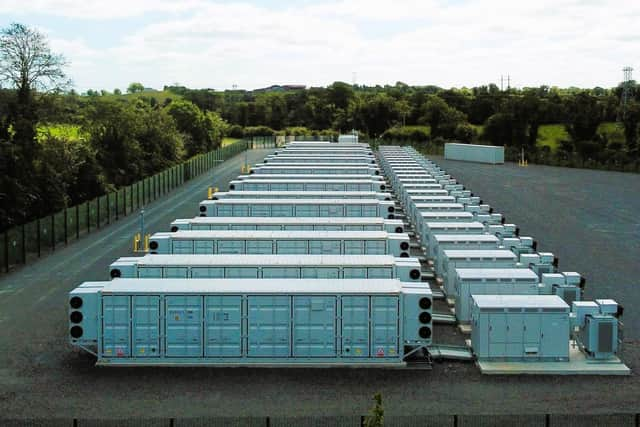

Planning documents show it includes transformers, battery enclosures and will operate for about 40 years.
DRD pledged a £1,000/MW one-off payment to support local projects once construction starts. The company said its long-term plan aims to deliver at least 10 per cent more biodiversity than before the site was installed. This includes planting a woodland and meadows around the site.
The development has been highly controversial for the local community.
Residents set up a campaign to fight against the plans, during which they raised £2,400 to involve a planning consultant to prepare a formal objection to the battery storage park.
The campaigners called for a public meeting with Argyll and Bute Council, however DRD submitted their application directly to the Scottish Government.
Some of locals claimed the company had “sidestepped” local democracy in the process.
Tony Gannon, head of DRD, said: “We are delighted to have obtained planning consent for the Taigh an Uillt Energy Storage Park and pleased that the Reporter recognised that the site selection was appropriate, and the information submitted as part of the planning application was sufficient to support his determination.
“We look forward to delivering the Energy Storage Park and contributing to energy resilience in the area, whilst also offering a significant community benefit contribution.”
Plans for some 80 battery energy storage systems (BESS) were lodged for Scotland over the last three years, according to figures from the Scottish Government.
Concerns about the proximity of BESS to residential areas, their impact on agricultural land, potential noise, fire and flood risks have been widely raised among rural communities.
Results from a Freedom of Information request, obtained by the Scottish Conservatives earlier this year, showed 75 of applications between 2022 and 2025 have not required an environmental impact assessment (EIA).
These include the consented 900 MW Alyth BESS in Perth and Kinross and the Coalburn BESS in South Lanarkshire. The latter is part of a portfolio that will total 1.5 GW of power, making it what is believed to be Europe's largest once complete.
Other sites that have not required an EIA include a further eight in South Lanarkshire, eight in the Highlands, seven in East Lothian, and five across Aberdeenshire.
Developments that generate more than 50MW need permission directly from the Scottish Government to be built under the Electricity Act 1989. Meanwhile, applications below 50MW are determined under the Town and Country Planning (Scotland) Act 1997 and are usually a matter for local councils.
Comments
Want to join the conversation? Please or to comment on this article.