
Shetland fishermen calling for stronger protection in 'marine squeeze' with energy developments

Calls have been made for more robust siting rules to steer energy infrastructure away from key fishing grounds.
Shetland fishermen have called for stronger measures to safeguard their fleets from the onset of energy developments in the waters where they work.
A new report by the Shetland Fishermen Association (SFA) warned that current proposed developments are due to be located in the archipelago’s established fishing grounds.
The organisation claimed the footprint of the planned offshore wind farms alone is equivalent to 38 per cent of Shetland’s land area, with cable corridors and other infrastructure to add to the figure.
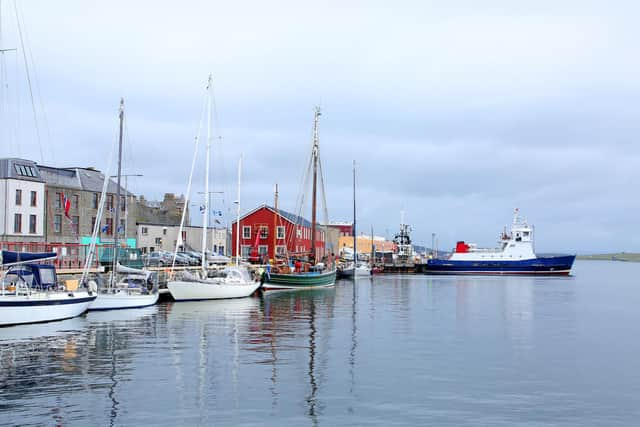

The SFA said this WAS contributing to the “spatial squeeze” being felt by the fishing industry.
Although Shetland’s surrounding waters make up only 17 per cent of the UK’s sea area, the sector claims the island produces around 33 per cent of the nation’s fish catch.
Scottish ministers said they recognise the increasing pressure on marine space with the competing sectors.
A spokesperson for the Scottish Government said its new National Marine Plan should help balance the fishing and energy industries.
The SFA’s 85-page study, co-developed with Voar Energy, which specialises in advice and technical services for coastal and offshore energy projects, highlighted the marine spatial demand of current projects. It reference the planned Arven and Stoura floating turbine wind farms to the east of Shetland, which would take up 458km² and 100km² respectively.
The report said these would cover areas which are currently used by both whitefish and pelagic fisheries.
The paper made urgent demands for safeguards to prevent the family-owned fishing fleet from being harmed by energy giants headquartered outside the isles.
Authors have called for stronger and earlier consultation steps so fishermen have a real say in project design and operations.
SFA executive officer Daniel Lawson said: “Shetland’s diverse, family-owned fishing fleet is being put in serious jeopardy by these projects.
“Government and energy industry leaders need to realise that skippers cannot just move somewhere else.
“Wind farms of the type and scale proposed to the east of Shetland will permanently exclude vessels from some of the most productive fishing grounds in the world.
“Worst of all, unlike the fishing industry, ownership of these projects lies outwith Shetland, meaning the economic benefits derived from Shetland’s seas will shift away from local hands to outside interests.”
Mr Lawson added: “Shetland’s seas are becoming a proving ground for the so-called ‘just transition’.
“We support renewable energy and recognise its importance, but it cannot come at the expense of the fishing industry – an industry that provides food security, skilled jobs, and one of the lowest carbon sources of protein in the world.”
Daniel Gear, of Voar, said the issue lies not with an individual project, but the way multiple developments or restrictions interact to narrow the sea space that fishermen rely on.
He said: “Unless that cumulative impact is actively managed, the balance of who benefits from Shetland’s waters will shift, not by design, but by default.”
A Scottish Government said it is due to publish Scotland’s first regional marine plan for the Shetland Islands.
A spokesperson said: “We recognise there is increasing pressure on marine space, and that there are valid concerns from those engaged in existing marine activities – which is why our National Marine Plan 2 will set out the sustainable development of Scotland’s marine shared space, in line with our Blue Economy vision and our just transition principles.
“The plan will consider our marine economy, local communities, and the environment helping to ensure the right planning framework is in place to address the increased competition for marine space, whilst balancing the need for protection and enhancement of the marine environment and sustainable development of existing and emerging sectors.”
Comments
Want to join the conversation? Please or to comment on this article.