
Here's what 7 of Scotland's top private school headteachers said about their hopes and fears for the future

Future remains bright for many institutions, despite challenge of VAT raid
The future of Scotland’s private schools has been under the spotlight since the new Labour government cemented plans for a tax raid on the sector.
The decision to start charging VAT on fees has already been blamed for the closure of two schools. But it is not all doom and gloom, as The Scotsman found out when it asked head teachers from seven of the nation’s leading independent schools about the opportunities and challenges they envisage for the coming years.
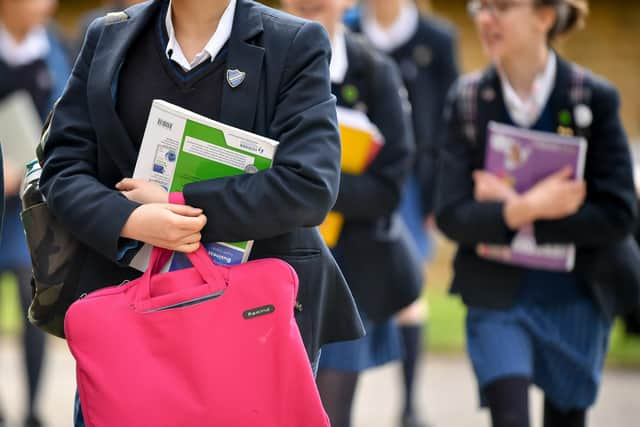

Here are the key messages from their responses, which were published in full in the Independent Schools supplement at the weekend.
The VAT change is a problem, but the future remains bright for many
Helen Harrison, head at Fettes College in Edinburgh, said: “As the leader of our school, one of my greatest current challenges is adjusting to the imposition of VAT on school fees, ensuring we find a way to share this burden with parents so we can retain the full range of opportunities in our diverse and inclusive community of which I could not be prouder.”
Mark Lauder, Strathallan School headmaster, said: “Front of mind for independent schools today is the impending introduction of VAT on school fees, a policy that could place independent education out of reach for many hard-working families already contending with the rising cost of living.
“At Strathallan, after years of growth, prudence and innovation, we are fortunate to be in a strong position and able to take these challenges as an opportunity to evolve and develop our school further.”
Gordonstoun principal Peter Green said: “Despite the planned introduction of VAT, we want to widen access to a Gordonstoun education and remain committed to funding our bursary programme, which offers life-changing opportunities to children from the most under-privileged backgrounds.”
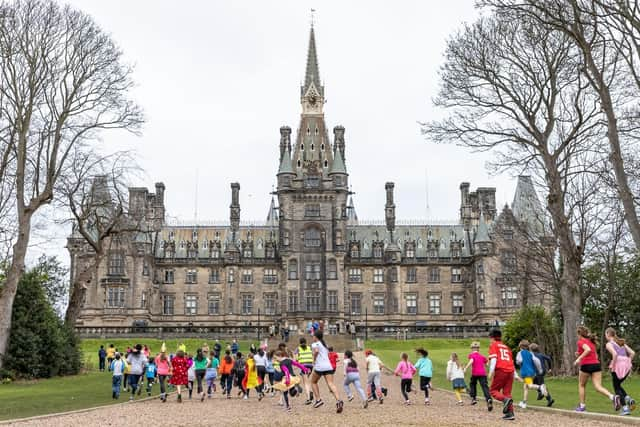
It is time to move beyond division and to recognise the wider role independent schools can play
Lisa Kerr, principal of George Watson's College in Edinburgh, said: “Despite the deliberately collaborative design of the Holyrood chamber, Scotland has not been immune to emulating a world where you have to make a binary choice.
“In an unwelcome echo of politics across the pond, we ask if you are a unionist or a nationalist, a Brexiteer or a Remainer.
“In education, too, we are seeing a similar polarising approach to the proposed application of VAT to independent school fees - are you for the 93 per cent [who attend state schools] or the 7 per cent [in the independent sector - much higher, of course, in Edinburgh].
“This is, of course, nonsense. Those of us who work in schools know that education is not a zero-sum game.”
Ms Kerr added: “To create an environment where we get it right for every child, our challenge is to move away from polarised posturing and instead be for the 100 per cent, with a focus on partnerships and collaboration. This is where opportunity lies.”
Robin Macpherson, head of Robert Gordon's College in Aberdeen, said: “We need to keep getting our message out on the nature and benefits of the independent sector, so that it is better understood by all.
“Ultimately, all independent schools want to play their part in systems-wide improvement, and want to extend access to an independent education regardless of family income.”
Independent schools are leading the way on technological and curriculum innovation
Ian Munro, rector at Dollar Academy, said: “In May 2021, we established the Futures Institute at Dollar Academy (FIDA) to tackle three key challenges in education: ensuring equitable access and closing the poverty-related attainment gap, exploring innovative alternatives to traditional teaching and assessment systems, and embedding sustainability into education.
“The demand for a more inclusive education system, one that values diverse skills and achievements beyond traditional exams, continues to grow among students, educators, and business leaders.”
He added: “One of our most exciting initiatives is the International Sustainability Diploma, launched through FIDA and being piloted in seven schools across the Highlands and the Central Belt.”
Victoria Gamble, headteacher of Fairview International School in Bridge of Allan, said: “As we navigate the complexities of the 21st century, it’s essential to re-evaluate the way we approach education.
“The traditional model, centred on memorisation and standardised testing, is outdated and ill-equipped to prepare our students for the rapidly changing world they will face.”
She added: “In this context the International Baccalaureate (IB) programme offers a compelling alternative. Unlike conventional systems, its enquiry-based framework emphasises creativity, and global citizenship.”
Ms Harrison [Fettes] said: “After GCSEs, we offer a choice between A Levels and the International Baccalaureate, a dual Sixth Form pathway which accommodates diverse learning styles allowing students to capitalise on their individual strengths.
“Recent curriculum innovations include the introduction of our bespoke Middle School Diploma, while our sixth formers are currently engaged in our This Will Be Your World leadership lecture series, encouraging them to engage with such key issues as climate change and inequality, learning from industry leaders.”
Mr Green [Gordonstoun] said: “My vision is to take Gordonstoun ‘back to the future’ by fully embracing the principles of our founder, Kurt Hahn, in particular giving ‘children opportunities for self-discovery’.
“Hahn was one of education’s greatest innovators and, like him, I firmly believe that students need to encounter ‘challenge’ and, above all, ‘compassion’ during their school days. Challenge is found in the classroom, on the mountains and sea, and many other areas.”
Private schools can be beacons of inclusion
Mr Macpherson [Robert Gordon's] said: “The most exciting area for me is around EDI [equality, diversity, and inclusion]. Independent schools have become increasingly attractive for families with children who are neurodivergent, and for ethnic minorities.”
He added: “Independent schools are now so far removed from the stereotypes of the 20th century, and EDI is a prime example of that transformation. It’s a trend that will continue to grow in future years which we will continue to embrace.”
Comments
Want to join the conversation? Please or to comment on this article.