
Energy use cut by 50% at Fife's 'too flipping hot' Passivhaus school
It might be too hot but Fife’s world’s-largest Passivhaus school has gained full marks for energy efficiency

Pupils may have complained it was “too flipping hot” in their world-first new school - but builders are hailing a 50 per cent cut in energy use.
Developers BAM UK & Ireland have boasted that teenagers are “staying cosy and warm” in what is the world’s largest Passivhaus school.
Energy bills have been cut by £433,392 while energy consumption has reduced by 48 per cent in its first year of operation, the firm claims.
The figures may be cold comfort to pupils who were reported by a local councillor to be “stressed out and sweating” in the new building.
Jim Ward, Regional Director at BAM UK & Ireland, said: “These figures prove without doubt that Passivhaus works at scale.
“Because we built and now operate the school, we can see exactly how it performs in real conditions including during periods of extreme cold.
“The building is operating around 20 per cent better than its original energy performance target, while delivering significant financial benefits, which is a real accomplishment and sets a new standard.”
Passivhaus is an environmentally efficient standard of building - developed in Germany - that makes airtight and highly insulated buildings with little or no heating requirements.
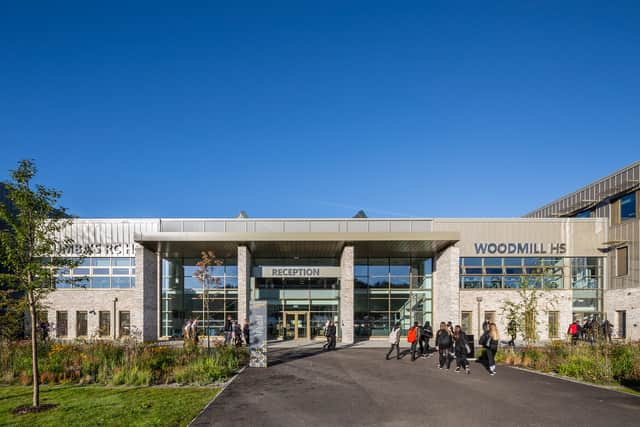

Built by BAM UK & Ireland for Fife Council, the new Passivhaus-certified building opened in Autumn 2024.
It brought together 2700 students from two high schools, Woodmill and St Columba’s, and replaced older school buildings.
The two schools are linked by a central hub designed to foster collaboration, innovation and community use, supporting better outcomes for all.
“Building like this is not without its challenges - Passivhaus schemes demand a different approach from the industry from conception to delivery,” Mr Ward added.
“They introduce a new level of accountability where every system and every detail has to perform exactly as intended."
Under Scottish Learning Estate Investment Programme (LEIP) funding requirements, the first-year energy performance of the building is critical, with funding contingent on meeting strict in-use energy targets.
Under a three-year facilities management contract with Fife Council, BAM UK & Ireland is delivering real-time monitoring.
The firms say monitoring so far shows the building is far exceeding the required targets, setting a new benchmark for sustainable school design in the UK and helping to reduce energy costs.
Councillor Cara Hilton, Fife Council’s education spokeswoman, is delighted Dunfermline Learning Campus is living up to expectation: “The Passivhaus certification continues to be a fantastic achievement for Dunfermline Learning Campus.
“It highlights our commitment to sustainability and providing high-quality learning environments for our students.”
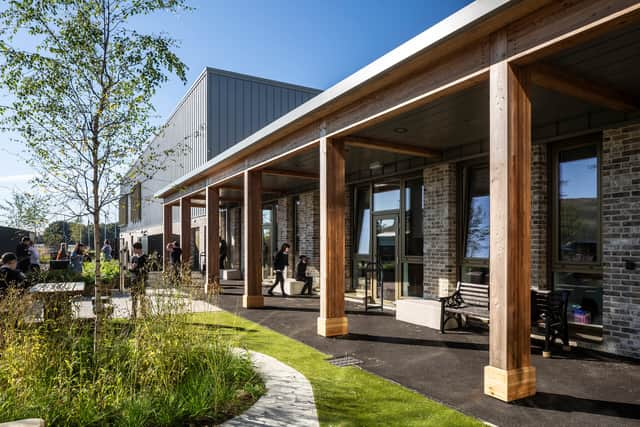
At a recent Fife Council meeting, councillor Jean Hall-Muir complained that confusion over the opening of windows had left the building too hot.
“Despite reassurances, even at the new learning campus, we need to better balance what it is like for 35 small hormonal humans to be in a room that you cannot open the windows,” she said.
However, there are no complaints from headteacher of St Columba's RC High School, Mick McGee, who said: “Purpose-built shared spaces, a modern Learning Lab, Learning Plazas and advanced classroom technology allow our young people and staff to work, learn and create in an inspiring Passivhaus environment."
Rector of Woodmill High School Sandy McIntosh added: “Our Passivhaus shared campus puts young people at the heart of the design, offering a comfortable, innovative, modern and energy efficient environment that supports their wellbeing, focus and learning every day.”
BAM has managed the project across its full lifecycle, from design and construction to current monitoring and management.
A digital twin and building management system collects data from 150 metering points every 30 minutes, enabling live performance monitoring and allowing BAM to assess factors such as temperature and air quality in real time.
Comments
Want to join the conversation? Please or to comment on this article.