
'Bleak' warning as report finds universities are 'not sustainable' under current funding model

While the report paints a bleak picture, the reality may be far worse for Scotland’s universities
Scotland’s universities are “not sustainable” under their current funding model, a leading economist has warned.
New research has outlined a “bleak” financial pictures that is likely to be even worse than the figures used show.
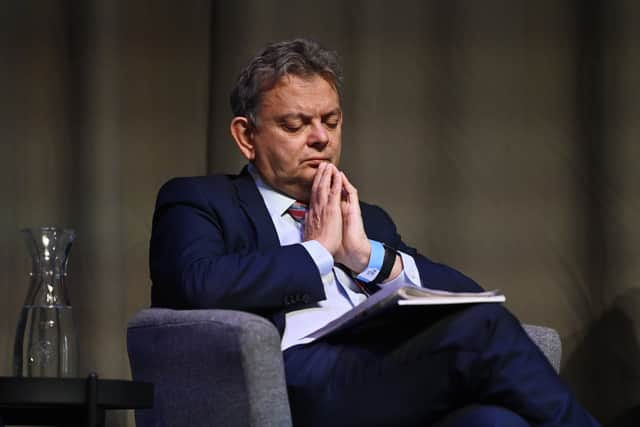
Anton Muscatelli, former Principal of the University of Glasgow, said the sector faces “an acute and growing financial crisis” that has accelerated since the Covid pandemic.

For 2023-24, expenditure by universities exceeded their income by about £200 million.
READ MORE: Scots universities in stark warning to Home Office over 'serious weaknesses' in student visa scheme
The public funding gap for teaching Scottish students reached approximately £288 million in 2023/24 with around only 82 per cent of the costs of teaching recovered.
The real terms drop in investment will raise fresh questions about the viability of free student tuition.
Professor Sir Anton Muscatelli, President of the Royal Society of Edinburgh, said the “picture painted in this analysis is bleak”.
“Collectively, Scotland’s universities face an acute and growing financial crisis,” he said.
“The funding they receive – from both public and private sources – is not sufficient to sustain their core activities.”
The Funding Gap Analysis Report is a joint piece of work from the Scottish Government and Universities Scotland.
It presents the first comprehensive assessment in 15 years of the gap between all sources of income to Scotland’s 18 universities and the full economic cost of delivering their activities.
Sir Anton’s report finds funding universities receive and the income they generate is not sufficient to sustain their core activities of teaching or research, creating a funding gap between cost and all sources of income of around £200 million in 2023/34.
He described this as a “conservative estimate”, adding: “Today’s reality, for many institutions, is one of persistent year-on-year funding gaps.
READ MORE:A barely audible 'guilty' marks the pinnacle of the Peter Murrell drama that has dogged the SNP
“The consequent cost cutting creates a false impression of longer term sustainability and likely means that the funding gap facing the sector is even larger than the data used in this report suggests.”
The funding gap for university research has reached approximately £580 million in 2023/24, with only 72 per cent of costs recovered.
In less than 10 years, international - non-EU - student fees have grown to account for nearly half of all teaching income.
The figure was less than one third in 2016/17 and was nearly 50 per cent by 2023/24 across all universities.
For the ancient universities, non-EU students accounted for 58.1 per cent of teaching income.
This rising dependency creates vulnerability in a sector underpinned by foreign students but where the Scottish government has no levers to control immigration.
Reduction in international student recruitment affects universities’ ability to support teaching, research, infrastructure investment, and wider activities currently sustained through cross-subsidy.
Other pressures include estate maintenance.
Twelve Scottish universities have confirmed the presence of reinforced autoclaved aerated concrete (RAAC) on their estates, across 35 buildings.
Of these, 13 buildings have been fully or partially closed with the total cost of repairs estimated at £77.2m.
Education Secretary Màiri McAllan said universities “make an outstanding contribution to our economy and wider society”.
She added: “Our joint commitment to the protection of free tuition means that Scottish students are not hampered by the levels of debt we see elsewhere in the UK, and they are able to go to university based on their ability to learn and not their ability to pay.”
Ms McAllan pointed to this year’s exam results data showing a record number of young Scots going to university.
She said: “However, I recognise the need to ensure a sustainable model of funding which recognises wider financial pressures facing universities in Scotland and indeed across the UK.
“The UK government’s crackdown on international student visa routes, coupled with Brexit, inflation, energy prices and increases to employer National Insurance contributions have all added to the sector’s financial pressures.
“Our shared commitment remains to securing a sustainable future for Scotland's universities while protecting the core principle of free tuition for Scottish students.”
Convener of Universities Scotland and Co-Commissioner of the Future Framework, Professor James Miller, recently warned of the pressures on universities caused by the Labour government’s student visa changes.
He said of the Future Framework report: “The analysis is clear that the current position is not sustainable and provides a foundation for the work ahead.
“This is not simply an issue for universities but for Scotland as a whole.
“Today's report is the beginning of a wider conversation, not the end of it.”
While all universities are affected differently, the report concludes the financial constraints facing them are systemic.
Mary Senior, Scotland Official for UCU Scotland and Future Framework Steering Group member, said: "This report comes as no surprise to workers in universities, as they along with students have been at the sharp end of this chronic under-funding.
“The reality of the unsustainable system is cuts to jobs and courses, unsafe workloads, stagnating pay, and all too many workers on precarious contracts.
"It's vital that the next stage of this review leads to sustainable solutions.
“Alongside that there is an urgent need for an injection of cash to stabilise the system.
“We are clear that the forthcoming Scottish budget needs to support a university sector without mass redundancies to deliver the world leading teaching and research that powers our economy and society."
The Framework for the Sustainability and Success of Scotland’s Universities was launched in late December 2025 as a joint exercise between Scottish Government and Universities Scotland.
Its task is to explore options for ensuring a sustainable and successful future for Scotland’s 19 higher education institutions to 2045.
The first phase of the work was to assess the extent of funding challenges facing the sector.
Get our revamped Steamie newsletter
The next phases will draw on trend analysis and stakeholder input to consider how universities will need to adapt ahead of the curve of a raft of anticipated demographic, technological and other changes.
Comments
Want to join the conversation? Please or to comment on this article.