
Wind turbine recycling hub in repurposed warehouse turns renewable energy greener


What happens to old and broken wind turbines when they are no longer needed?
A 100-year-old engineering works on the banks of the Clyde is getting a new lease of life as a recycling hub for defunct wind turbines.
The warehouse, off Glasgow’s South Street, was built in 1913 to manufacture marine diesel engines for British Engine Works – a purpose it served for many decades.
It was later used as a store and cable-stripping shed by Glasgow-headquartered scrap merchants EMR Metal Recycling, but had been largely dormant in recent years.
Now the disused building will play home to a pioneering wind turbine processing facility that will help Scotland’s renewables industry become even greener.
While wind power delivers an increasingly high percentage of energy demand in Scotland and the UK, the oldest turbines are now reaching the end of their operational lifespan – usually around 25 years.
But the structures have until recently proved troublesome to deal with once defunct.
Turbines are made of a variety of materials, including a high proportion of infinitely recyclable – and valuable – metals such as copper, steel and aluminium, found in the towers and nacelles.
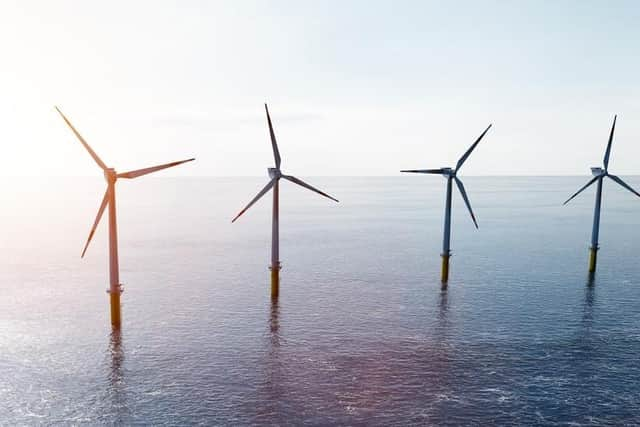
Cutting waste and need for virgin materials
EMR’s new facility will enable these metals to be recovered and reused, contributing to the circular economy.
Options for treating blades, usually made from fibreglass and balsa wood and so trickier to recycle, are also being explored.
The Glasgow site has achieved a permit to receive and store blades to trial innovative new techniques to handle and downsize them to enable repurposing, recovery and recycling to be undertaken.

This means the Wind Turbine Processing Centre can accept every part of the structures, enabling the company to create a bank of valuable components and materials for reuse rather than a waste problem.
The facility will also see EMR partner with Scottish businesses across the country to create a circular supply chain for wind turbines, while also bringing skilled green jobs to Glasgow.
Revamping the old engineering works building to create a modern tech hub has itself been something of a recycling project.
John McPhail, EMR’s energy infrastructure project manager, said: "We are thrilled to see this iconic warehouse repurposed for such a groundbreaking initiative.
“This facility not only supports our commitment to renewable energy, but also preserves a piece of Glasgow's industrial heritage.
“By converting this space we are able to maintain a connection to the past while contributing to a sustainable future.”
He added: “The preservation of original features, highlights our dedication to honouring the history of the site.
“This project makes a significant step in advancing the circular economy in the renewables sector, and we look forward to the positive impact it will have on the environment and the local community.”
The refurbishment, carried out in partnership with Solis Facilities Management, involved repurposing as much of the historic site as possible.
Marcus McNeily, managing director of the Solis Group, said: “We were able to reuse some of the materials from the site on other projects, such as leftover timber and pipe.
“We also carried out a carbon capture report by weighting out the metals that were recycled.
“We focused on preserving the character of the warehouse while ensuring it meets the high standards required for a wind turbine recycling operation.”
He added: “The project required a delicate balance of restoration and modernisation.”
Dr Charlotte Stamper, strategic partnerships manager at EMR, said: “EMR’s decommissioning hub will create a new pathway for used turbines to be efficiently dismantled, with most components either being immediately recycled by our expert teams or refurbished and made available for reuse.
“EMR’s new Wind Turbine Processing Centre will bring together some of the most exciting research when it comes to reusing or recycling wind turbines, ensuring this green technology is even more sustainable.”
Morag Watson, director of onshore at Scottish Renewables, said: “With sustainability at its heart, Scotland’s renewable energy sector is well placed to lead the way in developing industry standards that prioritise resource recovery, reuse, repair and remanufacture.
“The wind turbine processing centre being developed by EMR is a great example of how companies are harnessing the opportunities presented by a circular economy and consolidates Scotland’s reputation for leading the way in circular renewables.”
The project is part of the government-funded Re-Rewind scheme, a partnership between industry and academia – spearheaded by EMR – which aims to create a circular supply chain for the rare earth magnets used within modern wind turbines.
Research and development projects to boost magnet-reclamation will also be based at the new processing centre.
Comments
Want to join the conversation? Please or to comment on this article.