
Why the freelance economy might be the smartest tool a tech founder never considers
Instead of building capacity and hoping the work fills it, bring in expertise precisely when you need it, at the level you need it, says Alex King
I started Echo3 a decade ago with £1,500 and the aim of building a business that gave me the flexibility to travel to the US several times a year to visit my daughter. That constraint forced me to think differently about how to build.
What I found was Edinburgh’s freelance tech community – a group of people with a solution-focused mindset, and a way of looking at highly effective modular collaboration.
The standard startup process is typically formulaic – you raise money, you employ staff and build a team. The freelance model inverts this. Instead of building capacity and hoping the work fills it, you bring in expertise precisely when you need it, at the level you need it.

This allows quality to be prioritised, without a cost overhead in the crucial early days.
Over the past decade, Echo3 has been built by a lean network of Edinburgh-based specialists; a backend developer, a UX designer, a growth strategist, a subject matter expert in ergonomics and workplace safety. None of them are on the payroll. All of them have been instrumental.
Edinburgh’s freelance tech scene has been the key to our growth. This is a professional community of people who know each other, refer each other and crucially, are selective with those referrals – as they want to work with people they like and respect.
One introduction led to another. The developer knew the designer. The designer had worked with the strategist. It’s almost like have a team with chemistry built in, before the work even starts.
There's a broader point here about how we think about startup ecosystems. Scotland has invested meaningfully in the infrastructure around tech founders. There are a number of programmes and funding routes – Techscaler, the RBS Accelerator and university spin-out programmes.
But the informal layer underneath them, where expertise and knowledge are shared, often as people are still learning and growing, rarely gets discussed as a startup resource.
For an early-stage founder, access to a trusted freelance network has the potential to be incredibly valuable. Especially when that network has ideas and expertise that directly impacts growth. Good freelancers push back on bad ideas and are open to putting forward alternative solutions. The relationship is more like a collaboration between professionals than an employer-employee dynamic, and that changes the quality of the work.
Echo3 has now sold over 80,000 health and safety courses. Our clients include NHS Trusts, the Scottish Parliament and Rolls Royce. Seventy per cent of our customers are individuals – freelancers, sole traders, people running small businesses who need affordable, accredited training.
It’s not lost on me that the business is, in a sense, a product of the same economy it serves. A business built by freelancers, for freelancers.
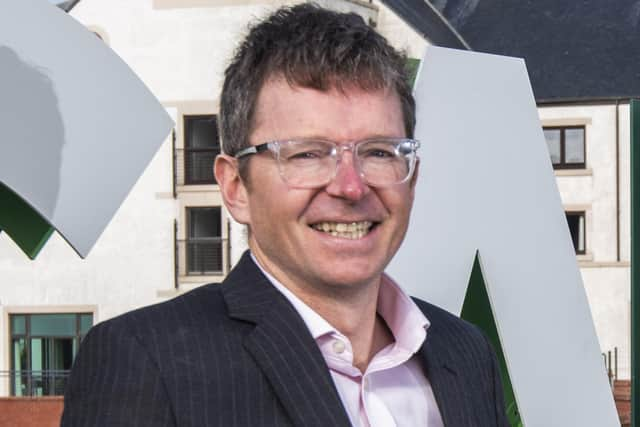
Alex King is the founder of Echo3 Education, an Edinburgh-based online health and safety training provider offering nearly 100 accredited courses to individuals and organisations across the UK.
Comments
Want to join the conversation? Please or to comment on this article.