
Why rural Scotland’s ceiling is higher than resilience
Policy needs to catch up with an already entrepreneurial, innovative and ambitious rural Scotland, writes Catherine McWilliam
Scotland cannot achieve its economic ambition while asking rural businesses to settle for resilience.
Too often, rural policy conversations start from the question of how to stop communities losing what they already have, while elsewhere in Scotland, the focus is on accelerating growth, attracting investment and helping businesses scale.
The latest Programme for Government is a prime example of this unbalanced approach. It sets out a new High Growth Unit, a Scottish Innovation Fund and AI Scotland aimed at accelerating the economy and driving innovation, entrepreneurship and investment. Here, policy is creating the conditions for businesses to start, scale and compete. Yet when we get to rural Scotland, the language changes.

For rural communities, the focus shifts towards maintaining existing services and protecting the last remaining businesses through a Last Provider Fund. Resilience is important, but it cannot be the ceiling of our ambition for rural Scotland’s business leaders, innovators, entrepreneurs and start-ups. The Rural Renewal Bill is an opportunity to move beyond managing existing challenges and redesign the conditions for real future growth.
To achieve that, we also need to examine the definition of ‘rural Scotland’.
There is no singular rural economy in Scotland, but many distinct and interconnected areas with unique challenges and opportunities. Our islands are one of those economies and a particularly powerful example of why geography matters when designing policy for growth.
Across our island communities, the experience of doing business is fundamentally different. A distillery in Jura, a digital business in Raasay and a tourism operator in Orkney are all operating in ‘rural Scotland’ but have vastly different circumstances and policy requirements – and that’s before we even get to the mainland.
The differences between our islands alone demonstrate the limitations of trying to design policy around a single definition of rural Scotland. The Rural Renewal Bill aims to “enable economic growth in rural areas”, but whose growth and where? If it is genuinely going to unlock growth, policy must recognise each economy rather than treating the islands and wider rural Scotland as one place with one set of needs.
We already recognise elsewhere that a one-size-fits-all approach does not work. The Programme for Government talks about capitalising on the unique strengths of local areas, including specific strategic approaches such as the Glasgow-Edinburgh Arc and East Coast Arc. If we accept that different areas of Scotland need different policies to unlock their economic potential, the same must apply to rural Scotland and ultra-rural Scotland. The islands make this clear: Lerwick may be rural on a national level, but functions as an urban centre for businesses on the outer islands.
This raises a fundamental question: which businesses and economic activities are actually visible to policymakers when they picture rural Scotland? That definition ultimately shapes the policy that follows. If it fails to reflect the full breadth of businesses already operating there, we risk reinforcing geographic disadvantage, affecting the long-term viability of communities and constraining Scotland’s entire economic potential.
We cannot keep applying short-term fixes to long-term economic problems to preserve the status quo. Policy needs to catch up with an already entrepreneurial, innovative and ambitious rural Scotland, or we will continue to return to the same crises while losing businesses, skills and people along the way.
Rural businesses are not asking for special treatment, they are asking for an equal opportunity to compete and for frameworks such as the Rural Renewal Bill to ensure that where a business is based does not determine how far its ambition can take it.
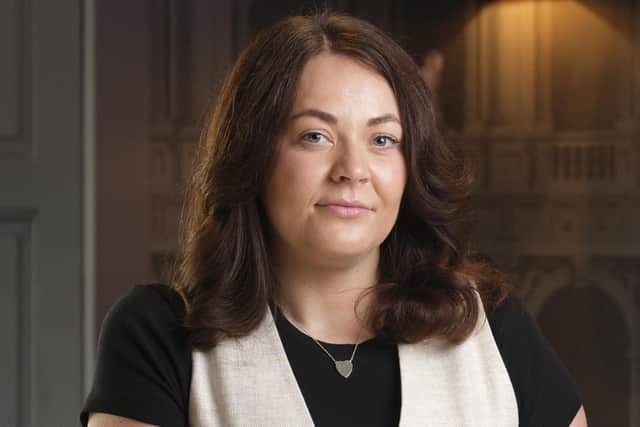
Catherine McWilliam, Nations Director at IoD Scotland
Comments
Want to join the conversation? Please or to comment on this article.