
Why property investors are snapping up Scotland’s retail warehouses
“Retail warehousing continues to offer compelling fundamentals” – Gavin Munn, Edmond de Rothschild
Scotland’s retail warehousing is a “sector in demand”, despite challenging market conditions, a new study of the country’s property investment market has revealed.
The latest investor research from Lismore Real Estate Advisors points to “limited supply and resilient demand” as being the leading driver of rental growth for retail warehousing over the next few years.
The firm’s quarterly poll of investors highlights a preference for food store operators being in the tenant line-up which will be an important platform for retail warehousing performance, with 62 per cent of respondents selecting the category. This was more than double the proportion choosing discount/value retailers, while a further 14 per cent identified drive-thru and food and beverage (F&B) operators.

The findings varied by investor type, with food stores selected by 75 per cent of property company respondents and 56 per cent of funds. Funds showed a stronger preference for discount/value retailers, at 33 per cent, while investment managers placed greater emphasis on drive-thru/F&B operators, with 33 per cent identifying the category compared with 12 to 14 per cent across the other investor groups.
When asked about assessing retail warehousing acquisition, 34 per cent of investors selected “dominant catchment strength” as the most important acquisition characteristic, closely followed by 28 per cent selecting asset management opportunities. A further 21 per cent identified reversionary rental potential, with 7 per cent selecting strong anchor tenant covenant.
The report comes as several large-scale speculative developments aimed at the industrial and logistics warehousing markets push ahead.
Gavin Munn, senior director at Edmond de Rothschild, who was interviewed by Lismore for its latest investor snapshot, said: “Retail warehousing continues to offer compelling fundamentals, with sustainable income, rental growth prospects and attractive relative value. Most importantly, occupational demand remains strong, with low vacancy, limited new supply and a broad range of retailers seeking space.
“Rents have largely rebased to affordable levels, while the continued importance of physical stores within omnichannel retailing provides further support. Demand is also underpinned by a diverse range of sectors, including discount and value retail, food, DIY, furniture and pets.
“For investors, however, selectivity remains critical,” he added. “The focus should be on supply-constrained micro-markets, affordable rents and assets with strong occupational demand.
“Well-located schemes can also offer longer-term flexibility through extensions, reconfiguration or alternative uses, adding to their investment appeal.”
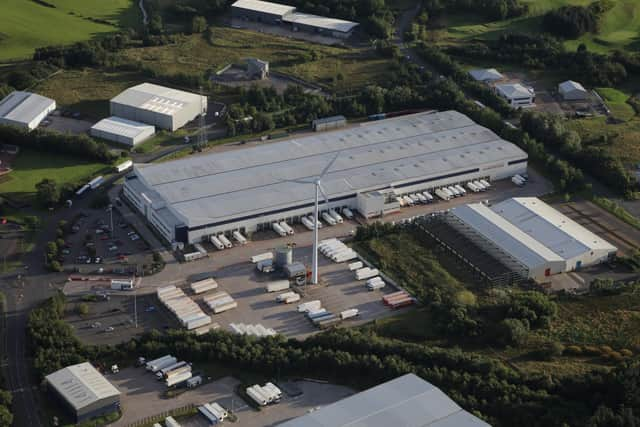
Lismore’s review also shows total investment transactions of £348 million in the third quarter of 2026, taking the year-to-date total to some £1.07 billion. Notable transactions included Blacksand’s £45m acquisition of the Morrisons distribution centre in Bellshill from ICG.
Lismore director Simon Cusiter said: “While there is no denying that the more general retailing backdrop remains challenging, the out-of-town market looks well placed to navigate the choppy waters. The sector’s tenant demand is increasingly concentrated in those categories that remain relatively well-positioned: value, convenience, discount food, trade-led retail and essential spend.
“This kind of positive occupational story is giving investors comfort and the retail warehousing sector remains one with the deepest pool of active buyers.”
Comments
Want to join the conversation? Please or to comment on this article.