
What the current Middle East crisis could mean for Scottish agriculture
Over the past few years, Scottish farmers and crofters have had stark reminders that global events can quickly translate into local pressures.
Over the past few years, Scottish farmers and crofters have had stark reminders that global events can quickly translate into local pressures.
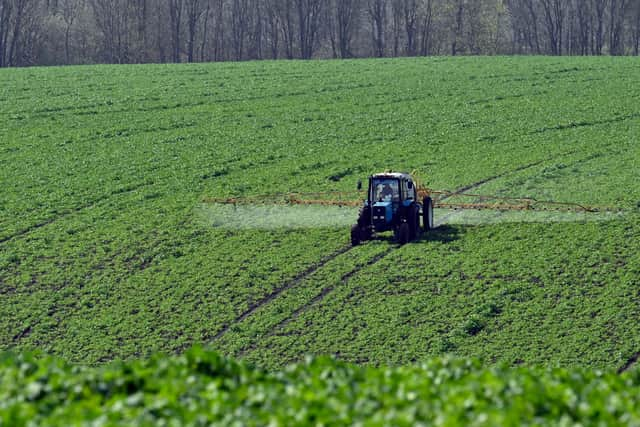

From the war in Ukraine to disruption in global supply chains, geopolitics has increasingly shaped the costs of producing food.
The current crisis in the Middle East risks becoming another such moment. While the headlines understandably focus on the humanitarian and security dimensions of the conflict, the implications for global energy and fertiliser markets are already beginning to emerge. For Scottish agriculture - an industry heavily reliant on imported inputs - those shifts could have real consequences for farm businesses in the months ahead.
The reality is that a significant proportion of global fertiliser production and key raw materials originate in, or moves through, the Middle East. Countries such as Qatar and Saudi Arabia are major exporters of urea and other fertiliser feedstocks, while critical shipping routes in the region carry large volumes of nitrogen and phosphate
products to global markets.
If conflict disrupts production, shipping routes, or insurance costs for vessels moving
through the region, fertiliser markets will respond quickly - as we have seen many
times before.
Another reality is that Scotland, and the rest of the UK, relies on imports for most
fertilisers used on farms. When global markets tighten, the costs for Scottish farmers
invariably soar.
For context, Scottish agriculture uses around 250,000 to 300,000 tonnes of nitrogen
fertiliser each year, the majority of which supports grassland and cereal production.
Even relatively small movements in global fertiliser prices can therefore translate into
very significant cost increases across the sectors – and directly impact on many
farms and crofts.
The other key factor is energy.
Nitrogen fertiliser is produced using natural gas, meaning fertiliser markets are
closely tied to global energy prices. Any disruption that pushes up gas or oil prices
feeds directly into farm input costs.
That matters not only for fertiliser, but also for red diesel, which underpins day-to-day
farm operations. Across Scotland, arable farms rely heavily on fuel during cultivation,
drilling and harvest, and livestock farms depend on fuel for feed handling, bedding,
and winter operations, while contractors, hauliers and processors all face higher
costs when energy prices rise.
When fuel costs spike, those increases ripple through the entire supply chain.
Unfortunately, this is nothing new. Scotland’s farmers and crofters will remember only
too well the fertiliser crisis following the invasion of Ukraine in 2022. Nitrogen
fertiliser prices rose dramatically, readily exceeding £800 per tonne and forcing many
to reconsider cropping plans and fertiliser strategies. Some reduced nitrogen
applications, others switched crops, and many absorbed significant financial
pressure simply to keep producing – all in an effort to remain viable. While markets
have stabilised somewhat since then, the current geopolitical tensions highlight how
fragile that stability remains.
We should be in no doubt that current conflict and political tensions are likely to lead
to higher fertiliser and fuel costs across Scottish agriculture.
Arable producers, particularly in the east of Scotland - from Berwickshire through
Angus and into Aberdeenshire - are among the most fertiliser-intensive systems in
the country. Crops such as winter wheat, barley and oilseed rape depend on
significant nitrogen inputs to achieve viable yields.
As a result, fertiliser can represent between 30 and 40 percent of variable costs in
arable production. When fertiliser prices rise sharply, margins are quickly squeezed –
especially given the poor outprices cereals and oilseeds growers have endured over
recent years.
Livestock farms, meanwhile, are not immune. Grass growth, and therefore forage
production, depends heavily on nitrogen fertiliser. Higher fertiliser costs can reduce
grass utilisation, increase reliance on purchased feed, and ultimately raise the cost
of producing beef, lamb and milk. In upland and hill systems, where margins are
almost permanently tight, additional input costs can place real pressure on farm and
croft viability.
It is also important to remember that farm input costs do not exist in isolation. Higher
fertiliser and fuel costs affect not only crop production and feed prices, but also
transport, logistics, and food processing. If these issues persist, both local and global
cost inflation will translate into higher supermarket prices - putting pressure on
household budgets, reducing spending power in the wider economy, and potentially
creating domestic political pressures.
One of the clear lessons of the past few years is that volatility in global markets is
becoming more frequent.
That makes resilience increasingly important. On farm, many producers are already
taking steps to improve nutrient efficiency - through soil testing, precision
applications, organic manures and slurry, and better grassland management.
But there are also wider policy questions.
If fertiliser and energy are strategically critical inputs for food production, then
governments must consider how best to support secure supply chains and reduce
exposure to global shocks. That includes thinking about energy security, domestic
food production capacity, and the long-term resilience of agricultural systems.
There is no escaping the fact that Scottish agriculture is deeply connected to the
wider world. We export high-quality food to global markets, but we also rely on global
supply chains for many of the inputs that make that production possible. Ensuring
security in the fertiliser supply chain is a critical component of national food security.
Events in the Middle East may feel distant from farms in East Lothian, Ayrshire or the
Highlands. Yet time and again history shows that geopolitical tensions can quickly
translate into higher costs at the farmgate.
At a time when Scotland’s farmers and crofters are already navigating tight margins,
significant changes to policy and support payments, and economic and market
volatility, these developments serve as another reminder of the importance of
building a resilient and sustainable food production system here in Scotland – and of
the shared responsibilities of the agricultural industry, the supply chain, and
governments.
In response to the developing situation, NFU Scotland has written to the Prime
Minister raising concerns about rising input costs and urging the UK Government to
consider measures that could help stabilise fertiliser and fuel markets and protect
domestic food production.
ENDS
Comments
Want to join the conversation? Please or to comment on this article.