
Wetherspoon’s Sir Tim Martin warns profits may miss mark as industry costs mount
“There will be worries that cheap pints might be the latest casualty of higher costs facing pubs” – Susannah Streeter, Wealth Club
The founder of JD Wetherspoon has warned that the pubs giant could marginally miss profit guidance after a “substantial” jump in costs.
Sir Tim Martin’s comments came as the firm, which has 794 managed pubs and 21 franchise sites, revealed slower sales growth over the latest quarter.
Martin, who chairs the group that he set up in the late 1970s, said his business was among hospitality operators to have seen “substantial increases in costs” recently. He added that this could therefore result in “profits slightly below market expectations”.

The group - commonly referred to as Spoons - previously said increases in employers’ national insurance contributions and wages would cost the business around £60 million per year. It is also facing an extra £1.6m in tax this year through the extended producer responsibility packaging levy.
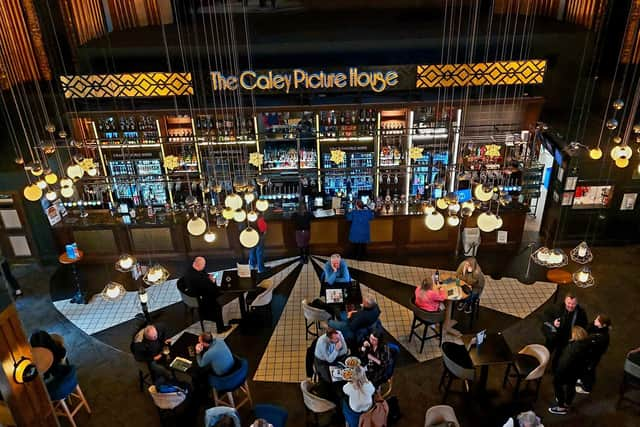
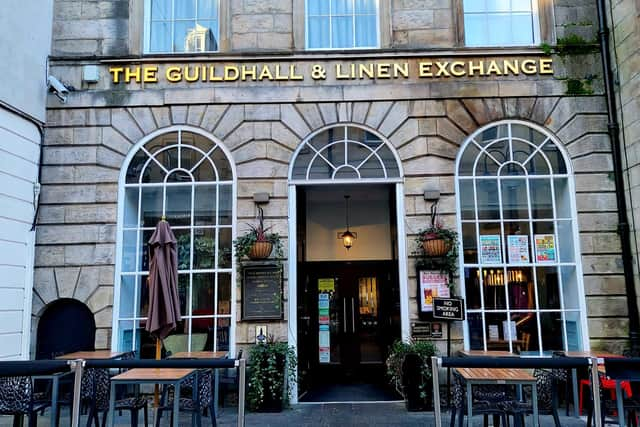
Wetherspoons - whose Scottish estate includes the likes of the Caley Picture House in Edinburgh and Dunfermline’s Guildhall & Linen Exchange - reported that like-for-like sales grew by 3.4 per cent in the 13 weeks to April 26, compared with a year earlier. Like-for-like sales had risen by 4.8 per cent over the six months to the end of January.
It means like-for-like sales have risen by 4.3 per cent over the financial year-to-date, with total sales up 4.9 per cent for the period.
In its trading update, the firm said it opened eight more pubs over the latest quarter but saw its total pub estate remain stable after also selling eight sites.
Martin, who started the chain with a single pub in Muswell Hill, London, naming the business after one of his teachers - told investors: “Sales growth was ahead of the NIQ RSM Hospitality Business Tracker for the 43rd month in a row in March, although Wetherspoon’s growth for Q3 was slightly below the year-to-date.
“The company has a strong pipeline of new pubs and planned openings include Manchester Airport, Heathrow Airport, Paddington station, Charing Cross station and Shaftesbury Avenue in central London.
“As many hospitality operators, including Wetherspoon, have reported, there have been substantial increases in costs, which may result in profits slightly below market expectations.”
Derren Nathan, head of equity research at investment platform Hargreaves Lansdown, noted that the group had put out an “uncharacteristically short” trading update.
He said: “The group continues to outsell its rivals, supported by its strong value proposition, and is optimising its estate towards high-footfall locations. However, founder Tim Martin pointed out substantial cost increases for the industry, which may result in profits slightly below market expectations.
“Pre-tax profit was previously expected to fall 11 per cent in 2026. The shares are down over 20 per cent year-to-date, and a flat reaction today suggests further weakness was already priced in. The group looks better placed than most to prosper when the economic tide turns, but near-term catalysts could be few and far between.”
Get our upcoming weekly business newsletter - click here
Susannah Streeter, chief investment strategist at Wealth Club, said: “There will be worries that cheap pints might be the latest casualty of higher costs facing pubs, given JD Wetherspoon’s latest update. It demonstrates the extent to which the sector is grappling with mounting financial pressures despite steady demand.
“Although the bar is still busy, with Wetherspoon’s value offering continuing to pull in punters, margins risk being diluted as the rising cost burden froths up. Management has warned that profits could come in slightly below expectations, suggesting higher wage bills, energy prices and input costs are starting to eat into takings.
“The danger is that something has to give, and the worry will be that low pricing which is a cornerstone of Wetherspoon’s appeal may come under pressure,” she warned. “While the World Cup and extended opening hours may provide a short-term boost to sales, they’re unlikely to fully offset the squeeze, leaving the group with the increasingly tricky balance of keeping prices low while protecting profitability.”
Robinhood UK lead analyst Dan Lane added: “Wetherspoon pubs are pulling their weight but it’s becoming a familiar story of costs (labour and taxes in particular) absorbing that growth.
“Sales are holding up, with the company’s value proposition still bringing in customers in a stretched consumer environment. But, with cheap pints getting people through the doors, management is clearly reluctant to push pricing meaningfully, which means there’s little sign of margin relief ahead.”
Recently published research showed that across Scotland, there was a net loss of more than 600 pubs between 2010 and 2025. In four local authority areas, the number of pubs has fallen by more than 40 per cent over the 15-year period, intensifying concerns about the impact on local communities and economies.
The Scottish Beer and Pub Association (SBPA), which carried out the analysis of the declining number of establishments via Scotland’s non-domestic rates database, described the rate of closures as “staggering,” and said more pubs were being pushed “to the brink” due to financial challenges.
The figures compiled by the SBPA from the Scottish Assessors Association's website showed that the local authority area with the steepest decline was the Shetland Islands, where there were just 16 pubs in 2025, compared to 42 in 2010.
East Renfrewshire also saw a significant fall in pub numbers, declining 52 per cent over the same period - down from 46 to 22, closely followed by East Dunbartonshire, where a net loss of 25 pubs shut their doors - a 45 per cent reduction.
Comments
Want to join the conversation? Please or to comment on this article.