
UK gilts crisis: What’s causing the market turmoil and should I be concerned?
“For households, the long wait only prolongs uncertainty at a time when many are still grappling with the cost-of-living squeeze” – Rebecca Williams, Rathbones
As Britain’s long-term government borrowing costs come under pressure, with gilts touching fresh 27-year highs this week, experts have warned that market volatility is likely to continue in the countdown to the autumn Budget, now confirmed as 26 November.
The yield on 30-year government bonds - also known as gilts - reached highs not seen since 1998 on Wednesday morning, touching 5.746 per cent at one stage, up from 5.698 per cent at Tuesday’s market close. Gilt yields move counter to the value of the bonds, meaning their prices fall when yields rise.
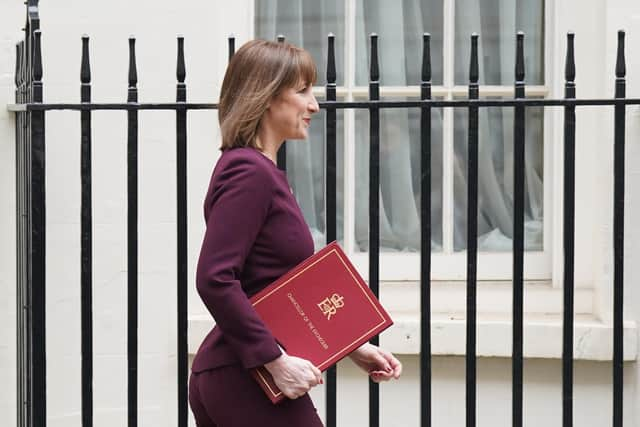
Those yields eased slightly in late morning trade as Chancellor Rachel Reeves announced that her latest Budget statement would be delivered on 26 November. Confirmation of the date also helped to take some of the pressure off the pound.
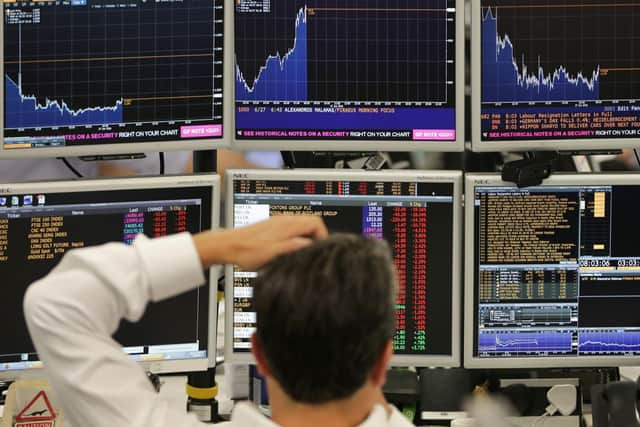

Britain is not alone in the latest financial turmoil, with European and US government bonds also under the cosh due to political uncertainty and public finance concerns, while Japan saw its 30-year yield hit a record high on worries over rising debts.
Rising yields on these bonds means that it costs more for governments to borrow from financial markets.
Meanwhile, gold touched fresh highs - above $3,530 an ounce - as nervous investors flocked to what is regarded as a safe haven asset.
Matthew Amis, investment director, rates management, at Scottish funds giant Aberdeen, pointed to a number of factors behind the current volatility.
“Although it makes great headlines, the move in gilt yields in the last few days has largely been in line with other markets,” he said. “Global bond yields are moving higher and the UK is going along for the ride.
“The real story for the UK should be that the UK DMO [Debt Management Office] has just managed to syndicate £14 billion of ten-year gilts, a record size. Not something that could be delivered in a Truss-like meltdown.
“Gilt markets are on high alert for the autumn Budget, and constant speculation on tax proposals is far from helpful, but for the time being the UK is not the outlier in global bond markets.”
Financial markets have been heavily focused on the upcoming Budget, with the sell-off in gilts largely down to worries over Britain's public finances and as investors look for reassurances on how the Chancellor will plug a black hole in the nation’s public finances - estimated by some to be as much as £51 billion. Experts also believe a driver of weakness in the UK bond market this week could have been compounded by concerns over the Prime Minister’s government reshuffle on Monday and Reeves’ position.
Rathbones, the UK wealth manager, said the long wait until 26 November would only “prolong the uncertainty” for households and investors.
Rebecca Williams, the firm’s divisional lead for financial planning, noted: “With the Budget now set for 26 November, it feels like a rather late fiscal event. But with public finances stretched thin, the delay underlines that ministers are in full-on thinking mode ahead of what is shaping up to be one of the most consequential Budgets in a generation.
“For households, the long wait only prolongs uncertainty at a time when many are still grappling with the cost-of-living squeeze. Markets and savers alike dislike being left in the dark, and it is little wonder we’ve seen a surge in queries around pensions taxation, estate planning, and whether it remains worthwhile to hold on to buy-to-let properties amid growing speculation.”
She added: “This period of waiting can be used productively: to review budgets, shore up financial resilience, and stress-test long-term plans. Above all, good financial decisions should be grounded in sound advice and verified information.”
Kathleen Brooks, research director at XTB, said the “focus is likely to remain on the Budget for some time” and cautioned that bond markets will continue to see volatility.
“UK bond yields have been on an upward trajectory for most of this year and have risen significantly since Labour took office,” she said.
“The bond market will need some hefty persuading that Labour will rein in public sector spending and bring the UK’s finances under control. This is why we expect to see bouts of UK bond market volatility in the coming months.”
IG noted that sterling shorting activity on its trading platform had jumped by 150 per cent amid the escalating turmoil in UK bond markets. The firm said that among its international clients, the volume of short trades against the pound leapt 153 per cent on Tuesday, versus the previous day, with the value of those positions climbing by a similar percentage. UK-based traders also piled in, with short bets jumping 116 per cent day-on-day and up 137 per cent compared with the previous Tuesday.
Credible
Chris Beauchamp, chief market analyst at IG, said: “The turmoil in gilts and sterling has put the UK government’s fiscal position squarely back on everyone’s radar. The mood around the UK economic outlook continues to sour as 30-year gilt yields hit their highest level in more than a quarter of a century.
“UK stocks might still be cheap, but investors are concerned that this attractive valuation comes with the risk of a broader fiscal crisis. There is still time for the government to get its house in order, and the panic hasn’t spread to the ten-year yield yet, but the clock is ticking.”
He added: “Without credible plans to restore confidence - likely through a combination of spending cuts and tax rises - the UK risks deeper financial instability.”
Comments
Want to join the conversation? Please or to comment on this article.